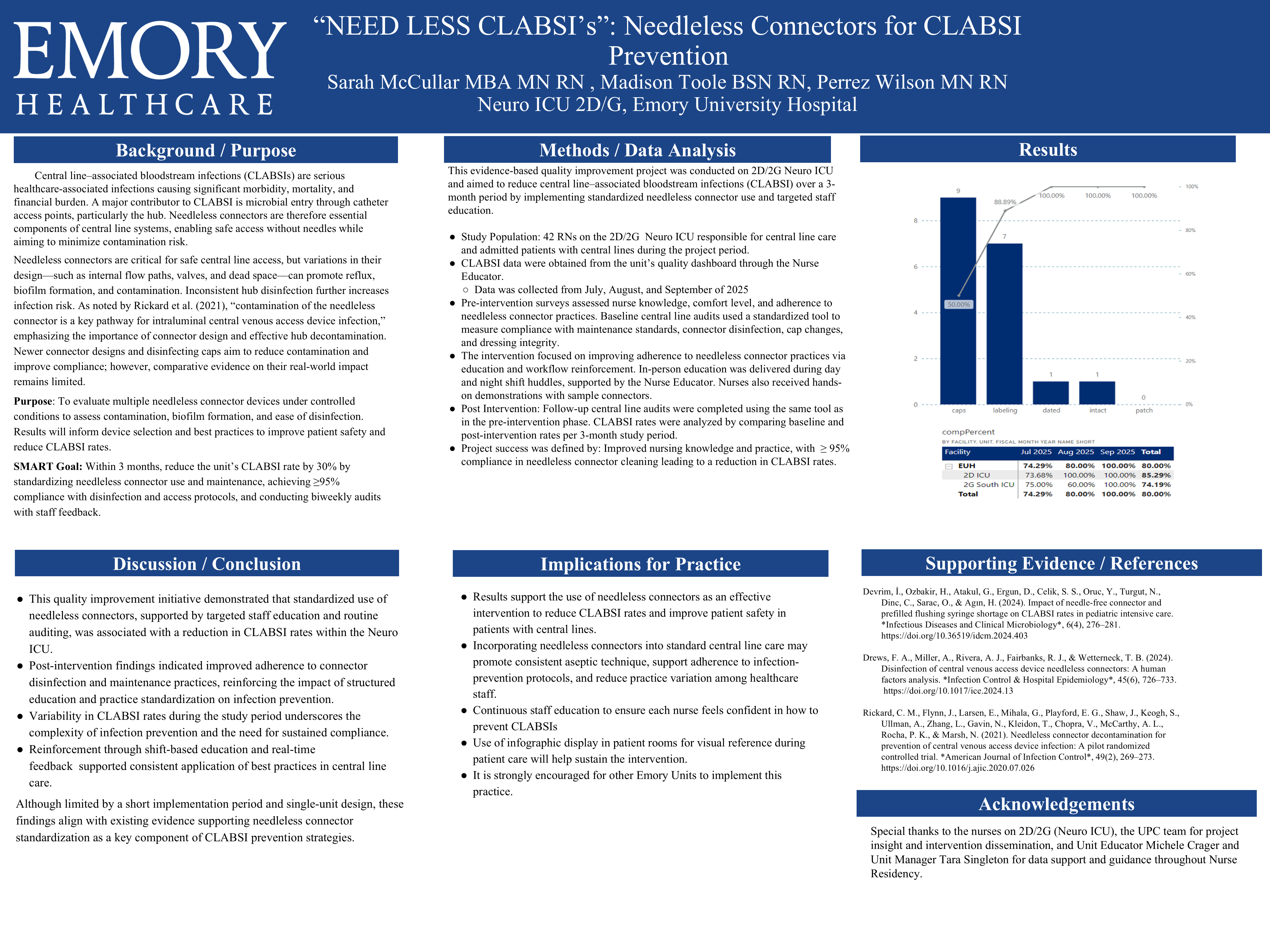
“Central line–associated bloodstream infections (CLABSIs) are serious healthcare-associated infections causing significant morbidity, mortality, and financial burden. A major contributor to CLABSI is microbial entry through catheter access points, particularly the hub. Needleless connectors are therefore essential components of central line systems, enabling safe access without needles while aiming to minimize contamination risk.
Needleless connectors are critical for safe central line access, but variations in their design—such as internal flow paths, valves, and dead space—can promote reflux, biofilm formation, and contamination. Inconsistent hub disinfection further increases infection risk. As noted by Rickard et al. (2021), “contamination of the needleless connector is a key pathway for intraluminal central venous access device infection,” emphasizing the importance of connector design and effective hub decontamination. Newer connector designs and disinfecting caps aim to reduce contamination and improve compliance; however, comparative evidence on their real-world impact remains limited.”
Sarah McCullar MBA MN RN , Madison Toole BSN RN, Perrez Wilson MN RN Neuro ICU 2D/G, Emory University Hospital