
“Each year, roughly 300,000 hospital workers are exposed to bloodborne pathogens. These workers are at substantial risk due to frequent contact with patients, biological materials, and contaminated environments. Such exposures can result in significant physical, psychological, and economic consequences for affected workers and hospitals. Prior studies suggest that factors such as job role, work location, shift timing, and deviations from infection prevention guidelines may increase the likelihood of exposure to bloodborne pathogens among healthcare workers.”
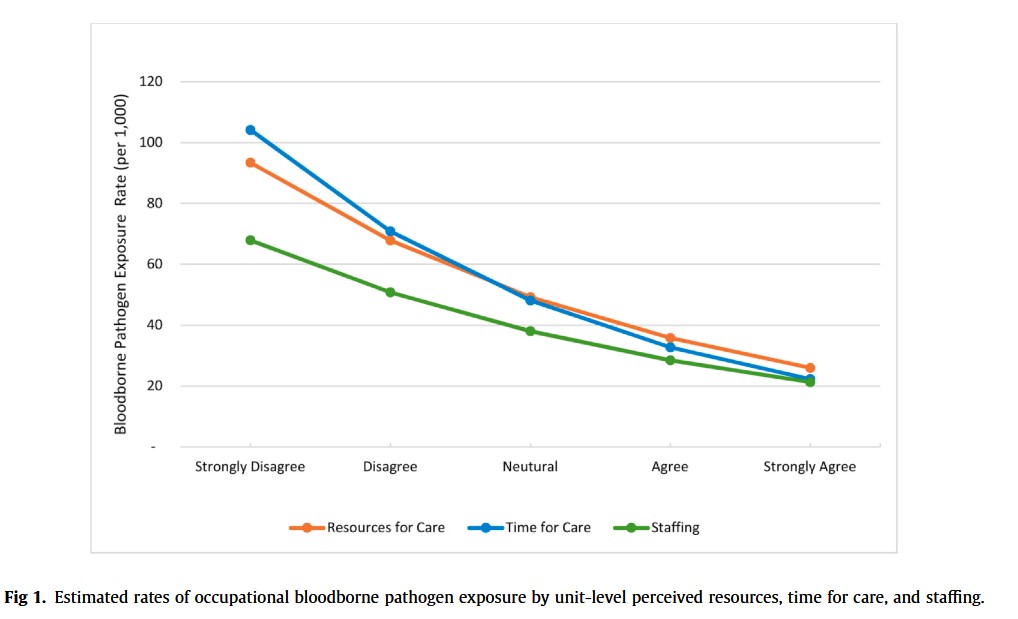
“In this report, we used commonly collected OSHA-reportable data and human resource data to estimate the rate of bloodborne pathogen exposure in hospitals. Our findings show that hospital units where workers reported adequate staff, time, and resources were significantly associated with lower rates of exposure to bloodborne pathogens. By linking unit-level data on adequacy of staff and resources with data on exposure events, this report extends prior research that largely focused on nurses or single exposure types (eg, needlestick injuries).”
“This underscores the need for a system-level safety strategy that includes educational strategies and the use of safety-engineered devices to reduce the risk of exposure for both healthcare workers and patients. Ensuring sufficient staff, time, and resources may facilitate adherence to infection prevention guidelines, which could potentially reduce the risk of occupational exposure. Hospitals and policymakers should recognize an adequate workforce as an essential component of occupational health and infection prevention
programs.”
Li, Y., Becker, E. R., Joski, P., Bouvier, M., & Cimiotti, J. P. (2026). Unit-level organizational resources and occupational exposure to bloodborne pathogens: A multi-hospital study. American Journal of Infection Control, 54(7), 821–823.

