
“The preparation new graduate nurses (NGNs) receive in prelicensure education is requisite skill and knowledge for entry into the profession but falls short of the expected competence for independent nursing practice. This competency gap is a well-described challenge for nurse educators and nurse leaders. For NGNs, the academic practice gap represents a
steep learning curve in a complex setting. Entry into practice in highly specialized acute care units is a fast-paced, high-stakes environment complicated by staffing shortages, heavy workloads, and hostile workplace cultures.”
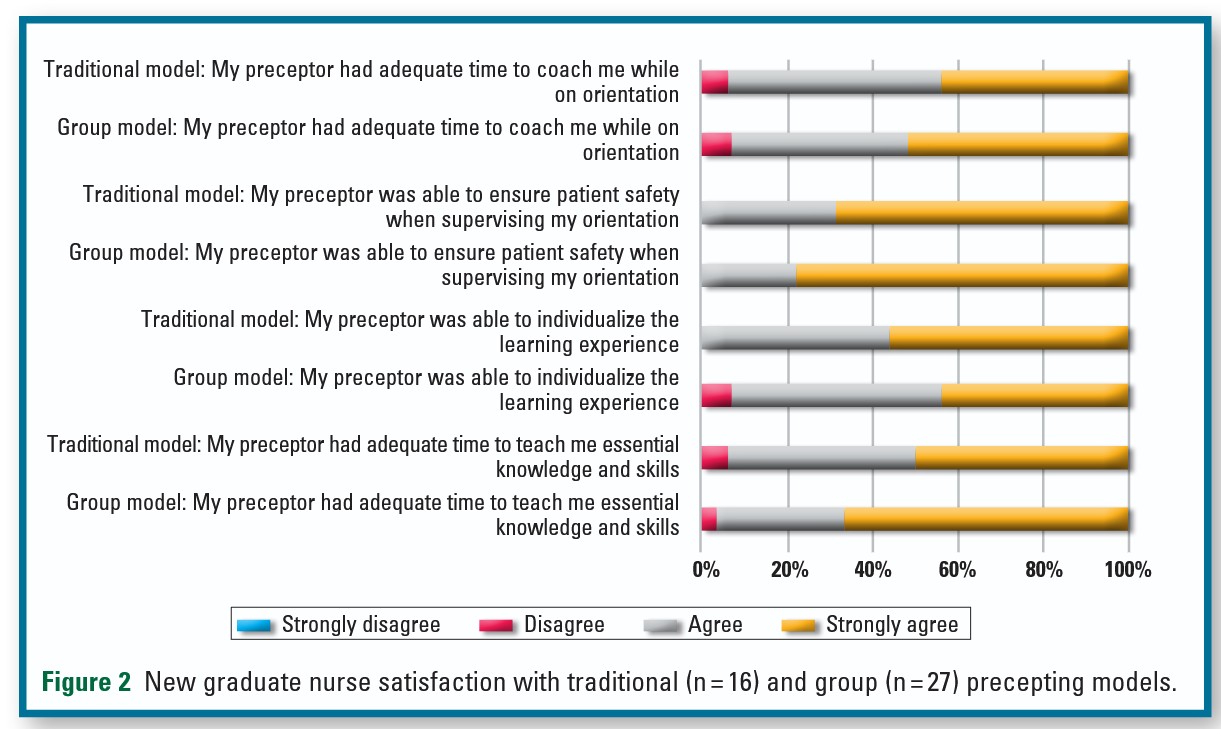
“Rapid change continues to shape health care and the nursing workforce. An orientation designed for NGNs with an early phase of group learning before transitioning to a 1:1 precepted orientation appears to be a promising approach. Group orientation improves preceptor satisfaction with the role and NGN satisfaction with orientation. In this project, group orientation was also associated with an increase in NGN retention. The cost of providing group orientation was approximately $10,000 for each NGN, but this expense may be offset by cost savings appreciated when NGN retention increases. Future evaluation of group orientation for NGN transition to practice should include a closer examination of the effect of this model on NGN confidence, competence, and other domains of the new graduate experience.”
McDermott, C., Haun, P. J., Robinson, E., & Russo, L. (2026). Orientation of New Graduate Nurses to Acute and Critical Care: Reimagining the Preceptor Role. Critical Care Nurse, 46(3), 43–50.

