JONA Highlights: Assessing the Impact of ANCC Magnet Designation

“Achieving Magnet designation is a significant milestone, but sustaining it may pose challenges. Magnet is a journey, not a destination. The journey does not end with recognition; rather, it demands ongoing readiness and leadership engagement to elevate nursing practice and improve patient outcomes. Petto et al identify the importance of leadership behaviors in sustaining quality outcomes and driving long-term success.”
“The Magnet Model provides a framework for nurse empowerment, professional development, and shared governance. Sustaining the journey fosters a positive work
environment, which leads to improved job satisfaction and lower turnover rates. Integrating Magnet principles into the organization’s strategic plan ensures that nursing initiatives align with the healthcare organization’s mission, vision, and values.”

  • “Evidence synthesis suggests Magnet recognition is associated with improved nurse work environments and selected patient outcomes, particularly mortality, failure to rescue, patient satisfaction, and fall prevention, while findings for infections, pressure injuries, length of
    stay, and perioperative complications are mixed.
  • Achieving Magnet status boosts the hospital’s reputation, nurturing the hospital’s competitive edge. It contributes to the structural score in most specialties of US News Best Hospitals, reflecting nursing excellence as recognized by the ANCC.
  • Some chief financial officers suggest Magnet recognition may be viewed favorably by bond rating agencies as part of broader assessments of organizational stability.
  • Magnet hospitals can attract highly qualified and ambitious nurses, strengthening the workforce and contributing to improved patient care”
Continue reading

Hot Topics: A comparison of transition experiences and practice readiness of newly licensed nurses with in-person and virtual residency training: A national observational study

“Traditionally, NRPs in the U.S. are delivered in-person with didactic curriculum, however, in 2014, the Iowa Action Coalition established the Iowa Online Nurse Residency Program (IONRP) intended to produce a more affordable, accessible and adaptable NRP for all clinical settings. This forward-thinking move by Iowa Action Coalition leaders responded to constrained resources encountered in small rural healthcare settings across the state and learning preferences of contemporary learners. Wilson and colleagues conducted a formative evaluation of both online and blended NRP options finding similar outcomes at both six and 12 months for the Casey-Fink Graduate Nurse Experience Survey for both formats.

Continue reading

Patient refusal of chlorhexidine (CHG) bathing

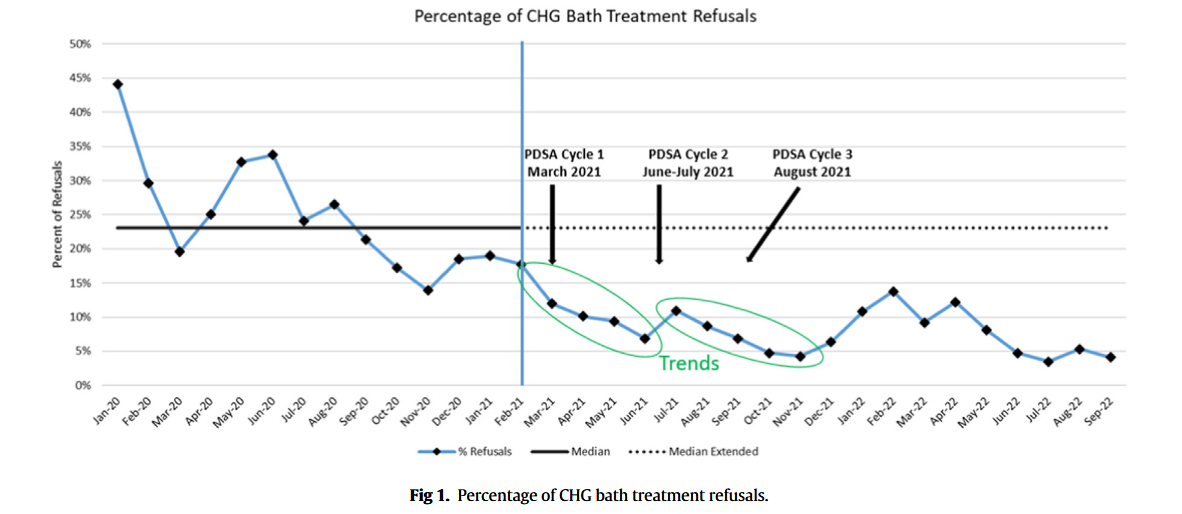
“In previous articles, it has been noted that patient refusals are also a barrier to performing daily CHG bathing. Indeed, Caya et al found that compliance with daily CHG bathing averaged 78%, with patient refusal of CHG bathing ranging from 3% to 29% across all units within a 505-bed hospital. According to patient interviews, reasons for refusing a CHG bath included a low perception of susceptibility to infection and low knowledge of the benefits of CHG bathing. There were no concerns related to the CHG product itself. Similarly, Reynolds noted that providing patients education on the importance of bathing while hospitalized may help improve compliance with this practice.”

“This project found a reduction in patient refusals of CHG bathing after Plan-Do-Study-Acts (PDSA) cycles were initiated focused on this barrier. Continued efforts are needed to improve overall CHG bathing compliance and reduce CLABSI rates; however, this initiative showed that focused
efforts to remove a significant barrier were beneficial. Other health care systems who struggle with patient refusals of CHG bathing may consider implementing similar interventions.”

Destine, Y., Capes, K., & Reynolds, S. S. (2023). Reduction in patient refusal of CHG bathing. American Journal of Infection Control, 51(9), 1034–1037.

Continue reading

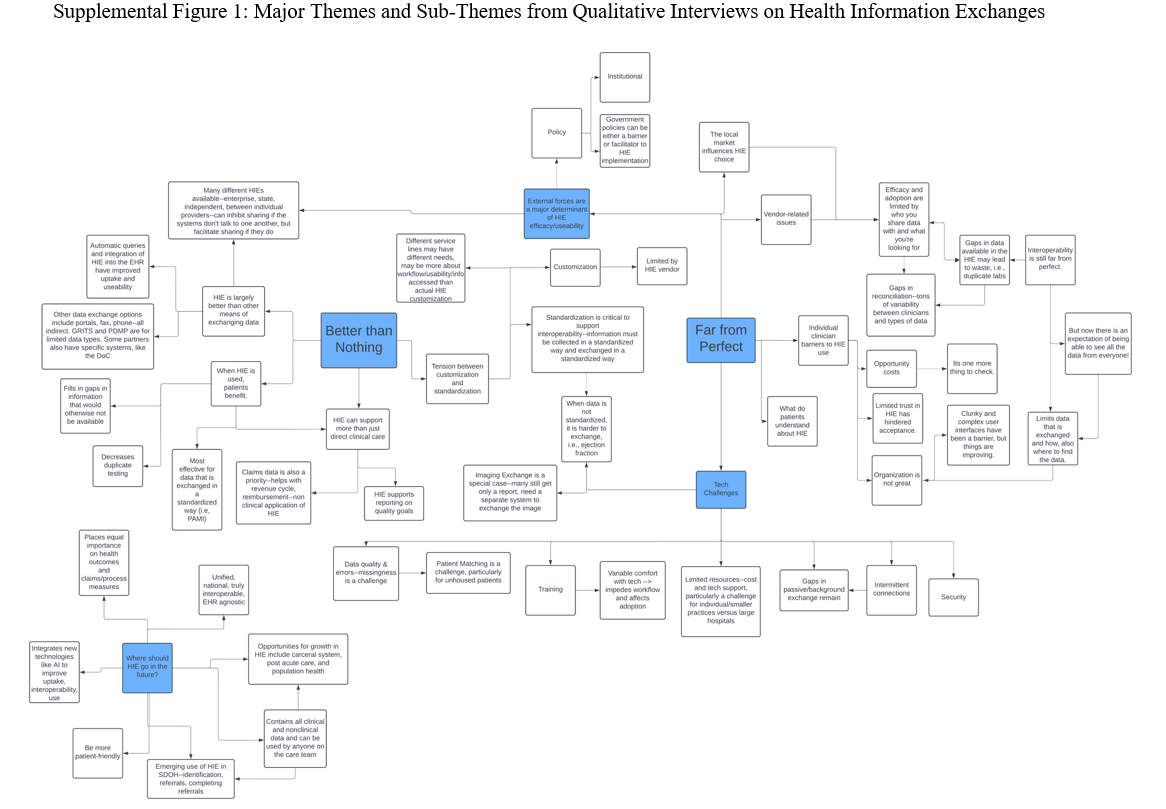
Emory Authors: Better than nothing, far from perfect: hospital and healthcare system leaders’ perspectives on health information exchanges

“Implementation and effective use of health information exchanges (HIEs)—systems that electronically share clinical and administrative data between settings of care—has the
potential to transform health care and improve patient out-comes. Financial investments in HIE infrastructure and the achievement of a critical mass of hospitals and health systems
participating in information sharing have mitigated key structural barriers to HIE use, while technological innovations, including the incorporation of HIE into electronic health records (EHRs), have improved integration of HIEs into many clinicians’ workflows. However, real-world use of HIE is lagging: it is estimated that HIEs are accessed in less than 20% of
clinical encounters and in only 50% of referrals—despite being a part of required reporting for the Centers for Medicare and Medicaid Services Promoting Interoperability incentive
program. Health information exchange use varies widely across settings of care: as few as 3.7% of outpatient visits and 17.6% of inpatient admissions recorded HIE use in one study.”

Continue reading

Emory Authors: Effects of a Group-Based Online Lifestyle Medicine Intervention Among Rural Participants

“Chronic diseases impact public health by attributing to 43 million deaths globally, requiring ongoing medical treatment, limiting daily activities, and contributing to disability and rising healthcare costs. In the United States, cardiovascular disease, diabetes, and cancer are the leading causes of death, and the prevalence of these conditions is high as more than half
of adults have been diagnosed with at least one chronic disease and just under half are managing two or more.”

able 1.

Sociodemographic Characteristics.

VariableTotal Sample n = 80Control Group n = 40Intervention Group n = 40Test StatisticEffect Size
Age (M ± SD)48.44 ± 17.0345.73 ± 17.7051.15 ± 16.09t(78) = 1.43, P = .155d = 0.321
Genderχ2(1) = 0.08, P = .775φ = .032
 - Female65 (81.3%)32 (80.0%)33 (82.5%)
 - Male15 (18.8%)8 (20.0%)7 (17.5%)
Marital statusχ2(4) = 6.60, P = .158φ = .287
 - Married/Partnered35 (43.8%)12 (30.0%)23 (57.5%)
 - Not married/Have a significant other13 (16.3%)8 (20.0%)5 (12.5%)
 - Single/Other13 (16.3%)9 (22.5%)4 (10.0%)
 - Divorced/Separated17 (21.3%)10 (25.0%)7 (17.5%)
 - Widowed2 (2.5%)1 (2.5%)1 (2.5%)
Educationχ2(2) = 0.56, P = .754φ = .084
 - < HS/HS grad20 (25.0%)11 (27.5%)9 (22.5%)
 - Some college33 (41.3%)17 (42.5%)16 (40.0%)
 - College+27 (33.8%)12 (30.0%)15 (37.5%)
Raceχ2(1) = 4.01, P = .045φ = .224
 - White58 (72.5%)33 (82.5%)25 (62.5%)
 - Black/Other/Multiracial22 (27.5%)7 (17.5%)15 (37.5%)
Incomeχ2(3) = 2.87, P = .413φ = .194
 - Under $30,00036 (47.4%)21 (56.8%)15 (38.5%)
 - $30,000 – $49,99919 (25.0%)8 (21.6%)11 (28.2%)
 - $50,000 – $100,00012 (15.8%)4 (10.8%)8 (20.5%)
 - Over $100,0009 (11.8%)4 (10.8%)5 (12.8%)
Employmentχ2(3) = 1.93, P = .587φ = .155
 - Full-time job28 (35.0%)12 (30.0%)16 (40.0%)
 - Part-time job18 (22.5%)8 (20.0%)10 (25.0%)
 - Not working, or full-time homemaker18 (22.5%)11 (27.5%)7 (17.5%)
 - Retired16 (20.0%)9 (22.5%)7 (17.5%)
# Of risk factorsχ2(2) = 1.33, P = .513φ = .129
 - 1-224 (30.0%)13 (32.5%)11 (27.5%)
 - 3-425 (31.3%)14 (35.0%)11 (27.5%)
 - 5 or more31 (38.8%)13 (32.5%)18 (45.0%)
Total risk score4.10 ± 2.284.00 ± 2.444.20 ± 2.14z = 0.63, P = .527g = .086
# Of previous historyχ2(1) = 0.00, P = 1.00φ = .000
 - 1-264 (80.0%)32 (80.0%)32 (80.0%)
 - 3-616 (20.0%)8 (20.0%)8 (20.0%)
Total history score1.68 ± 0.981.63 ± 0.981.73 ± 0.99z = 0.67, P = .501g = .101
Continue reading

JONA Highlights: Advancing Nursing Workforce Strategy Through a Tiered Academic Partnership Model

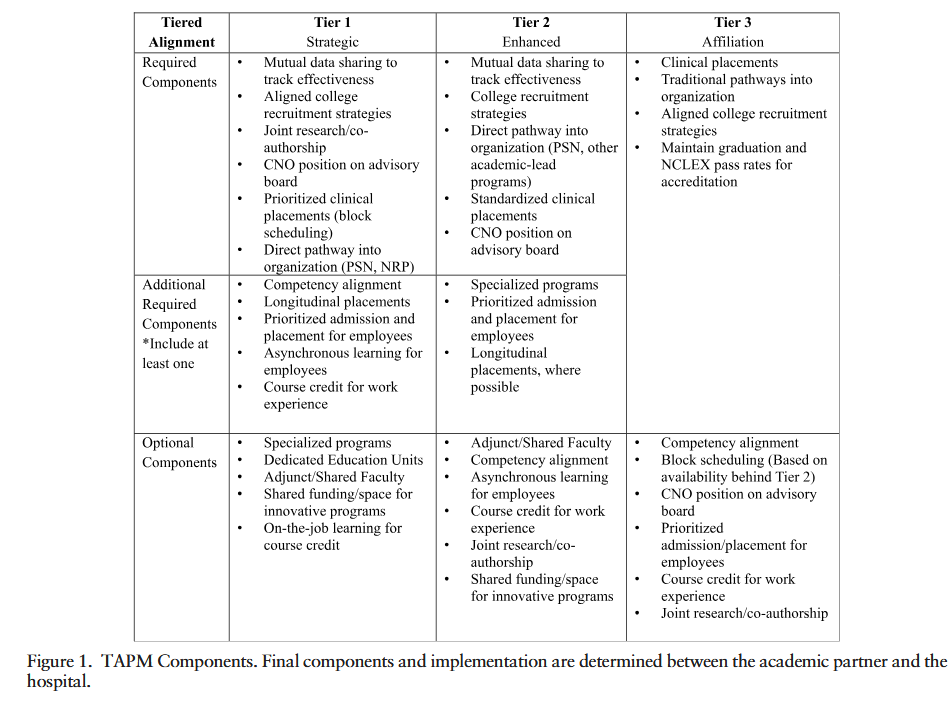
“The discrepancy between the supply and demand of RNs creates pressure on nursing leaders to find innovative solutions to strengthen the nursing workforce and reduce new graduate nurses’ time in orientation. In response, Memorial Hermann Health System leaders developed the Tiered Academic Partnership Model (TAPM). The model provides a strategic framework to align academic partnerships with health system nursing workforce priorities. The TAPM supports strategic, outcomes-driven partnerships between health systems and academic partners. TAPM categorizes partnerships into 3 tiers to optimize clinical placements, improve new graduate nurse readiness, and enhance conversion-to-hire rates. This scalable model fosters intentional collaboration, operational efficiency, and stronger workforce development.”

Continue reading

Nursing Highlights: Analyzing the role of connection in nurse well-being

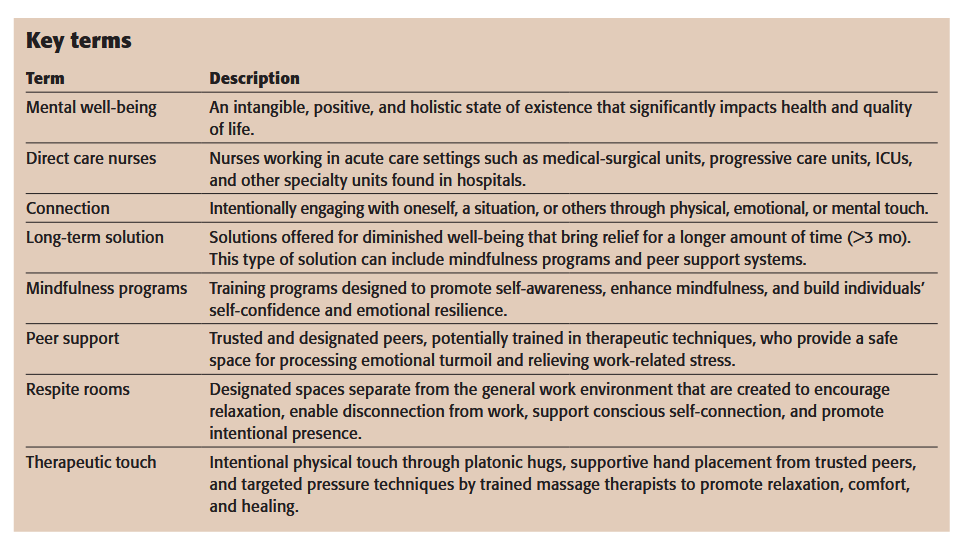
“As healthcare has become more critical and complex, so have nurses’ responsibilities,
expectations, and scopes of practice. Acute care nurses working at the bedside are subject to an immense amount of stress, anxiety, and burnout due to their work environment.
Although respect for the duties and profession of nursing has increased, the demands posed by various physical, mental, emotional, ethical, and moral challenges have also intensified. These challenges affect healthcare workers on both superficial and
systemic levels.”

Continue reading