Emory Authors: Closing the Gap: A Clinical Instructor and Preceptor Academy to Address Educator Shortages and Improve Teaching Confidence

“An aging U.S. population and the increasing complexity of care have intensified the demand for nurses, and a critical shortage of clinical instructors and preceptors (CIPs) threatens the nursing workforce pathway. Experienced nurses are frequently assigned preceptor roles without formal preparation in clinical teaching, feedback, or learner evaluation, which contributes to dissatisfaction and burnout among CIPs and learners alike. Clinical teaching should be attractive, engaging, and meaningful to CIPs rather than a
source of personal liability or stress. Nurses often report that they are not asked, compensated, trained, or resourced to precept—even though it is known that CIPs re-
quire specialized, evidence-based training and practical resources to help prepare the next generation of nurses.”

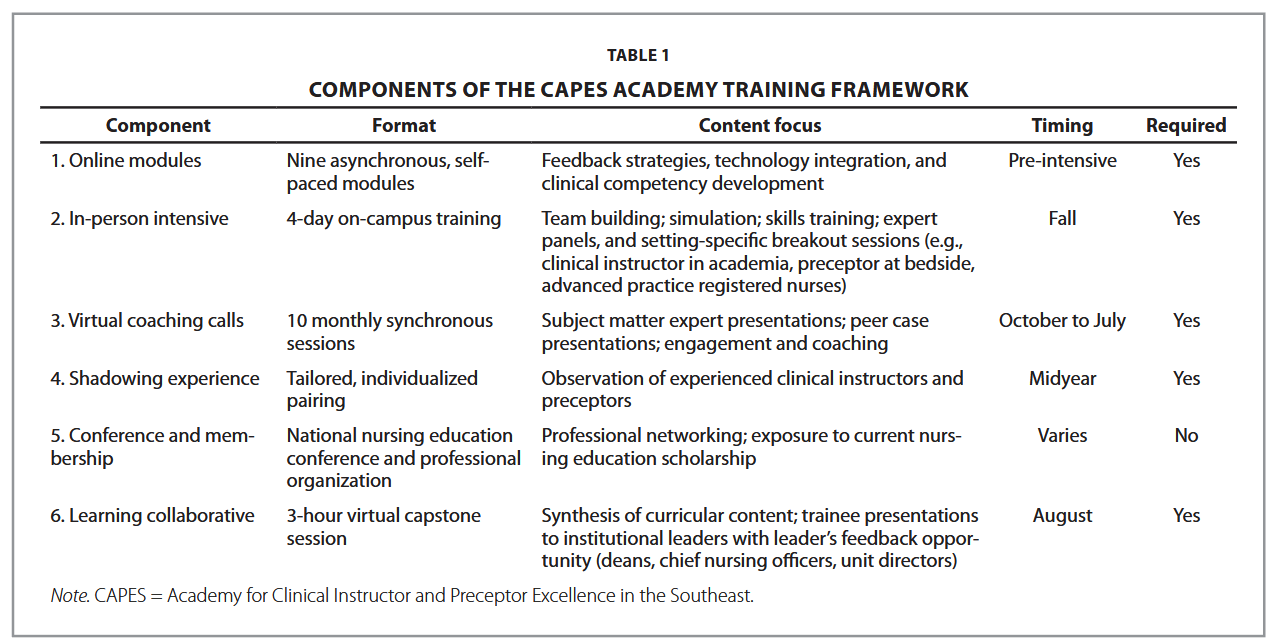
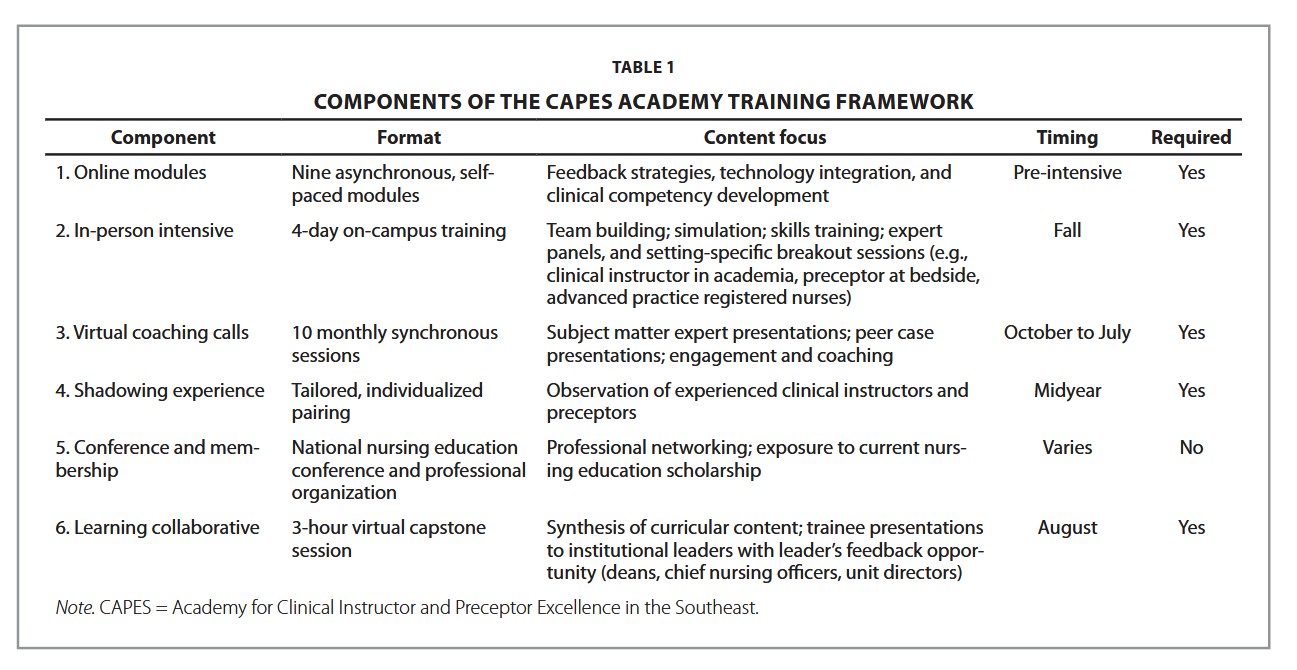
“To address this need, the CAPES Academy: Academy for Clinical Instructor and Preceptor Excellence in the Southeast was developed as a 4-year training grant funded by the Health Resources and Services Administration (HRSA), with the explicit goal of expanding nursing workforce capacity through the preparation of clinical faculty and preceptors.”
Continue reading →

Emory Authors: Closing the Gap: A Clinical Instructor and Preceptor Academy to Address Educator Shortages and Improve Teaching Confidence

“An aging U.S. population and the increasing complexity of care have intensified the demand for nurses, and a critical shortage of clinical instructors and preceptors (CIPs) threatens the nursing workforce pathway. Experienced nurses are frequently assigned preceptor roles without formal preparation in clinical teaching, feedback, or learner evaluation, which contributes to dissatisfaction and burnout among CIPs and learners alike. Clinical teaching should be attractive, engaging, and meaningful to CIPs rather than a
source of personal liability or stress. Nurses often report that they are not asked, compensated, trained, or resourced to precept—even though it is known that CIPs require specialized, evidence-based training and practical resources to help prepare the next generation of nurses. The challenge is compounded by limited access to high-quality continuing education specifically designed for clinical teaching roles. Available training
resources either require out-of-pocket costs or restrict participation to highly selective programs for baccalaureate-prepared clinical nurses.”

Continue reading →

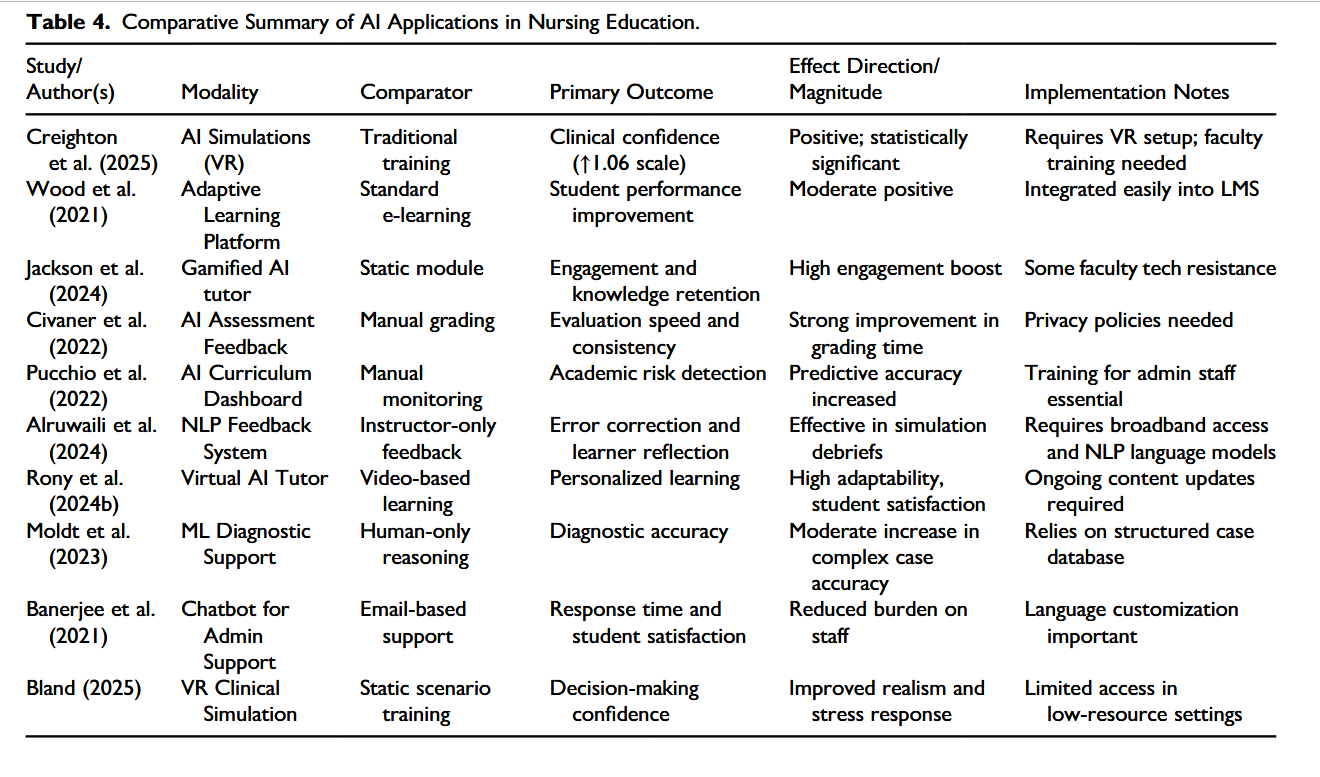
Emory Authors: Transforming Nursing Education with Artificial Intelligence: A Systematic Review (2010–2025)

“AI technologies encompass a wide range of applications within nursing education. These include intelligent tutoring systems for personalized learning, machine learning platforms
for performance prediction, virtual and augmented reality tools for clinical simulation, and automated systems for assessment and feedback. AI modalities such as natural
language processing, generative models like ChatGPT, decision-support tools, and rule-based algorithms are increasingly being deployed across educational contexts to assist both learners and educators. The scope of this review includes populations such as pre-licensure nursing students, nurse educators, and continuing education participants across academic,
clinical, and hybrid learning environments.”

Continue reading →

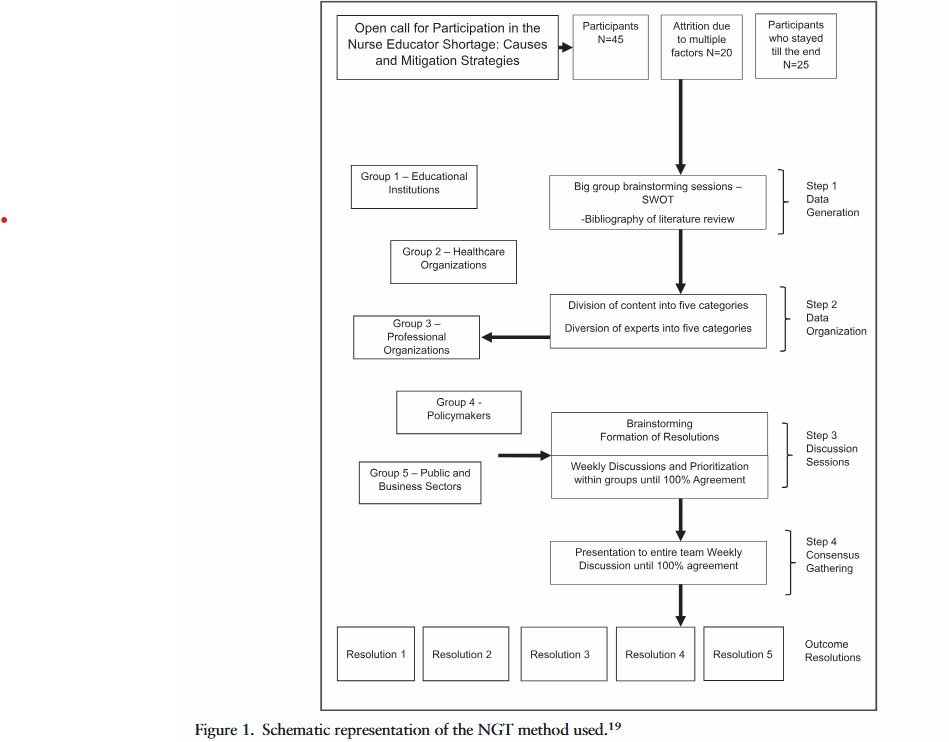
JONA Highlights: Addressing the Shortage of Academic Nurse Educators-An Opportunity for Collaboration Between Academic and Healthcare Organization Leaders.

“The nursing shortage is not new; however, it has been exacerbated by burnout, mass resignations, and alternative employment options during the COVID-19 crisis. A reported lack of academic nurse educators (ANEs) and impending shortages are predicted to have a negative impact on the nursing workforce. Academic nurse educators are licensed RNs with an advanced degree, typically a master’s in nursing, a doctorate of nursing practice, an EdD, or a PhD, and employed by a university, college, or school of nursing. The dearth of ANEs has led nursing programs to cap the number of accepted students, contributing to the nursing shortage. According to the National League for Nursing, the faculty shortage
across all nursing programs has almost doubled from 669 vacancies3 in 2019 to 1005 vacancies in 2022.”

Continue reading →

Library Resources for Emory Healthcare Staff

Access to library resources has recently been updated bring universal access across EHC, including the EDOU locations.

You can view the available resources at this link: Resources for Emory Healthcare Staff

You can also visit our LibGuide Library Resources for Emory Healthcare Staff. This includes additional resources including tutorials and guides.

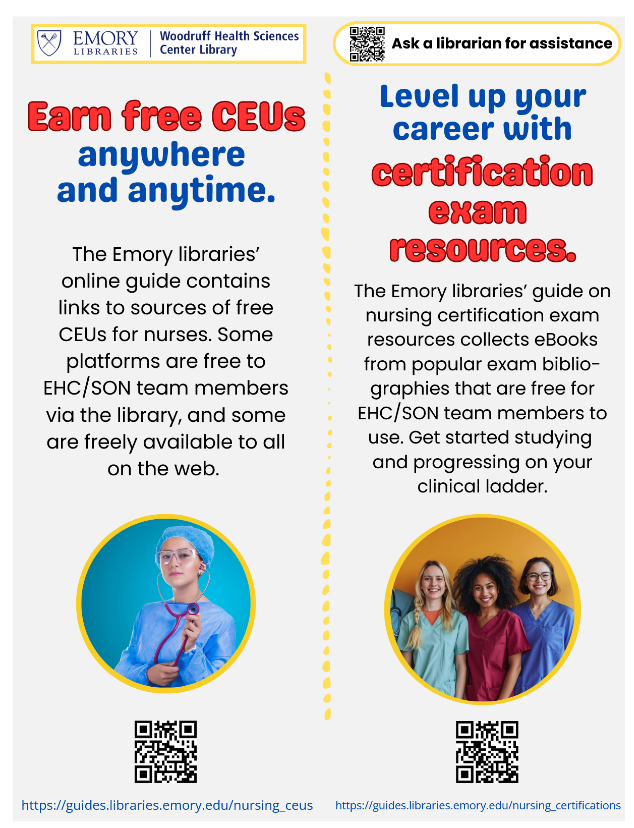
New Nursing Continuing Education Page

The WHSC Library is committed to providing Emory students, faculty, and healthcare professionals with the resources necessary to prepare for specialty certification exams, license renewal and achieve advancements in your career.

To help support your continuing education and professional development, a new online Nursing Continuing Education guide from the WHSC Library links nurses from Emory Healthcare and the School of Nursing to sources of both free and library-subscribed nursing CEUs to help with license renewal.

This guide, along with the Nursing Certification Resources page, support our Emory healthcare communities and their dedication to patient care and safety.

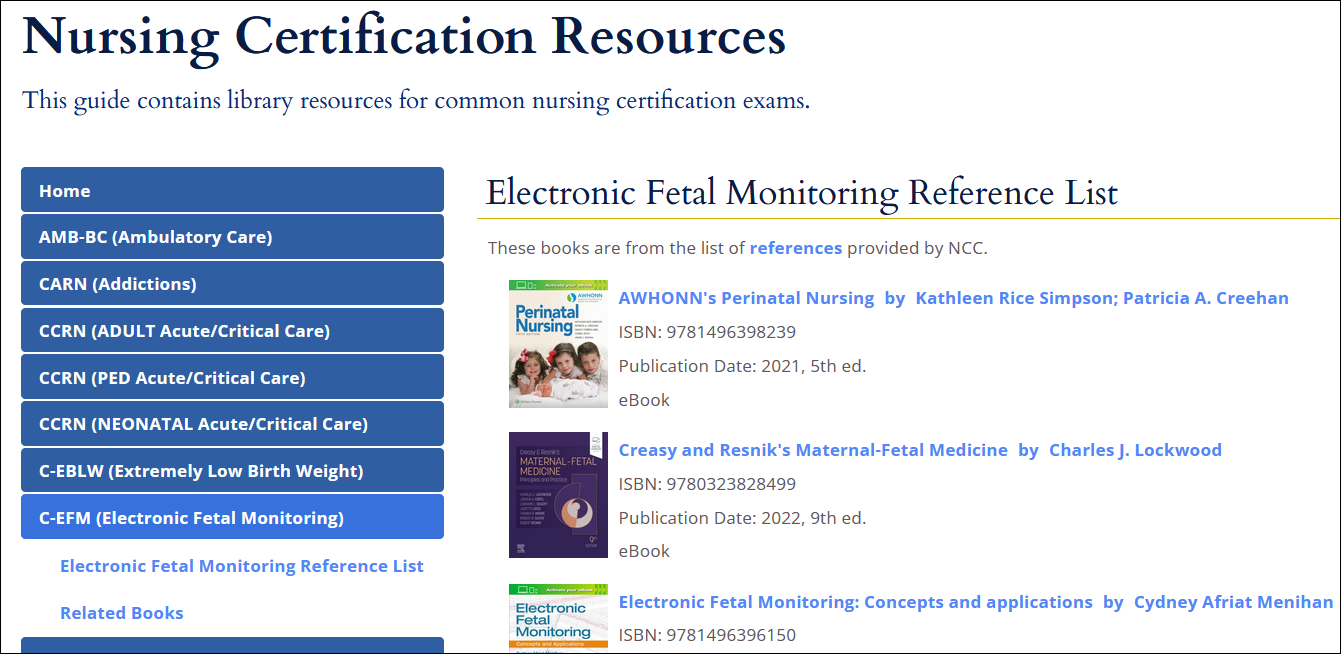
Nurse Certification Resources: Emory University’s Woodruff Health Sciences Library

*See Notification below*

The WHSC Library supports our nursing populations in attaining advanced nursing specialty certifications. Specialty certifications recognize nurses’ skills and knowledge, improve quality of care and health outcomes, and support Magnet status.

Our new online guide helps nurses advance their careers by providing access to reference books that are used for common nurse certification exams. At this guide you’ll find an extensive list of certifications and lists of reference books that are available through Emory Libraries. We hope that you’ll find this to be a helpful resource during your studies!

*Not all materials will be accessible with EHC credentials*

Please visit the WHSCL or one of the Clinical Branch Libraries for access.

Emory University Hospital 
Room H-140, EUH
Phone:  404-727-5192 

Emory University Hospital Midtown 
1st Floor, Room 1312, Davis-Fischer Building
Phone:  404-686-1978

Emory John’s Creek Hospital 
Education Room, Ground Floor
Phone: 404-686-1978

Emory Saint Joseph’s 
Ground Floor Classrooms