
“The nursing shortage is not new; however, it has been exacerbated by burnout, mass resignations, and alternative employment options during the COVID-19 crisis. A reported lack of academic nurse educators (ANEs) and impending shortages are predicted to have a negative impact on the nursing workforce. Academic nurse educators are licensed RNs with an advanced degree, typically a master’s in nursing, a doctorate of nursing practice, an EdD, or a PhD, and employed by a university, college, or school of nursing. The dearth of ANEs has led nursing programs to cap the number of accepted students, contributing to the nursing shortage. According to the National League for Nursing, the faculty shortage
across all nursing programs has almost doubled from 669 vacancies3 in 2019 to 1005 vacancies in 2022.”
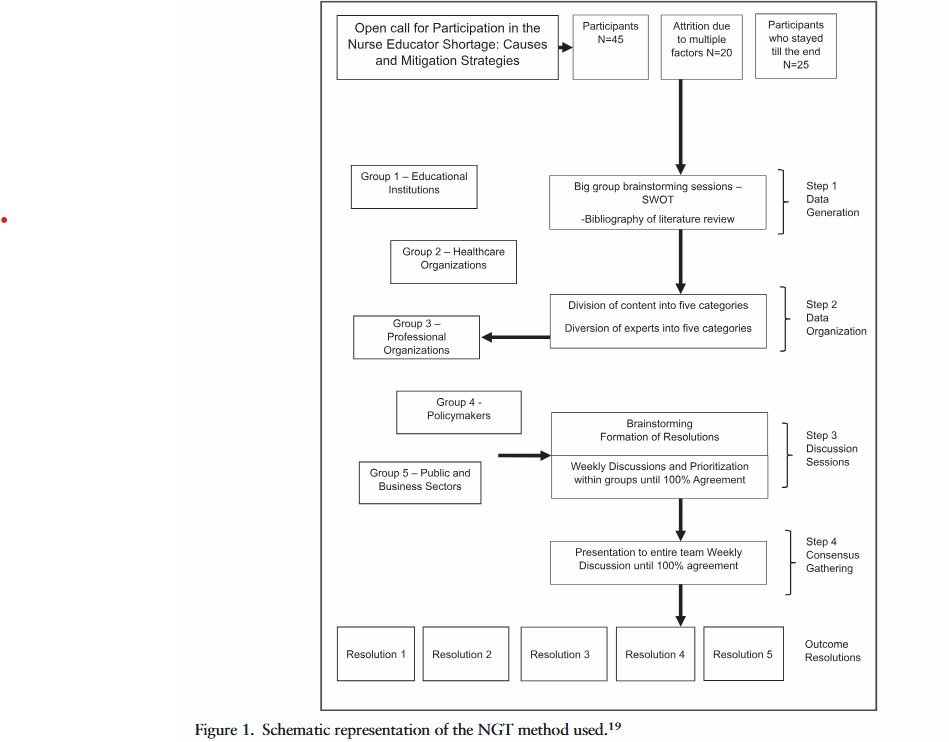
“The shortage of qualified ANEs is a complex issue requiring innovation and collaboration among nursing leaders of HCOs and nursing leaders of schools of nursing. The use of NGT as a research methodology uncovered potential solutions to address this persistent and ongoing problem. The authors of this article developed evidence-based recommendations to inform actions specifically dedicated to nurse leaders to reduce ANE shortages based on a significant review of the literature and feedback from consortium members and stakeholders. To implement these plans, HCOs and schools of nursing will require organizational changes in infrastructures and behaviors that facilitate the provision of emotional, logistical, and financial support to prospective ANEs.”
(2025). Addressing the Shortage of Academic Nurse Educators: An Opportunity for Collaboration Between Academic and Healthcare Organization Leaders. The Journal of Nursing Administration, 55, S11-S17.
 Evidence Matters