
“For many patients receiving palliative care, religious and spiritual (R/S) beliefs and practices provide a framework for understanding suffering, cultivating meaning, and sustaining hope in the face of declining health and mortality. A growing body of evidence demonstrates that higher levels of R/S beliefs and practices are associated with improved quality of life, greater emotional well-being, and longer survival.
Yet not all R/S coping is adaptive. Alongside positive forms of coping, such as faith, forgiveness, and connection, many patients experience R/S struggle, sometimes referred to as spiritual distress or spiritual pain. These experiences may include loss of meaning, anger toward God, abandonment, guilt, or conflict with faith communities.”
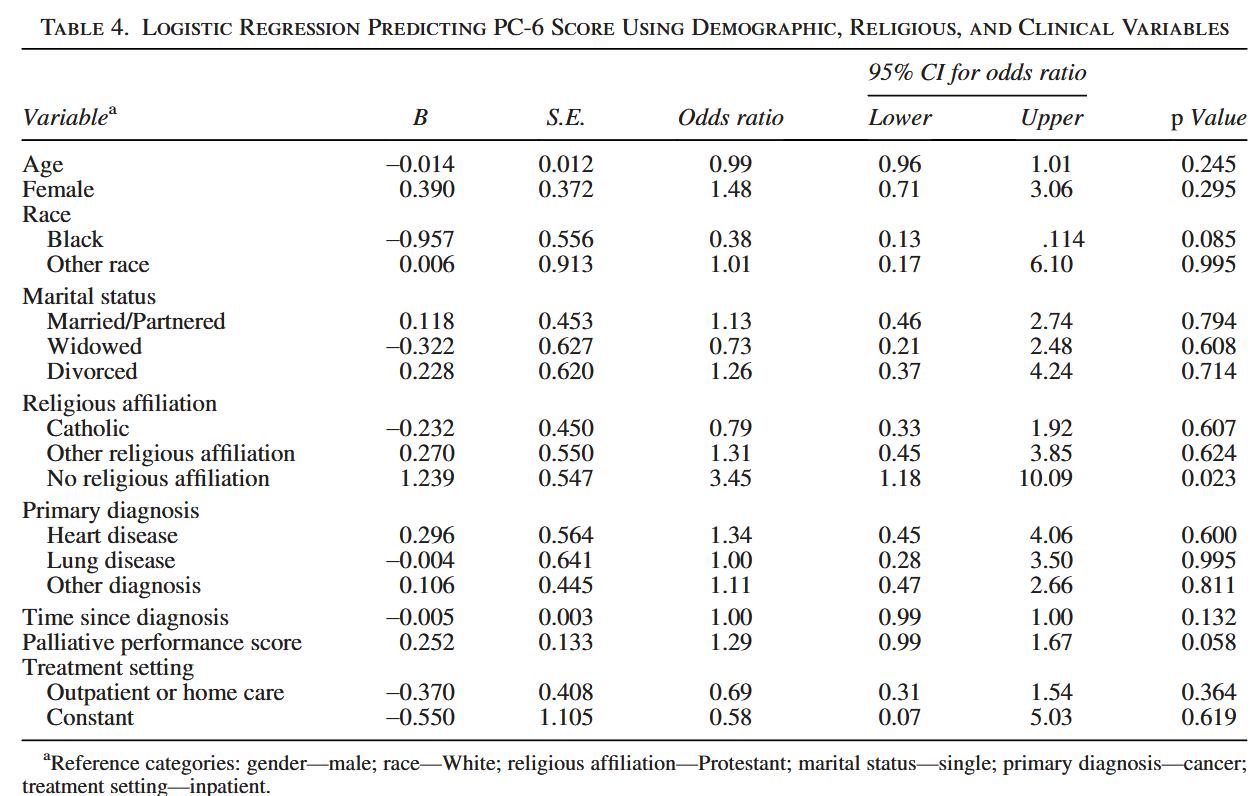
“These findings, using a validated chaplain-administered assessment, extend prior evidence that a substantial proportion of PC patients experience moderate or high levels of spiritual concerns that may compromise well-being and coping. These findings support the recommendations of a recent systematic review to “routinely incorporate spiritual care into the medical care of patients with serious illness,” and to “include specialty practitioners of spiritual care (e.g., chaplains) in the care of patients with serious illness.” Routine screening for R/S distress should serve as a central component of this care, along with timely referral for a chaplain assessment using the PC-6 or other validated models when indicated. Addressing suffering in all its dimensions—physical, psychological, social, and
spiritual—remains a core component of high-quality palliative care.”
Byrne-Martelli, S., Palmer, P. K., Cole, B., Cullen, I., Drennan, S. B., Harry, M. L., Labuschagne, D., Peñate, E., Ulrich, K. A., & Fitchett, G. (2026). Describing the prevalence and correlates of spiritual concerns using the PC-6 spiritual assessment with palliative care patients near the end of life. Journal of Palliative Medicine, 29(11), 1555–1562.

