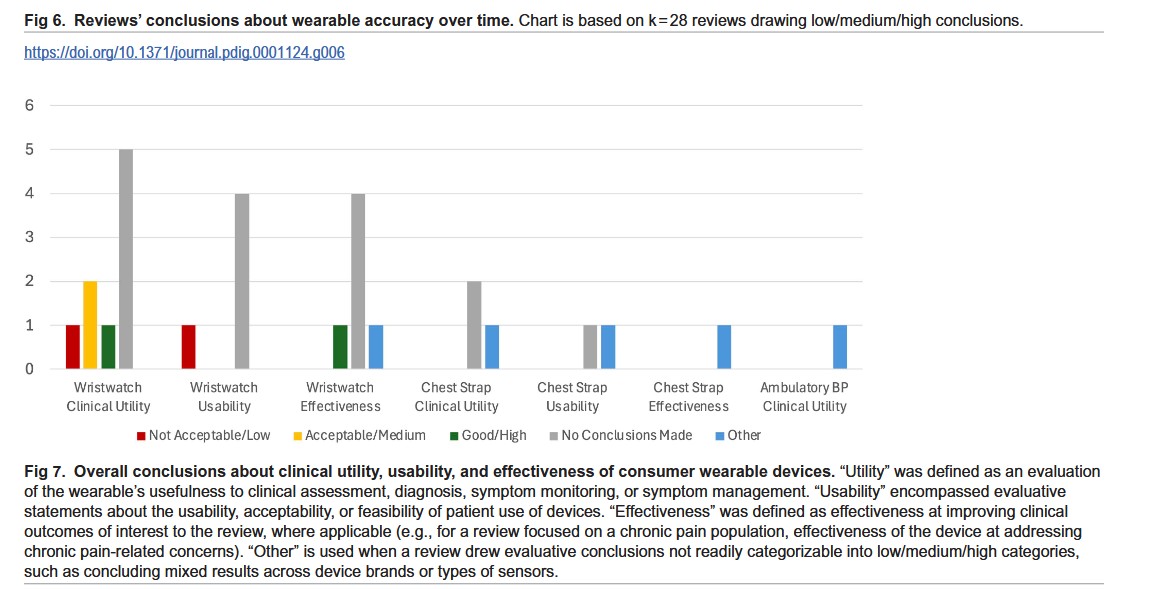
Emory Authors: Can consumer wearables support outpatient health monitoring for patients with post-acute infection syndromes? A systematic umbrella review of accuracy, validity, and clinical utility data

“Consumer health wearables—commercially available health tracking devices such as
smartwatches and other wearable sensors coupled to smartphones—have become
broadly adopted in the United States. A 2024 study found that 44.5% of Americans
reported using a wearable on a regular basis. These devices are designed to
passively and continuously collect physiological data, offering users a convenient,
data-driven, and readily available means of engaging with indicators of their health.
Biometrics tracked by consumer wearables with demonstrated links to health status
include heart rate, heart rate variability, blood oxygen saturation, electrodermal activity, blood pressure, and indices of sleep quantity and quality, among others.”

Continue reading

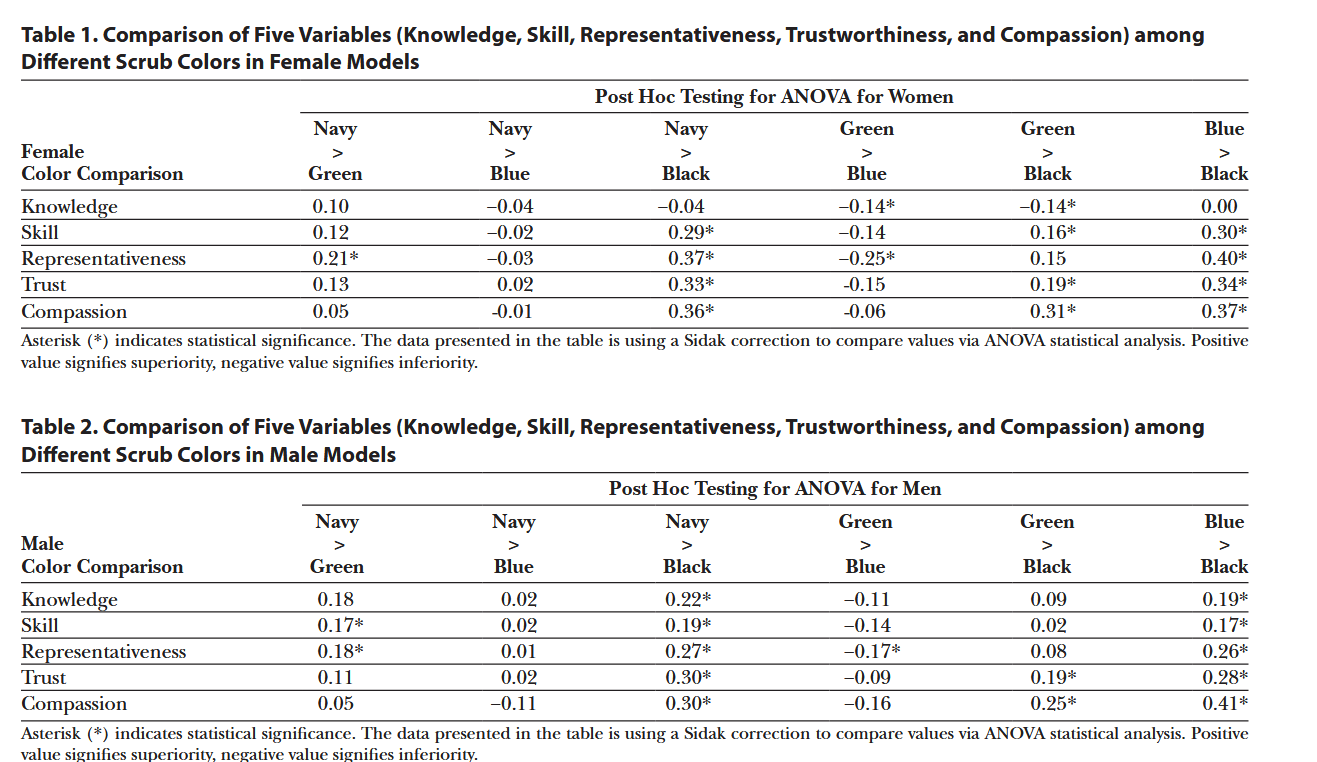
Patient perception of clinicians’ scrub colors

“A 2023 letter published in JAMA Surgery examined patient preferences regarding the color of scrubs physicians wore and found that patients most identified physicians wearing green scrubs as surgeons and those wearing blue scrubs to be the most caring, whereas those wearing black scrubs were associated mostly with negative characteristics (least knowledgeable, skilled, trustworthy, and caring)

Firouzbakht, P. K., Zhang, A., Nguyen, D. C., Slovacek, C., Daytz, A. E., Tanna, N., & Chen, K. (2024). Public Perception of Scrub Color and Style in Plastic Surgery. Plastic and Reconstructive Surgery. Global Open, 12(6), e5888.

Continue reading

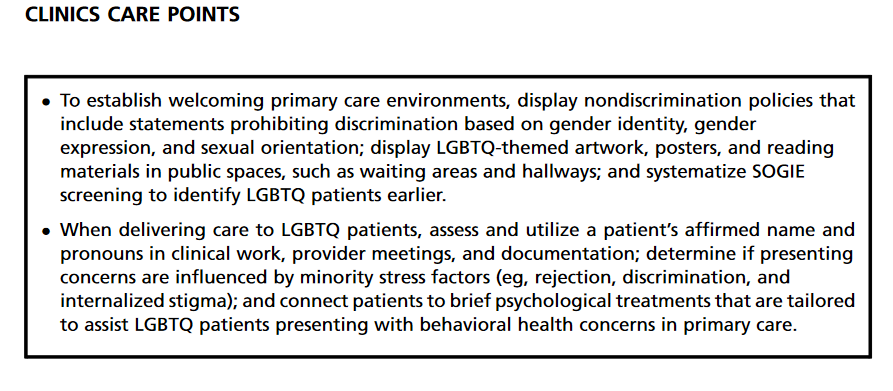
Affirming Care for LGBTQ patients

(Heredia)

Rider, G. N., et al  (2019). The gender affirmative lifespan approach (GALA): A framework for competent clinical care with nonbinary clients. The international journal of transgenderism, 20(2-3), 275–288. 

Earnshaw, V. A., et al  (2017). LGBTQ Bullying: Translating Research to Action in Pediatrics. Pediatrics, 140(4) 

Grasso, C., et al  (2019). Planning and implementing sexual orientation and gender identity data collection in electronic health records. Journal of the American Medical Informatics Association, 26(1), 66-70. 

Dichter, M. E., et al  (2018). Provider perspectives on the application of patient sexual orientation and gender identity in clinical care: a qualitative study. Journal of General Internal Medicine, 33(8), 1359-1365. 

Heredia, D., et al  (2021). LGBTQ-affirmative behavioral health services in primary care. Primary Care: Clinics in Office Practice, 48(2), 243-257.

Achieving patient satisfaction with discharge instructions

(Kang)

“Discharge education is important for general surgical patients to participate and
regain control of their life after discharge. Overcoming barriers to discharge education is essential to enhance patient comprehension and recollection of the information. Discharge education delivered using a patient‐centred approach provides opportunity to engage patients,
foster patient understanding and enhance patients’ ability to self‐manage and could in turn improve their post-discharge outcomes.” (Kang)

Continue reading

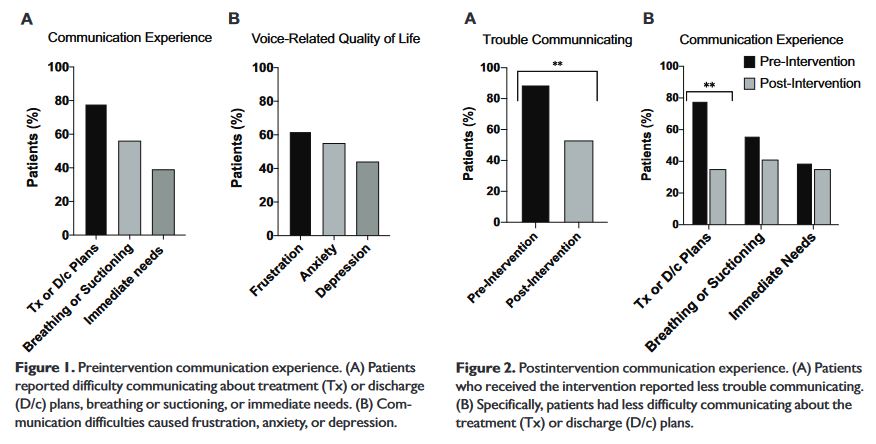
Communicating with intubated or tracheostomy through technology

“Surgical procedures that render patients acutely aphonic can cause them to experience significant anxiety and distress. Participants in this study included hospitalized patients who
acutely lost the ability to speak due to tracheostomy or total laryngectomy. Acute loss of phonation arising from surgery can be highly distressing for patients, and use of augmentative technology may alleviate some of these challenges by improving communication.”

Haring, C., Farlow, J., Leginza, M., Vance, K., Blakely, A., Lyden, T., . . . Casper, K. (2021). Effect of Augmentative Technology on Communication and Quality of Life After Tracheostomy or Total Laryngectomy. Otolaryngology–head and Neck Surgery., 019459982110137.
Full Text for Emory Users

Continue reading

Communication options with patients under isolation precautions: Covid 19

Fang, J., Liu, Y. T., Lee, E. Y., & Yadav, K. (2020). Telehealth Solutions for In-hospital Communication with Patients Under Isolation During COVID-19. The western journal of emergency medicine, 21(4), 801–806. https://doi.org/10.5811/westjem.2020.5.48165

Reengineering the patient’s environment: Establishment of a “Red Box” to improve communications with patients on isolation precautions. (2019). American Journal of Infection Control : Applied Epidemiology in Health Care Settings and the Community, 47(3), 264.

Communication strategies to mitigate fear and suffering among COVID-19 patients isolated in the ICU and their families. (2020). Heart & Lung., 49(4), 344.

Fan, P., Aloweni, F., Lim, S. H., Ang, S. Y., Perera, K., Quek, A. H., Quek, H., & Ayre, T. C. (2020). Needs and concerns of patients in isolation care units – learnings from COVID-19: A reflection. World journal of clinical cases, 8(10), 1763–1766. https://doi.org/10.12998/wjcc.v8.i10.1763

McNairy, M., Bullington, B., & Bloom-Feshbach, K. (2020). Searching for Human Connectedness During COVID-19. Journal of general internal medicine, 1–2. Advance online publication. https://doi.org/10.1007/s11606-020-06082-9

Vilendrer, S., Patel, B., Chadwick, W., Hwa, M., Asch, S., Pageler, N., Ramdeo, R., Saliba-Gustafsson, E. A., Strong, P., & Sharp, C. (2020). Rapid Deployment of Inpatient Telemedicine In Response to COVID-19 Across Three Health Systems. Journal of the American Medical Informatics Association : JAMIA, 27(7), 1102–1109. https://doi.org/10.1093/jamia/ocaa077