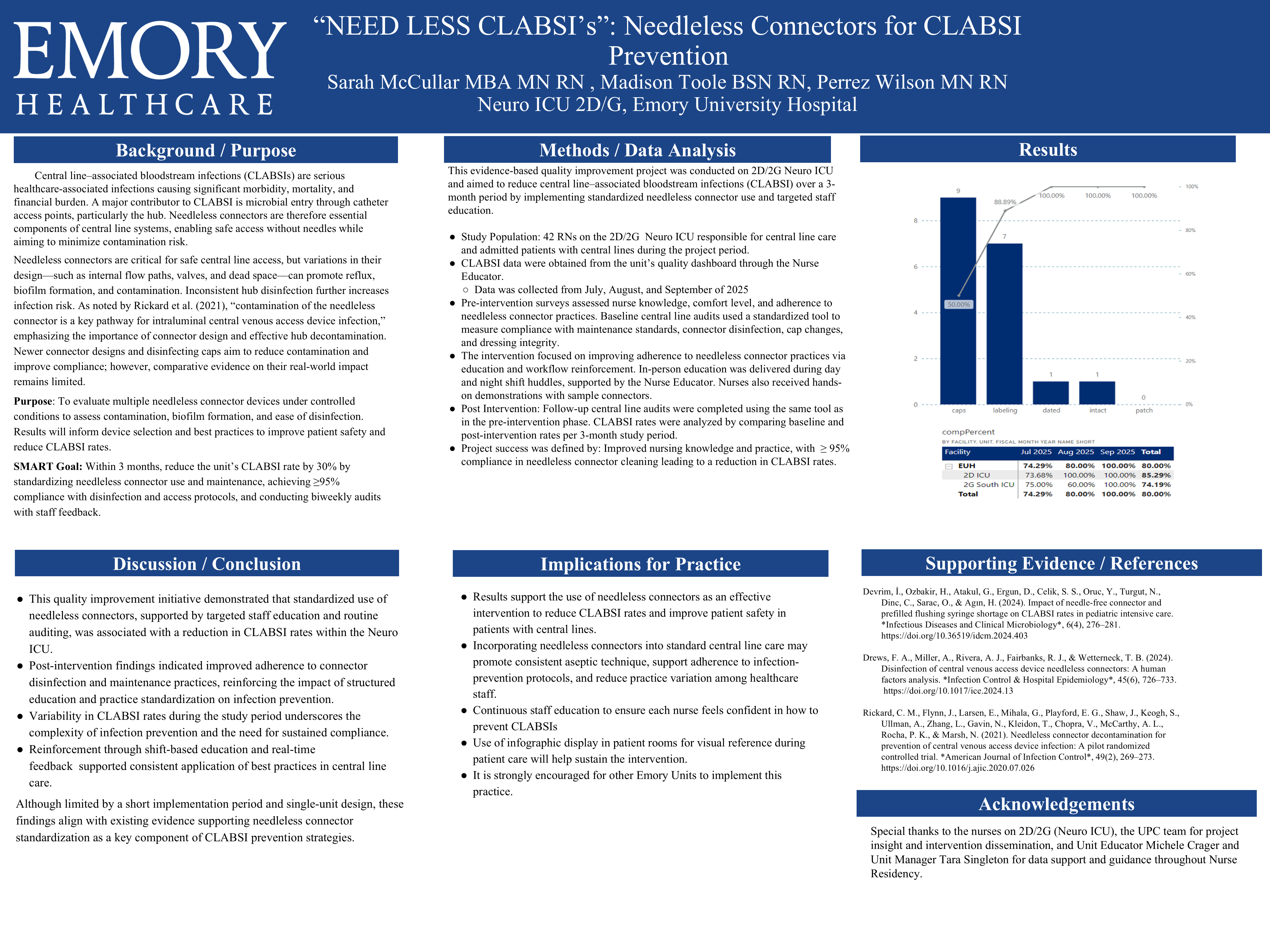
“NEED LESS CLABSI”s: Needleless Connectors for CLABSI Prevention

“Central line–associated bloodstream infections (CLABSIs) are serious healthcare-associated infections causing significant morbidity, mortality, and financial burden. A major contributor to CLABSI is microbial entry through catheter access points, particularly the hub. Needleless connectors are therefore essential components of central line systems, enabling safe access without needles while aiming to minimize contamination risk.
Needleless connectors are critical for safe central line access, but variations in their design—such as internal flow paths, valves, and dead space—can promote reflux, biofilm formation, and contamination. Inconsistent hub disinfection further increases infection risk. As noted by Rickard et al. (2021), “contamination of the needleless connector is a key pathway for intraluminal central venous access device infection,” emphasizing the importance of connector design and effective hub decontamination. Newer connector designs and disinfecting caps aim to reduce contamination and improve compliance; however, comparative evidence on their real-world impact remains limited.”

Sarah McCullar MBA MN RN , Madison Toole BSN RN, Perrez Wilson MN RN Neuro ICU 2D/G, Emory University Hospital

Boots on the Bed: Preventing Heel Pressure Injuries with Heel Soft Boots

Many Intensive Care Unit (ICU) patients suffer from conditions that limit mobility, further increasing their risk of pressure injuries (PI). A multi-center study found that 37.9% of ICU patients had a unit-acquired PI with 12.5% being heel PIs (n = 87), but with unit-based education the unit-acquired PIs reduced to 14.9% with 8.8% being heel PIs (n = 94) (Alshahrani et al., 2024). Several factors contributing to heel PIs can be reduced or eliminated through patient and nurse education on proper heel-offloading strategies, specifically the use of heel soft boots and pillows, as improper positioning can cause friction and contractures (Arslan & Ates, 2024). One study demonstrated the effectiveness of proper heel soft boot utilization, with 1 heel PI in the intervention group (n = 197) compared to 11 heel PIs in the control group (n = 197) over 28 days. (Johnson et al., 2022).

Will Anda, BSN, RN, Ben Haskew, BSN, RN, Alexis Holmes, BSN, RN, Madeeah Muhammad, BSN, RN, Hannah Ross, BSN, RN Emory University Hospital (EUH) 4TN/5TN Cardiovascular Intensive Care Unit (CVICU)

Hot Topics: A comparison of transition experiences and practice readiness of newly licensed nurses with in-person and virtual residency training: A national observational study

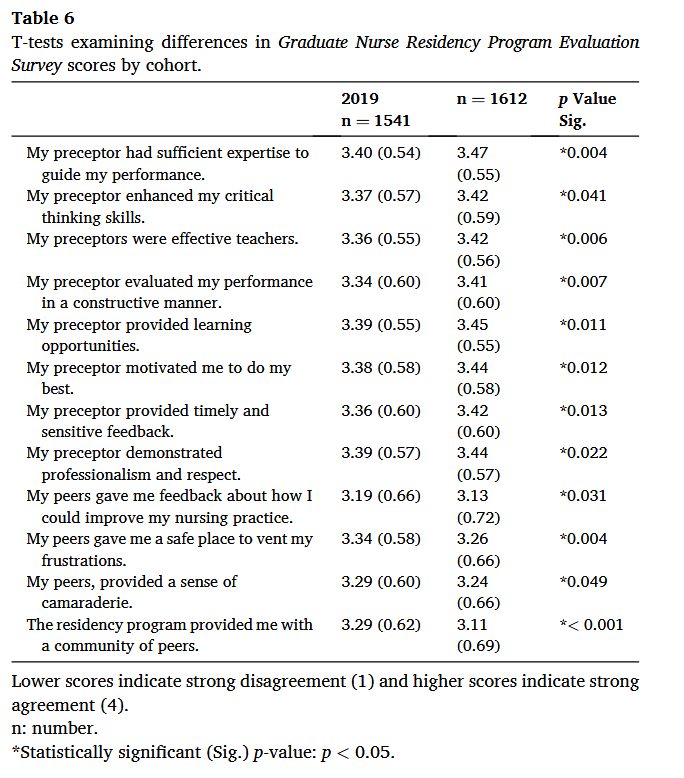
“Traditionally, NRPs in the U.S. are delivered in-person with didactic curriculum, however, in 2014, the Iowa Action Coalition established the Iowa Online Nurse Residency Program (IONRP) intended to produce a more affordable, accessible and adaptable NRP for all clinical settings. This forward-thinking move by Iowa Action Coalition leaders responded to constrained resources encountered in small rural healthcare settings across the state and learning preferences of contemporary learners. Wilson and colleagues conducted a formative evaluation of both online and blended NRP options finding similar outcomes at both six and 12 months for the Casey-Fink Graduate Nurse Experience Survey for both formats.

Continue reading