Emory Authors: Implementing Cognitive Rehearsal Training With Nursing Students to Counter Incivility in the Clinical Setting as Students and New Nurses.

“Incivility is prevalent in the clinical workplace and can lead to reduced self-confidence, adverse health effects, and negative implications for patient care. Cognitive rehearsal training (CRT) serves as a mental plan that individuals can use to counter incivility. This mixed-methods study examined select outcomes related to experiencing incivility for nursing students before and after receiving CRT and early into their professional practice. Many participants described experiencing incivility. Most found CRT useful and implemented the general approach of pausing and thinking before responding. Incorporating CRT into prelicensure education has potential for decreasing the effects of incivility and protecting professional well-being.”

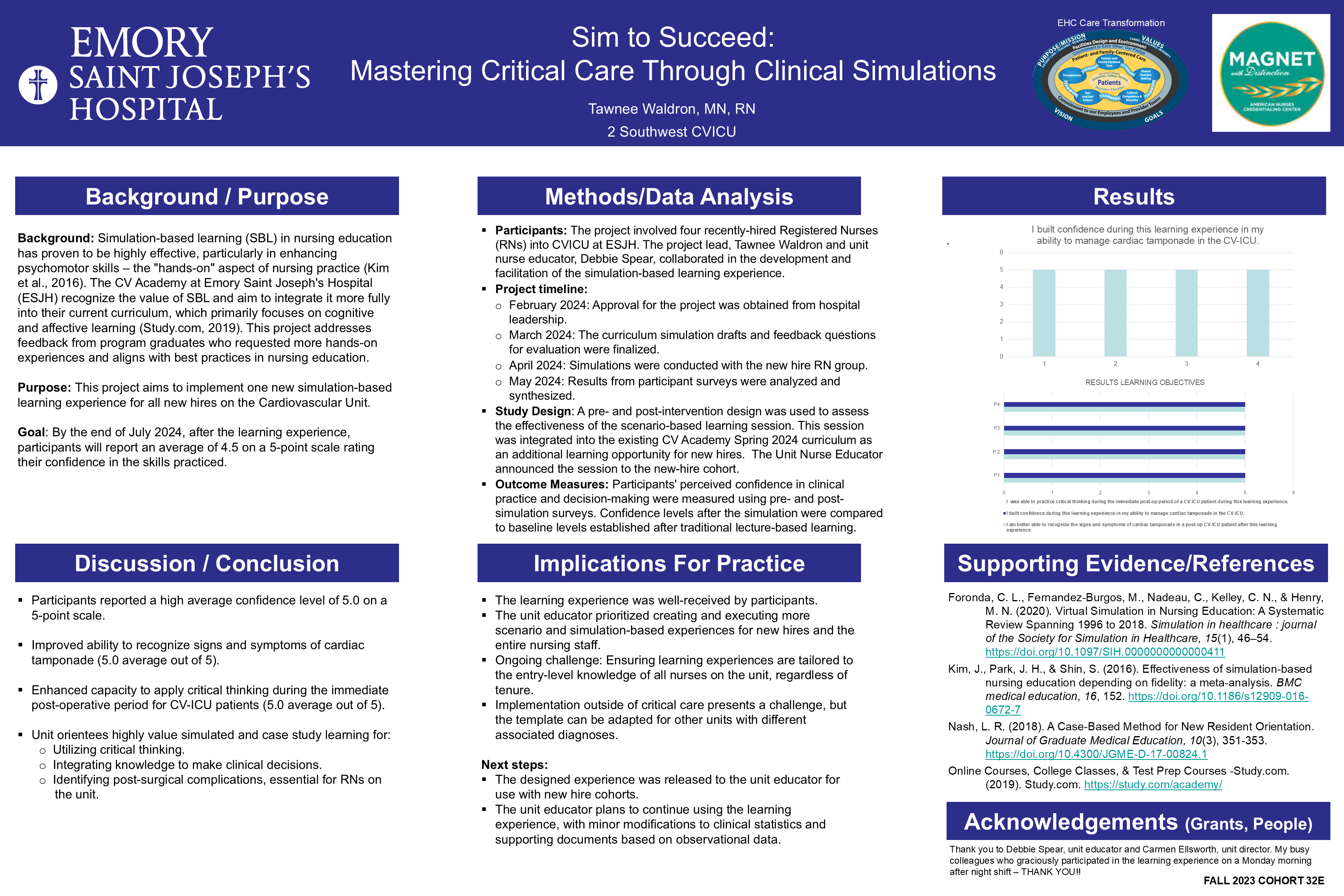
“COGNITIVE REHEARSAL TRAINING Following the training structure developed by Griffin (2004), CRT included one hour of didactic presentation on incivility and its consequences and one hour of interactive small-group role-play, during which participants practiced first
pausing after experiencing an uncivil remark or gesture and then utilizing a scripted response to address the incivility. The pause mitigates emotional reaction, and the use of a scripted response reduces cognitive burden in the moment.”

“SIMULATION-BASED LEARNING EXPERIENCE Students participated in the SBLE one to three weeks following CRT. The objectives of the SBLE were for students to work in small groups to provide care to multiple patients, recognize incivility, and utilize CRT strategies to
deflect incivility. The SBLE was designed following standards of best practice for simulation by a certified health care simulation educator.”
Continue reading →

Emory Authors: Reject the “Practice Readiness Myth”

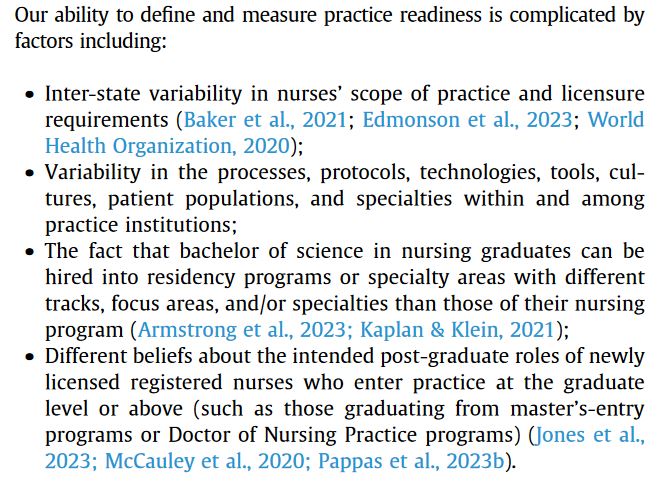
“The nursing profession is engaged in robust national dialogue on how to implement competency-based education. This dialogue often conflates the concept of “competency-based education” with nursing “competence” or “practice readiness.” Our aim is to discuss the potential harms of conflating “competency-based education” with “competence” or “practice readiness.” This commentary explores the possible risks of issue conflation. Risks include (a) suggesting that nurses who have successfully obtained licensure are not “competent” or “ready to practice,” and (b) de-emphasizing the importance of safe and sustainable work environments for new graduate nurses. We discuss the need to separate conversations about “competency-based education” and “practice readiness”; the need to increase the clarity and specificity of discourse surrounding competency-based education; and the need for strategic alignment across academia and practice.”

Continue reading →

Nurse education satisfaction scales

“Engagement with a course may improve academic performance, however, appropriate instruments are needed to measure engagement. Using an exploratory factor analysis approach, the 23-item Student Course Engagement Questionnaire (SCEQ) was used to quantify undergraduate nursing (n = 102), mid-wifery (n = 64), and paramedicine (n = 40) student engagement.” (Brown, et al)

(Brown, et al)

Brown, S., Bowmar, A., White, S., & Power, N. (2017). Evaluation of an instrument to measure undergraduate nursing student engagement in an introductory Human anatomy and physiology course. Collegian, 24(5), 491-497.
Full Text for Emory Users

Continue reading →