Emory Authors: Confidence, commitment, and control: Nursing faculty experiences with teaching LGBTQ+ health

“Nursing education research demonstrates that lesbian, gay, bisexual, transgender and queer (LGBTQ+) health receives scant attention in nursing curricula. The American Nurses Association (ANA) advocates for “Nurse educators that will help fill the void in knowledge by incorporating the issues of the LGBTQ+ populations as part of the curricula”. Calls to
action from scholars and professional nursing organizations demonstrate that while nurse educators are responsible for including LGBTQ+ related content in nursing curricula, these topics are not adequately suffused into nursing training.”

Continue reading →

Emory Authors: Evaluating Stigma Toward Individuals With Substance Use Disorder Among Prelicensure Nursing Students

“Stigma is acutely problematic in health care. The effects of institutional and health care provider stigma toward People with Substance Use Disorder (PWSUD) are sizeable, resulting in undertreatment, resistance to seeking and undergoing treatment, diminished therapeutic alliance, and lower-quality care. In a recent scoping review, Cazalis et al
note that approximately 20% to 51% of health care providers potentially hold negative beliefs/feelings toward PWSUD. As a result, PWSUD underutilize health care services to avoid distressing and stigmatizing experiences within the health care system, such as
decreased health care provider regard and empathy and increased discrimination. Substantial effort is needed to mitigate stigma among health care providers to provide improved quality of care and life for those with SUD.”

Continue reading →

Guidance on preoperative fasting

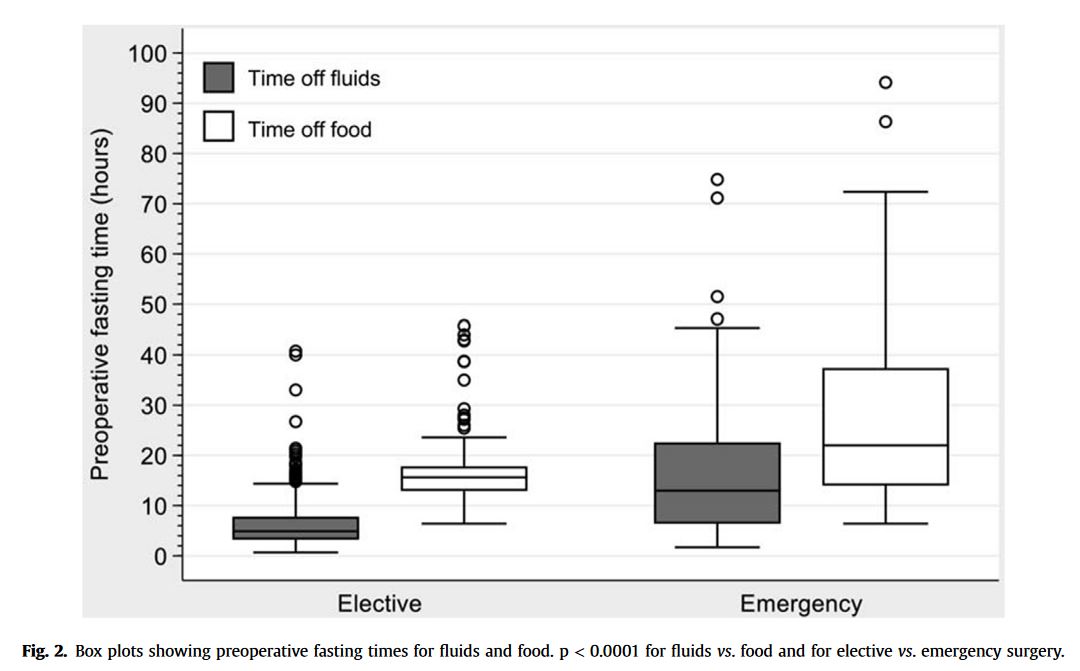
“This multicentre prospective audit from the East Midlands region of the UK demonstrates poor compliance with national and international preoperative fasting guidelines. Patients were fasting from clear fluids and food much longer than is recommended, with the majority of patients undergoing elective surgery fasting >4 h from clear fluids and >12 h from food. Patients undergoing emergency surgery fasted for even more prolonged periods with the
majority fasting >12 h from clear fluids and >24 h from food.” (El-Sharkawy)

El-Sharkawy

El-Sharkawy, A. M. etal (2021). Fasting and surgery timing (FaST) audit. Clinical Nutrition, 40(3), 1405–1412.

Continue reading →

Emory Authors: Telemedicine impact on post-stroke outpatient follow-up in an academic healthcare network during the COVID-19 pandemic.

“Outpatient follow-up after acute stroke plays a signifcant role in optimizing patient care, secondary stroke prevention and reducing morbidity and mortality. As the risk of recurrent stroke is highest within the first six months following stroke, prompt outpatient follow-up is essential for secondary prevention of future complications and minimizing the risk of hospital readmission. Outpatient in-person follow-up represents one strategy. However, the COVID-19 pandemic negatively impacted medical delivery in various specialties, including continuity of care. Telemedicine provides an alternative strategy to evaluate and treat patients after discharge.”

“We found that patients who used teleneurology for follow-up (vs no follow-up) were more likely to be discharged from CSC than PSCs, have private insurance vs Medicare, present to hospital through private transport/taxi (vs EMS or transfer from other hospital), have a history of dyslipidemia, have NIHSS 0-5, receive intraarterial alteplase or thrombectomy, receive antidepressant at discharge and discharge to home. In-person visits (vs no follow-up) were more common among those discharged from CSC, those with family history of stroke, NIHSS 0-5, those ambulating independently with or without device or ambulation with assistance of a person.”

Alabyad, D., et al (2023). Telemedicine impact on post-stroke outpatient follow-up in an academic healthcare network during the COVID-19 pandemic. Journal of Stroke & Cerebrovascular Diseases, 32(8),