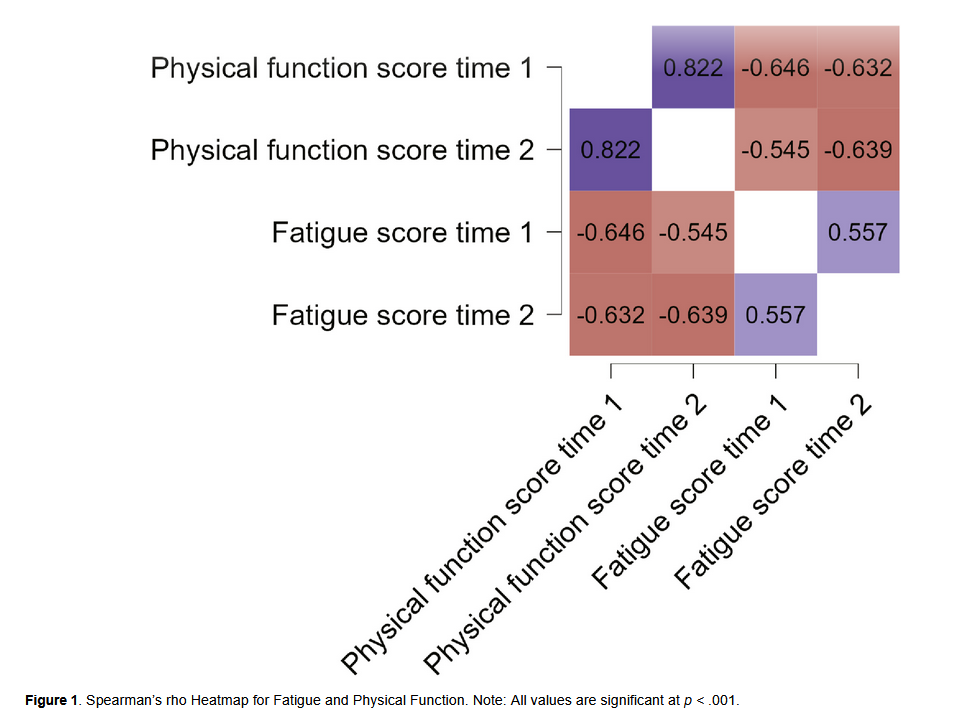
Emory Authors: Metabolomic Associations With Fatigue and Physical Function in Children With Cancer: A Pilot Study

“Fatigue is the most commonly reported symptom in children and adolescents during and after treatment for cancer. Fatigue is associated with decreased quality of life and may contribute to decreased physical function and impede normal childhood development. Currently, the only validated way to measure fatigue is through collection of self-reported data which may not be feasible for all children, specifically younger or sicker children, or those with lower reading levels. Proxy (i.e., parent) reports are often used as substitute measures but may not replace a child’s own report. In the precision medicine era, identifying biomarkers for fatigue would be beneficial in screening for and applying interventions to address this common symptom. A metabolomic approach to unraveling symptom experiences is promising as it allows for investigation of multiple metabolites and pathways at once and can provide insight into the physiological status of an individual at any one point in time.”

Continue reading

JONA Highlights: Redesign of a Clinical Advancement Program to Highlight Clinical Expertise

“Clinical advancement programs (CAPs) provide nurses opportunities to increase engagement in their nursing practice and increased monetary rewards through opportunities for professional development. This increased engagement can lead to improved patient outcomes, healthy practice environments, and increased retention. The redesigned CAP sought to improve upon these tenants by increasing participation through an objective
process while honoring the contributions and expertise of bedside nurses.”

Continue reading

Emory Authors: Nursing’s Commitment to the Principles of Diversity, Equity,and Inclusion

“The history of American nursing is a record of care across social, racial, economic, and geographic lines. The profession has long aligned itself with the needs of the underserved,
sometimes in direct opposition to the social norms of the time. One of the earliest examples are Lillian Wald, a New York nurse and social reformer serving the immigrant community of New York City’s lower east side, and Mary Eliza Mahoney, who became the first African American professionally trained nurse in the United States in 1879. Both, in their own ways,
championed equity and integration in nursing education and care, laying a foundation for social and racial equity in the profession.”

Continue reading

Emory Authors: Confidence, commitment, and control: Nursing faculty experiences with teaching LGBTQ+ health

“Nursing education research demonstrates that lesbian, gay, bisexual, transgender and queer (LGBTQ+) health receives scant attention in nursing curricula. The American Nurses Association (ANA) advocates for “Nurse educators that will help fill the void in knowledge by incorporating the issues of the LGBTQ+ populations as part of the curricula”. Calls to
action from scholars and professional nursing organizations demonstrate that while nurse educators are responsible for including LGBTQ+ related content in nursing curricula, these topics are not adequately suffused into nursing training.”

Continue reading

Drills for low frequency, high acuity events

“Patient outcomes during crisis events directly link to healthcare providers’ swift and appropriate actions, with nurses often the first responders to crisis events within the hospital. Crisis events, such as rapid responses and cardiac arrests, can prompt staff fear and anxiety regardless of years of professional experience, leading to hesitation and low self-confidence in decision-making. To optimize patient outcomes in crisis events, nursing staff should identify a decompensating patient quickly and begin competently performing resuscitation tasks. Previous mock code studies have found alarming delays in resuscitation tasks and overall poor performance; recommendations often discuss the need to focus on the first responders and the tasks being completed before the code team’s arrival Thus, the most critical period of the resuscitation process is left in the hands of nursing staff as first responders.

Bennett, J., et al (2021). Optimizing Nursing Response to Crisis Events through In-Situ Simulation. Medsurg Nursing, 30(2), 108-114.

Continue reading

Emory Authors: Fluid Resuscitation in the Treatment of Acute Pancreatitis: Rate and Volume Controversies

“The aim of the Research to Practice column is to enhance the research critique abilities of both advanced practice registered nurses and emergency nurses, while also aiding in the translation of research findings into clinical practice. Each column focuses on a specific topic and research study. In this article, we used a scenario of left upper quadrant pain to explore the study by de-Madaria et al., titled “Aggressive or moderate fluid resuscitation in acute pancreatitis”.

Continue reading