Interventions to reduce alarm fatigue and nuisance alarms on cardiac units.

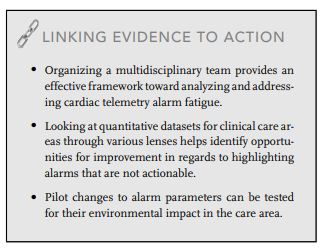
“Health care workers are exposed to an excessive number of alarms that overload their senses, which leads to alarm desensitization. It is estimated that between 80% and 99% of alarms in the clinical areas are false As health care workers become increasingly desensitized to alarms, alarm response rates decrease or diminish all together. Poor alarm response rates result in important alarms being overlooked or ignored because the important alarms are
drowned out by superfluous alarms.” (Srinivasa)

(Srinivasa)
Continue reading

Discharge lounges and patient/system outcomes

“The development of the discharge lounge has demonstrated significant improvement in five areas:
• Higher patient satisfaction scores
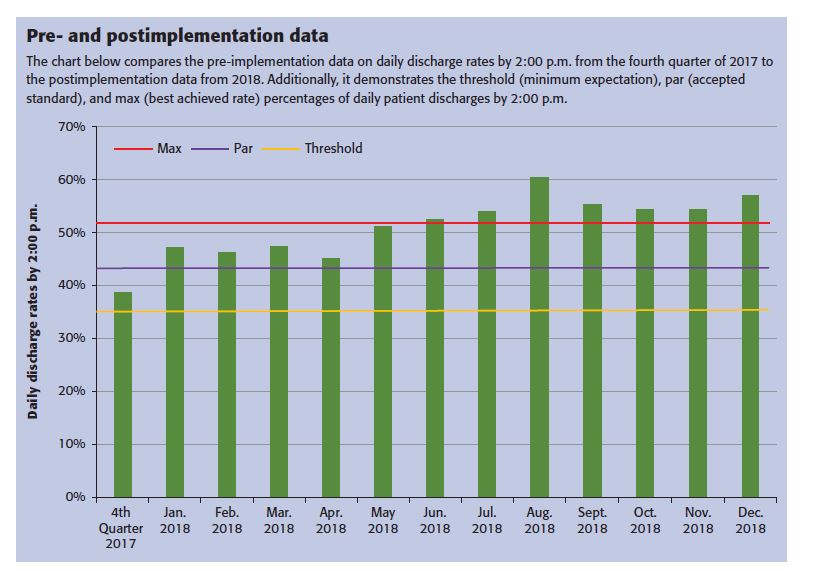
• Increased patient discharges by 2:00 p.m. daily
• Reduced boarding time, or the time patients spend in the ED before being transferred to another unit
• Decreased frequency of 30-day readmissions
• Enhanced identification and correction of potential safety issues”

(Rhodes)

RHODES, J. R., et al (2020). Discharge lounges for optimal outcomes: A quality improvement project. Nursing, 50(12), 65–68.
Full Text for Emory Users

Continue reading

Innovative orientation models in the critical care setting

“Nursing leaders responsible for orientation are challenged by the plethora of nursing knowledge and clinical skills required by nurses to provide safe care to critically ill patients. The goal is for new and experienced nurses to master the complexities of care and advanced technology and support the well-being of all. One way to achieve this goal is to actively engage new-to-practice nurses and experienced nurses in orientation programs designed to
transfer knowledge and skills needed to provide bedside care”.(Monforto)

Monforto, K., et al (2020801). Outcome-Focused Critical Care Orientation Program: From Unit Based to Centralized. Critical Care Nurse., 40(4), 54-64. Full Text for Emory Users

Continue reading

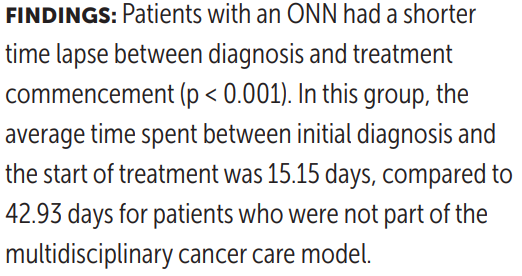
Do oncology nurse-navigators (ONN) improve patient outcomes?

Muñoz R, et al.. Multidisciplinary Cancer Care Model: A Positive Association Between Oncology Nurse Navigation and Improved Outcomes for Patients With Cancer. Clin J Oncol Nurs. 2018 Oct 1;22(5):E141-E145.

Muñoz R, Farshidpour L, Chaudhary UB, Fathi AH. Multidisciplinary Cancer Care Model: A Positive Association Between Oncology Nurse Navigation and Improved Outcomes for Patients With Cancer. Clin J Oncol Nurs. 2018 Oct 1;22(5):E141-E145. doi: 10.1188/18.CJON.E141-E145. PMID: 30239520.
Fulltext for Emory Users

Continue reading

What factors lead to resilient healthcare teams?

Psychological resilience, “the human ability to adapt in the face of tragedy, trauma, adversity, hardship, and ongoing significant life stressors,”[1] is thought to be a state of internal balance where “we are at our best, able to learn, solve problems, and work effectively with others”, resulting in better patient outcomes, and less employee burnout and turnover.[2]

Leadership techniques for team resilience training have been researched. One study found that managers addressed difficult situations by “facilitating teamwork through goalsetting, problem-solving and circumventing the technical systems’ limitations”, noting that increased team collaboration is supported by “team members’ abilities to predict the behavior of each other.”[3] Other strategies include “those that: a) foster connections within the team; b) provide education and training to develop behaviors that assist in controlling or limiting the intensity of stress, or aiding recovery; and c) assist in processing emotion and learning from experiences.”[4]

Additionally, in workshops, medical residents found greater personal strength from the group experience when they reflected on difficult cases and discussed them as a group, along with reviewing the “4 S’s” of resilience (Supports, Strategies, Sagacity [what wisdom did they gain], and Solutions to the problem).[5]

Resiliency is a factor for team success outside of healthcare as well. A Harvard Business Review survey[6] of 2,000 National Collegiate Athletic Association (NCAA) basketball coaches found that,

The “characteristics of a resilient team are:

  • They believe they can effectively complete tasks together.
  • They share a common mental model of teamwork.
  • They are able to improvise.
  • They trust one another and feel safe.”
Continue reading

Executive Leadership During COVID-19

Members of the Advisory Board of the Washington, DC-based Nursing Executive Center offer “5 Executive Actions to Engage Staff Amid COVID-19:

  • Ensure that staff are safe and feel safe when working.
  • Reinvigorate your staff input channels and act on what you can.
  • Do not sugarcoat the challenge ahead.
  • Plan for your worst-case scenarios so you do not go back on even one commitment.
  • Transition your leaders from sprint mode to marathon mode.”

Berkow S, Virkstis K, Herleth A, Whitemarsh K, Rewers L. An Executive Strategy to Support Long-Term Clinician Engagement Amid the COVID-19 Pandemic. J Nurs Adm. 2020 Dec;50(12):616-617. doi: 10.1097/NNA.0000000000000946. PMID: 33181597.
Full text for Emory Users

Continue reading

How can the medical record be used as an effective tool for patient and clinician communication?

“Electronic medical records comprise management of patients’ care, the clinical data repository, order entry and clinical decision suppor. EMRs can contain various components, including patient portals, secure messaging, and computerized physician order entry.”  “Clear communication is important to ensure safe and effective patient care in hospital settings. The adoption of EMRs in hospitals affects the ways in which health professionals communicate with patients and families.”

Manias, E.,et al E. (2020). Patient and family engagement in communicating with electronic medical records in hospitals: A systematic review. International Journal of Medical Informatics., 134, 104036.
Full Text Access for Emory Users
Continue reading