JONA Highlights: Advancing Nursing Workforce Strategy Through a Tiered Academic Partnership Model

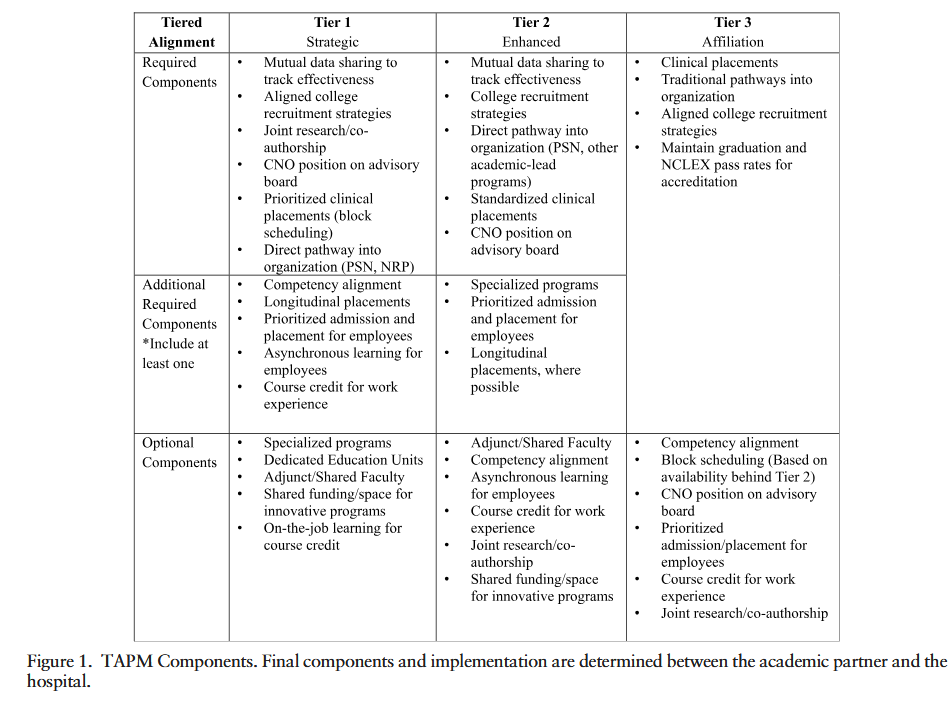
“The discrepancy between the supply and demand of RNs creates pressure on nursing leaders to find innovative solutions to strengthen the nursing workforce and reduce new graduate nurses’ time in orientation. In response, Memorial Hermann Health System leaders developed the Tiered Academic Partnership Model (TAPM). The model provides a strategic framework to align academic partnerships with health system nursing workforce priorities. The TAPM supports strategic, outcomes-driven partnerships between health systems and academic partners. TAPM categorizes partnerships into 3 tiers to optimize clinical placements, improve new graduate nurse readiness, and enhance conversion-to-hire rates. This scalable model fosters intentional collaboration, operational efficiency, and stronger workforce development.”

Continue reading

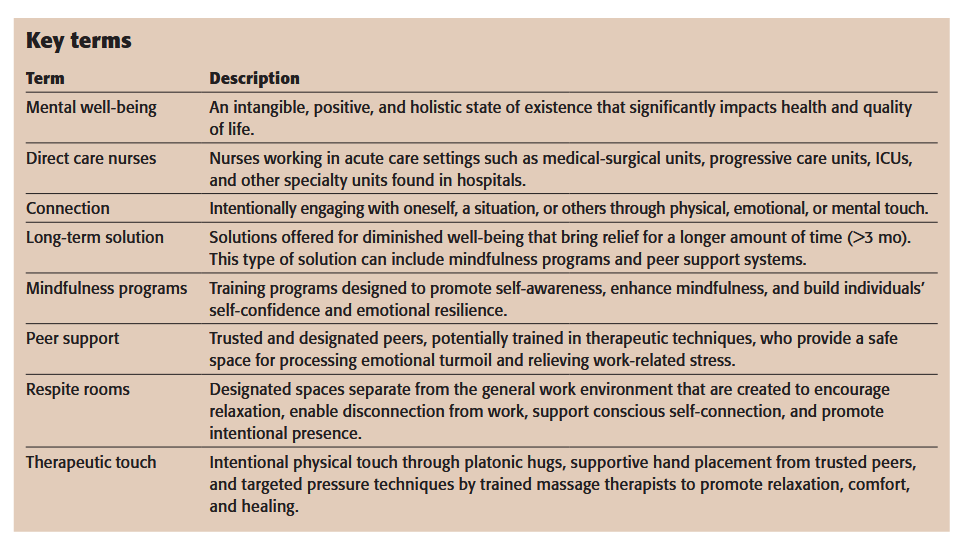
Nursing Highlights: Analyzing the role of connection in nurse well-being

“As healthcare has become more critical and complex, so have nurses’ responsibilities,
expectations, and scopes of practice. Acute care nurses working at the bedside are subject to an immense amount of stress, anxiety, and burnout due to their work environment.
Although respect for the duties and profession of nursing has increased, the demands posed by various physical, mental, emotional, ethical, and moral challenges have also intensified. These challenges affect healthcare workers on both superficial and
systemic levels.”

Continue reading

Emory Authors: Approaches Implemented by Nurse Managers Linked to High-Performing Clinical Care Teams

“Retaining high-quality, healthy, and well-educated nurses is vital to health systems’ capacities to provide patients with safe and evidence-based care. Research consistently demonstrates the benefits to patient safety when hospitals are adequately staffed with qualified nurses. Yet, estimates show over one-third of nurses have expressed some intention to leave their jobs and that approximately 1 in 5 nurses leave their jobs annually.
In the Southeastern United States, nurse turnover and intent to leave are particularly acute relative to elsewhere in the nation. The COVID-19 pandemic exacerbated working conditions for many nurses, accelerating trends with increasing numbers of nurses leaving, or planning to leave their positions, and even the profession. Identifying scalable approaches to promote workplace well-being and foster nurse retention is urgently needed
to stymie continued losses to the nurse workforce.”

Continue reading

Library Resources for Emory Healthcare Staff

Access to library resources has recently been updated bring universal access across EHC, including the EDOU locations.

You can view the available resources at this link: Resources for Emory Healthcare Staff

You can also visit our LibGuide Library Resources for Emory Healthcare Staff. This includes additional resources including tutorials and guides.

New Nursing Continuing Education Page

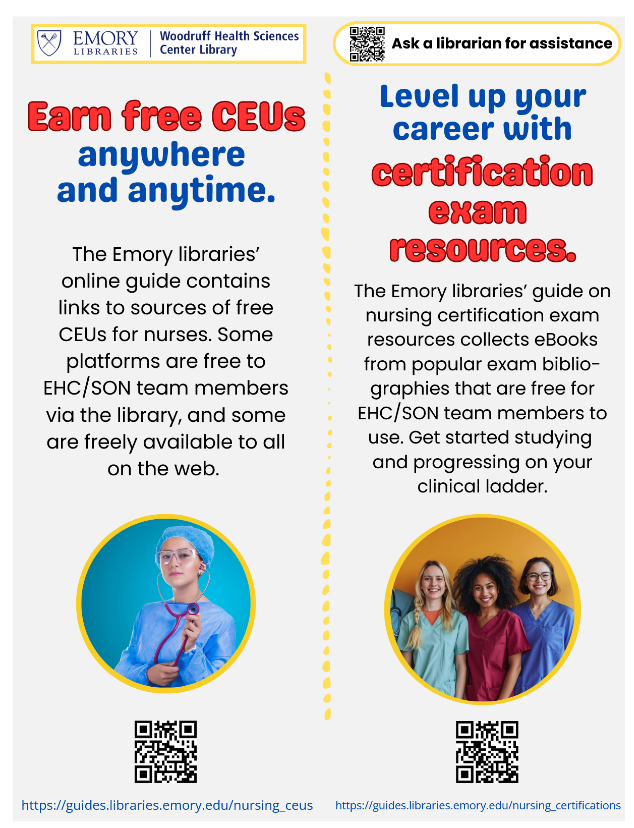
The WHSC Library is committed to providing Emory students, faculty, and healthcare professionals with the resources necessary to prepare for specialty certification exams, license renewal and achieve advancements in your career.

To help support your continuing education and professional development, a new online Nursing Continuing Education guide from the WHSC Library links nurses from Emory Healthcare and the School of Nursing to sources of both free and library-subscribed nursing CEUs to help with license renewal.

This guide, along with the Nursing Certification Resources page, support our Emory healthcare communities and their dedication to patient care and safety.

RN Buddy system for in-hospital scheduled breaks.

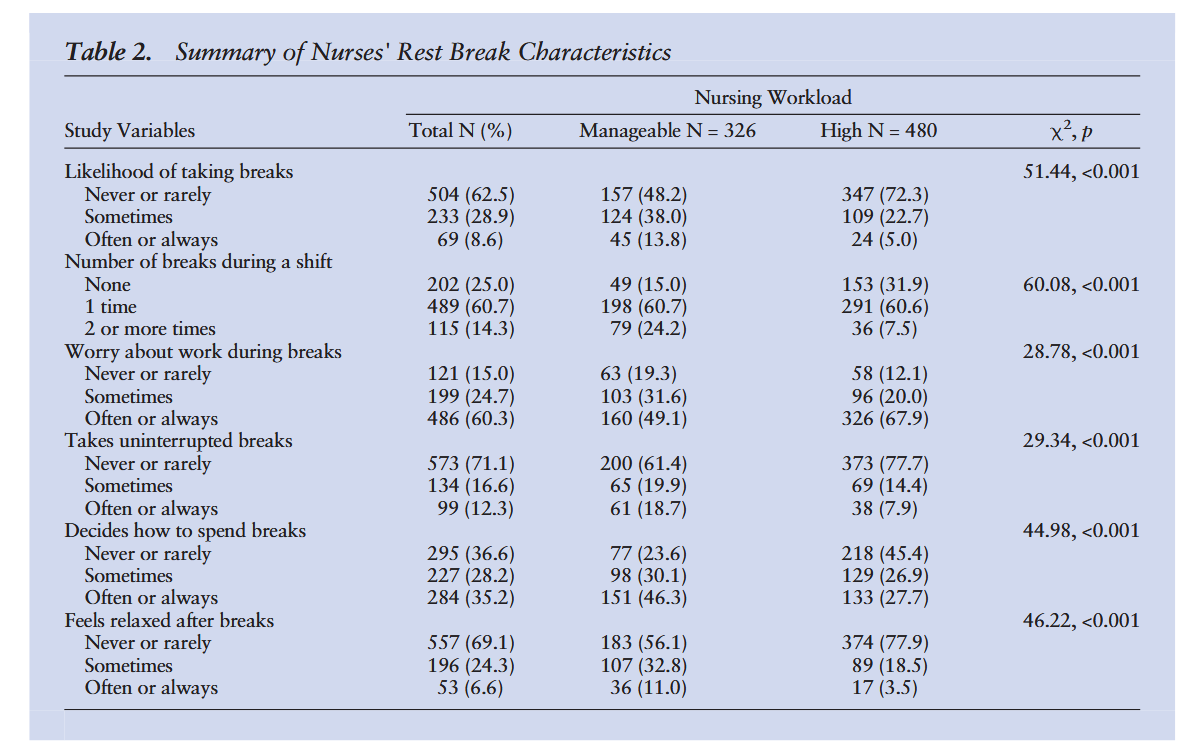
“Within the worked shift, rest breaks are short periods for employees to disengage from work activities and recuperate, at least partially, from the accumulated job strains and fatigue. The duration of breaks may range from a couple of minutes to 1 hour. In the
United States, rest break duration under federal regulations is classified into compensated rest periods (ie, 5-20 minutes) and unpaid meal periods (ie, 30 minutes or more).1 Typically, in the hospital environment, nurses at the bedside are allowed and expected to take 1 uninterrupted 30-minute meal break and offered an around 10- to 15-minute coffee break during a 12-hour shift. Many spend the time to eat, drink, rest, or nap, as well as socialize or listen to music.
Several studies found that taking rest breaks can benefit nurses, patients, and the organization. Nurses who took rest breaks had significantly better acute fatigue recovery and overall well-being, increased job satisfaction, and fewer patient-related adverse events
and intentions to leave the workplace.”

Sagherian, K., Cho, H., & Steege, L. M. (2023). The State of Rest Break Practices Among 12-Hour Shift Hospital Nurses in the United States. The Journal of nursing administration, 53(5), 277–283.

Continue reading

New graduates leaving nursing practice

“During the transition from student to nurse, newly graduated nurses grow and develop as professionals, making this transition a critical period in their new careers. New graduate nurse attrition rate ranges from 30 to 70% in the United States, 28–30% in Canada, and 24.5–35.3% in Korea. Negative experiences during the transitional period, such as theory-practice gaps, not feeling valued or respected, and senior staff’s bullying or violent behaviors are commonly reported reasons for new graduate nurses leaving nursing jobs.”

Kim, J. H., & Shin, H. S. (2020). Exploring barriers and facilitators for successful transition in new graduate nurses: A mixed methods study. Journal of Professional Nursing, 36(6), 560-568.

Continue reading