Interventions to improve medical reconciliation

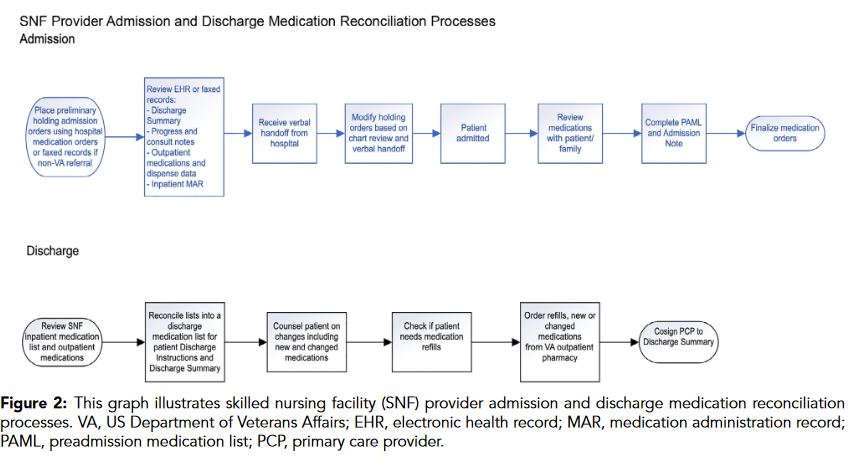
“Unintentional medication discrepancies due to inadequate medication reconciliation pose a threat to patient safety. Skilled nursing facilities are an important care setting where patients are vulnerable to unintentional medication discrepancies due to increased medical complexity and care transitions. This study describes a quality improvement approach to improve medication reconciliation in a skilled nursing facility setting as part of the Multi-Center Medication Reconciliation Quality Improvement Study 2.” (Baughman)
(Baughman)

Baughman, A. W., et al . (2021). Improving Medication Reconciliation with Comprehensive Evaluation at a Veterans Affairs Skilled Nursing Facility. Joint Commission journal on quality and patient safety, 47(10), 646–653. Free Full Text

Continue reading
Discharge lounges and patient/system outcomes

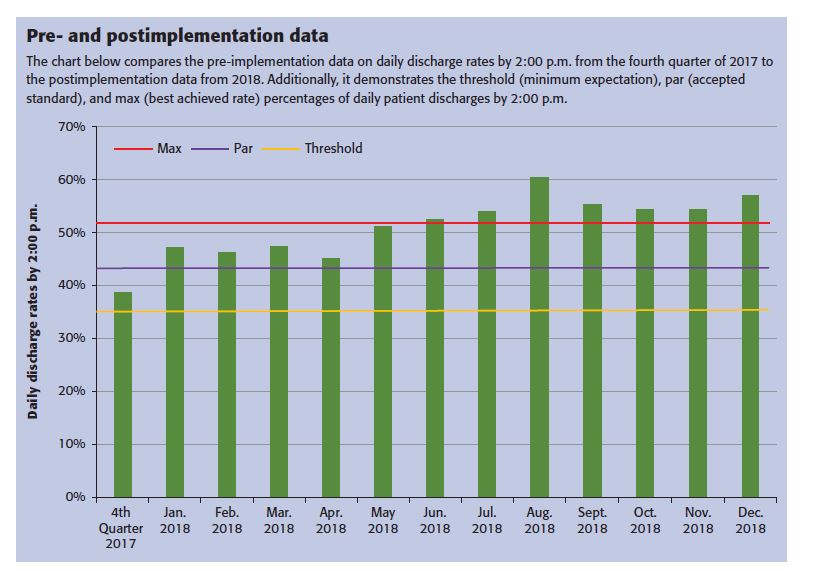
“The development of the discharge lounge has demonstrated significant improvement in five areas:
• Higher patient satisfaction scores
• Increased patient discharges by 2:00 p.m. daily
• Reduced boarding time, or the time patients spend in the ED before being transferred to another unit
• Decreased frequency of 30-day readmissions
• Enhanced identification and correction of potential safety issues”

(Rhodes)

RHODES, J. R., et al (2020). Discharge lounges for optimal outcomes: A quality improvement project. Nursing, 50(12), 65–68.
Full Text for Emory Users

Continue reading

What is the evidence based standard of care for patient monitoring during intravenous immunoglobulin infusion?

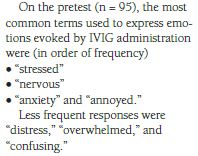
“Due to the infrequent use of I.V. immune globulin (IVIG) in the oncology population, most nurses have little experience with IVIG administration. Multiple-step calculations are often required to administer IVIG based on patient weight. The cost of a single dose of IVIG can be very high, depending on the formulation. Consequently, administering IVIG can be stressful for nurses. This project has important patient safety implications. It highlights apprehension and distress surrounding IVIG administration and can be used as a guide to identify other areas of opportunity to improve nurse comfort and confidence with high adverse reaction profile medications.”

Barnum, T., Bohnenkamp, C., & Haas, S. (2017). A nursing protocol for safe IVIG administration. Nursing.,47(8), 15-19.
Full Text for Emory Users

Continue reading

What are the barriers and facilitators to the sustainability of cancer interventions?

These overarching themes were identified, which when present, were facilitators, and if absent, were barriers:

  1. Evidence (intervention credibility, experienced efficacy, perceived need for intervention)
  2. Context (positive attitude to and capacity for survivorship/FCR care, favourable therapist orientation and flexibility, strong referral pathways)
  3. Facilitation of implementation (intervention/service fit, intervention/patient fit, and training,support, and provided resources). Continue reading