Interventions to reduce alarm fatigue and nuisance alarms on cardiac units.

“Health care workers are exposed to an excessive number of alarms that overload their senses, which leads to alarm desensitization. It is estimated that between 80% and 99% of alarms in the clinical areas are false As health care workers become increasingly desensitized to alarms, alarm response rates decrease or diminish all together. Poor alarm response rates result in important alarms being overlooked or ignored because the important alarms are
drowned out by superfluous alarms.” (Srinivasa)
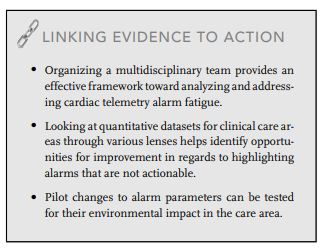
(Srinivasa)
Continue reading

What strategies can reduce alarm fatigue and false alarms in intensive care units?

“Alarms are specifically designed to cause cognitive distress and capture the attention of clinicians’ caring for multiple patients to a change warranting clinician awareness, closer assessment, and supportive intervention. In the current monitor paradigm with existing widely distributed technology, clinicians must interrupt a task when an alarm activates, identify the patient and device alarming, determine if it is actionable or non-actionable, and the type of action required. Alarm fatigue occurs when non-actionable alarms are in the majority, and clinicians develop decreased reactivity, causing them to “tune out” or ignore the alarms.”

Continue reading