Prevention of pressure ulcers for patients undergoing endoscopy procedures.

“Patient positioning during gastrointestinal endoscopic procedures has received minimal attention compared with surgical procedures performed in the surgical setting. However, prolonged endoscopic interventions on patients and the increasing requirement for general anesthesia have changed to need for patient positioning guidelines. It is crucial to establish positioning guidelines for endoscopic procedures in supine, prone, and lateral positions.
These new patient positioning guidelines during gastrointestinal endoscopic procedures should become part of national endoscopy practice standards and the education curriculum of endoscopy nurses.” (Meeusen)
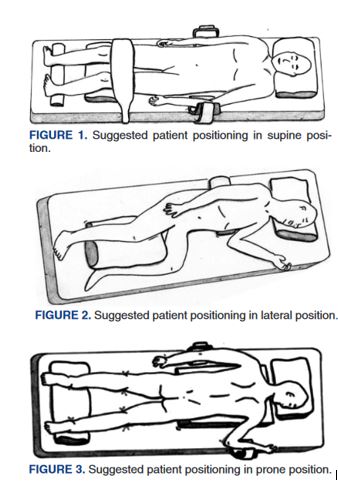
(Meeusen)
Continue reading

Prevention and Treatment of Pressure Ulcers: Clinical Practice Guideline

Prevention and Treatment of Pressure Ulcers: Clinical Practice Guideline

Developed by the National Pressure Ulcer Advisory Panel, the European Pressure Ulcer Advisory Panel and the Pan Pacific Pressure Injury Alliance, this guideline presents a comprehensive review and appraisal of the best available evidence to the assessment, diagnosis, prevention and treatment of pressure ulcers. This is a general guide to appropriate clinical practice, to be implemented by qualified health professionals subject to their clinical judgment and the patient’s personal preferences and available resources.

Criteria for unavoidable pressure ulcers

Seven articles were found that provide information on criteria for unavoidable pressure ulcers.

In order to be able to use the Find it @ Emory button within article entries to look at the full text, please use these instructions to access the collection.
1. Go to the Woodruff Health Sciences Center Library’s homepage at http://health.library.emory.edu/
2. Click on “PubMed.”
3. Copy and paste the url into the address bar of your browser: https://www.ncbi.nlm.nih.gov/myncbi/collections/54337732/?reload=updatePermissionSuccess

Vasopressor agents and development of pressure ulcers

Five articles were found that provide evidence on patients’ usage of vasopressor agents and subsequent development of pressure ulcers.

In order to be able to use the Find it @ Emory button within article entries to look at the full text, please use these instructions to access the collection.
Go to the Woodruff Health Sciences Center Library’s homepage at http://health.library.emory.edu/
Click on “PubMed.”
Copy and paste the url into the address bar of your browser: https://www.ncbi.nlm.nih.gov/sites/myncbi/1HMKnKhQm_d5i/collections/54337604/public/

Scheduled turning for pressure ulcers

Evaluating optimal patient-turning procedures for reducing hospital-acquired pressure ulcers (LS-HAPU): Study protocol for a randomized controlled trial. (n.d.). Trials., 17, Trials. , 2016, Vol.17.

Hsiao, R., Mi, Z., Yang, B., Kau, L., Bitew, M., & Li, T. (2015). Body posture recognition and turning recording system for the care of bed bound patients. Technology and Health Care., 24 Suppl 1, S307-S312.

Behrendt, R., Ghaznavi, A., Mahan, M., Craft, S., & Siddiqui, A. (n.d.). Continuous bedside pressure mapping and rates of hospital-associated pressure ulcers in a medical intensive care unit. American Journal of Critical Care., 23(2), 127-133.

Ostadabbas, S., Yousefi, R., Nourani, M., Faezipour, M., Tamil, L., & Pompeo, M. (2012). A resource-efficient planning for pressure ulcer prevention. IEEE Transactions on Information Technology in Biomedicine : A Publication of the IEEE Engineering in Medicine and Biology Society., 16(6), 1265-1273.

Pressure Sores. Hagger, Christina [BA (Hons), MBA, PhD]. [Consumer Information Sheets] 2010

impact of use of diapers in development of pressure ulcer and other skin related issues

Articles dated within the last ten years that are specific to the topic based on skimming the full text:

Sugama, Junko, et al. “Efficacy of an improved absorbent pad on incontinence-associated dermatitis in older women: cluster randomized controlled trial.” BMC Geriatrics 12(2012):22-22.

Shannon, Ronald J, LynneBrown, and DebashishChakravarthy. “Pressure Ulcer Prevention Program Study: a randomized, controlled prospective comparative value evaluation of 2 pressure ulcer prevention strategies in nursing and rehabilitation centers.” Advances in Skin & Wound Care 25.10 (2012):450-464.

Fader, Mandy, et al. “Management of night-time urinary incontinence in residential settings for older people: an investigation into the effects of different pad changing regimes on skin health.” Journal of clinical nursing 12.3 (2003):374-386.

Shigeta, Yoshie, et al. “Factors influencing intact skin in women with incontinence using absorbent products: results of a cross-sectional, comparative study.” Ostomy/Wound Management 56.12 (2010):26-28, 30-33.

Schindler, Christine A, et al. “Protecting fragile skin: nursing interventions to decrease development of pressure ulcers in pediatric intensive care.” American journal of critical care 20.1 (2011):26-34.

Nix, Denise. “Prevention and treatment of perineal skin breakdown due to incontinence.” Ostomy/Wound Management. 52.4 (2006):26-28.

What is the efficacy of sheepskin and phenytoin for treating or preventing pressure ulcers in acute care patients?

Joanna Briggs Institute EBP Database includes many systematic reviews and evidence summaries on interventions to prevent or treat pressure ulcers.

Sheepskin

Pressure ulcers a prevention of pressure related tissue damage.   2011.  [Technical Reports – Joanna Briggs]]
Reviews studies on use of sheepskin

McInnes E, et al.  Support surfaces for pressure ulcer prevention.  Cochrane Database Syst Rev. 2011 Apr 13;(4):CD001735. doi: 10.1002/14651858.CD001735.pub4.

Studies in PubMed published since these systematic reviews

Phenytoin

A search of PubMed retrieved some systematic reviews and original studies evaluating use of phenytoin in pressure ulcer management.

pressure ulcers AND phenytoin

Systematic reviews in the search results include:

Reddy M. Pressure ulcers. Clin Evid (Online). 2011 Apr 28;2011. doi:pii: 1901.
Review. PubMed PMID: 21524319; PubMed Central PMCID: PMC3217823.

Mao CL, Rivet AJ, Sidora T, Pasko MT. Update on pressure ulcer management and
deep tissue injury. Ann Pharmacother. 2010 Feb;44(2):325-32. doi:
10.1345/aph.1M315. Epub 2010 Jan 5. Review. PubMed PMID: 20118142.

Cullum N, Petherick E. Pressure ulcers. Clin Evid (Online). 2008 Mar 19;2008.
doi:pii: 1901. PubMed PMID: 19450317; PubMed Central PMCID: PMC2907959.

Reviewed 4/20/14 AA