Emory Authors: Telemedicine impact on post-stroke outpatient follow-up in an academic healthcare network during the COVID-19 pandemic.

“Outpatient follow-up after acute stroke plays a signifcant role in optimizing patient care, secondary stroke prevention and reducing morbidity and mortality. As the risk of recurrent stroke is highest within the first six months following stroke, prompt outpatient follow-up is essential for secondary prevention of future complications and minimizing the risk of hospital readmission. Outpatient in-person follow-up represents one strategy. However, the COVID-19 pandemic negatively impacted medical delivery in various specialties, including continuity of care. Telemedicine provides an alternative strategy to evaluate and treat patients after discharge.”

“We found that patients who used teleneurology for follow-up (vs no follow-up) were more likely to be discharged from CSC than PSCs, have private insurance vs Medicare, present to hospital through private transport/taxi (vs EMS or transfer from other hospital), have a history of dyslipidemia, have NIHSS 0-5, receive intraarterial alteplase or thrombectomy, receive antidepressant at discharge and discharge to home. In-person visits (vs no follow-up) were more common among those discharged from CSC, those with family history of stroke, NIHSS 0-5, those ambulating independently with or without device or ambulation with assistance of a person.”

Alabyad, D., et al (2023). Telemedicine impact on post-stroke outpatient follow-up in an academic healthcare network during the COVID-19 pandemic. Journal of Stroke & Cerebrovascular Diseases, 32(8),
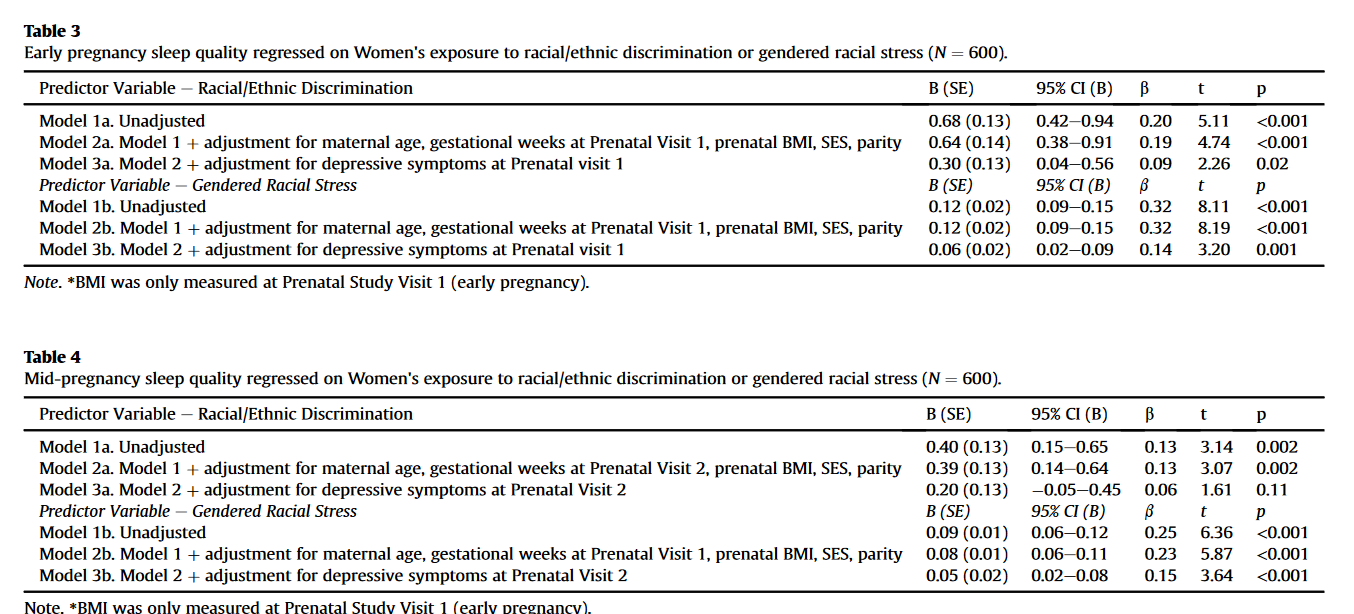
Emory Authors: Poor sleep quality in pregnant Black American women.

“Heightened exposure to racial/ethnic discrimination is associated with poorer sleep health
among non-pregnant adults. This relationship has received limited research attention among pregnant women, despite the importance of prenatal sleep quality for optimal maternal and child health outcomes.”

Continue reading

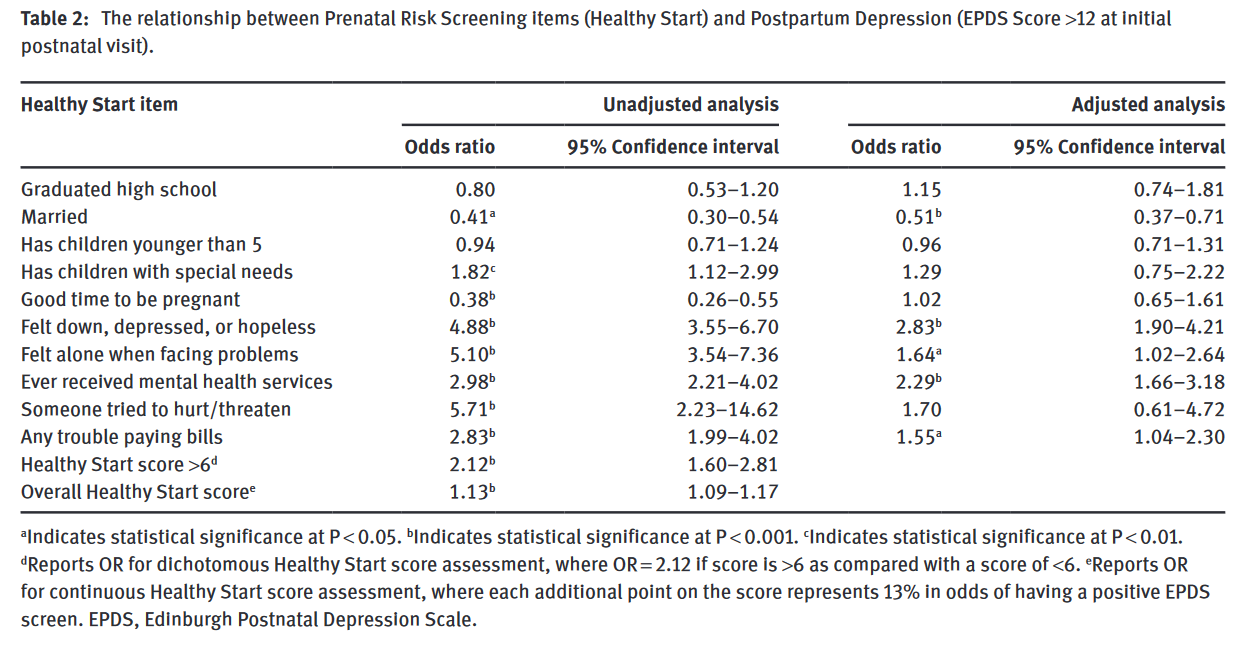
What are the predictors for risk of postpartum depression?


Assessing the utility of the Healthy Start Screen to predict an elevated Edinburgh Postnatal Depression Scale score.(includes abstract) Padilla, Mikela M.; Roussos-Ross, Dikea; Goodin, Amie J. Journal of Perinatal Medicine, Jun2020; 48(5): 483-487. 5p. (Article – research, tables/charts) ISSN: 0300-5577

Padilla
Continue reading

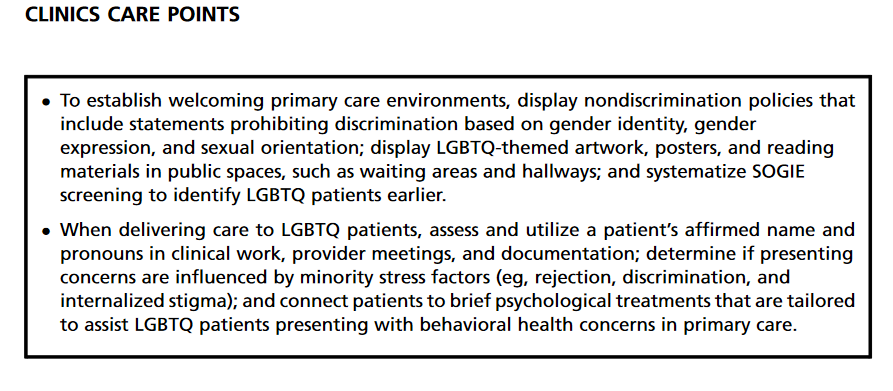
Affirming Care for LGBTQ patients

(Heredia)

Rider, G. N., et al  (2019). The gender affirmative lifespan approach (GALA): A framework for competent clinical care with nonbinary clients. The international journal of transgenderism, 20(2-3), 275–288. 

Earnshaw, V. A., et al  (2017). LGBTQ Bullying: Translating Research to Action in Pediatrics. Pediatrics, 140(4) 

Grasso, C., et al  (2019). Planning and implementing sexual orientation and gender identity data collection in electronic health records. Journal of the American Medical Informatics Association, 26(1), 66-70. 

Dichter, M. E., et al  (2018). Provider perspectives on the application of patient sexual orientation and gender identity in clinical care: a qualitative study. Journal of General Internal Medicine, 33(8), 1359-1365. 

Heredia, D., et al  (2021). LGBTQ-affirmative behavioral health services in primary care. Primary Care: Clinics in Office Practice, 48(2), 243-257.

Early discharge and patient acuity

Rice, A. N., et al  (2021). Fast-Tracking Patients in an Academic Hospital to Increase Efficiency and Decrease Discharge Delays: A Process Improvement Plan. Journal of PeriAnesthesia Nursing, 36(6), Full Text for Emory Users 615-621. 


Aicher, B. O., et al  (2019). Reduced length of stay and 30-day readmission rate on an inpatient vascular surgery service. Journal of Vascular Nursing, 37(2), 78-85 Free Full Text .

Venkatesan, C., et al (2016). Outcomes trends for acute myocardial infarction, congestive heart failure, and pneumonia, 2005-2009. Am J Manag Care, 22(1), e9-17. Doyle, D. (2018) Free Full Text.


Chronic care management: Transitional care models for readmission reduction (Doctoral dissertation, Johns Hopkins University). Al Mashalah, H. A. M. A. (2019) Free Full Text

.

Studying The Impacts of Occupancy Rate on Length of Stay and Outcomes At The Emergency Department At The Regina General Hospital (Doctoral dissertation, Faculty of Graduate Studies and Research, University of Regina) Free Full Text

Nissen, K. M. (2021). Operationalizing the ACS NSQUIP® SRC to Impact Surgical 30-Day Readmissions (Doctoral dissertation, Grand Canyon University). Morgan, T. A., et al . (2021) Free Full Text.

Chemical Restraints in mental health settings

“Chemical restraint (CR) (also known as rapid tranquilisation) is the forced (non‐consenting) administration of medications to manage uncontrolled aggression, anxiety, or violence in people who are likely to cause harm to themselves or others.”

Muir, C. E., et al (2020). International research into 22 years of use of chemical restraint: An evidence overview. Journal of Evaluation in Clinical Practice, 26(3), 927–956. Full Text for Emory Users

Continue reading

Phone and personal item confiscation of psychiatric patients

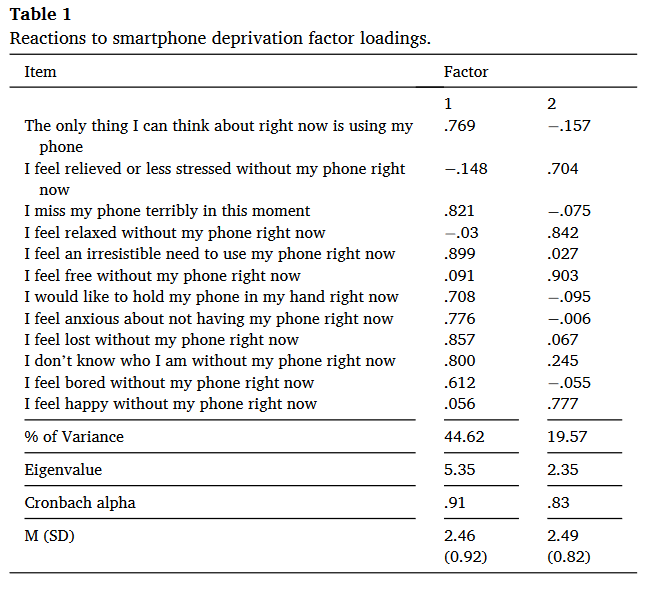
“Because of the diversity of reactions to smartphone deprivation, inpatient psychiatric unit clinicians should be aware of the duality of smartphone use and restriction among adolescents. Fostering youths’ awareness of the advantages and disadvantages of their smartphone use may facilitate behavior change related to problematic phone use after
leaving the hospital.” (Burke)

(Burke)

Burke, T. A., et al . (2022). Reactions to naturalistic smartphone deprivation among psychiatrically hospitalized adolescents. Journal of psychiatric research, 155, 17–23. Full Text for Emory Users

Continue reading