Skin care of the premature neonate

“Premature infants have an underdeveloped epidermal barrier with few cornified layers increasing their risk for greater permeability by noxious agents, high water loss, delayed skin maturation, skin damage, and infection. Their skin is easily torn due to deficiency of dermal structural proteins. Stratum corneum (SC) maturation is rapid upon exposure to a dry environment. At 23 weeks, it is nearly absent, with transepidermal water loss (TEWL) of
75 g/m 2 /h. By week 26, a few cornified layers have formed (TEWL of ~45 g/m 2/h), corresponding essentially to a wounded skin surface. One month later, premature SC was not fully competent, as indicated by significantly higher TEWL (17 g/m 2 /h) than normal, full-term infants. Complete skin maturation may take as long as 9 weeks and longer for complete acid mantle formation.”

Visscher, M. O., Carr, A. N., & Narendran, V. (2021). Premature infant skin barrier maturation: status at full-term corrected age. Journal of Perinatology, 41(2), 232–239.

Continue reading

Emory Authors: Confidence, commitment, and control: Nursing faculty experiences with teaching LGBTQ+ health

“Nursing education research demonstrates that lesbian, gay, bisexual, transgender and queer (LGBTQ+) health receives scant attention in nursing curricula. The American Nurses Association (ANA) advocates for “Nurse educators that will help fill the void in knowledge by incorporating the issues of the LGBTQ+ populations as part of the curricula”. Calls to
action from scholars and professional nursing organizations demonstrate that while nurse educators are responsible for including LGBTQ+ related content in nursing curricula, these topics are not adequately suffused into nursing training.”

Continue reading

Drills for low frequency, high acuity events

“Patient outcomes during crisis events directly link to healthcare providers’ swift and appropriate actions, with nurses often the first responders to crisis events within the hospital. Crisis events, such as rapid responses and cardiac arrests, can prompt staff fear and anxiety regardless of years of professional experience, leading to hesitation and low self-confidence in decision-making. To optimize patient outcomes in crisis events, nursing staff should identify a decompensating patient quickly and begin competently performing resuscitation tasks. Previous mock code studies have found alarming delays in resuscitation tasks and overall poor performance; recommendations often discuss the need to focus on the first responders and the tasks being completed before the code team’s arrival Thus, the most critical period of the resuscitation process is left in the hands of nursing staff as first responders.

Bennett, J., et al (2021). Optimizing Nursing Response to Crisis Events through In-Situ Simulation. Medsurg Nursing, 30(2), 108-114.

Continue reading

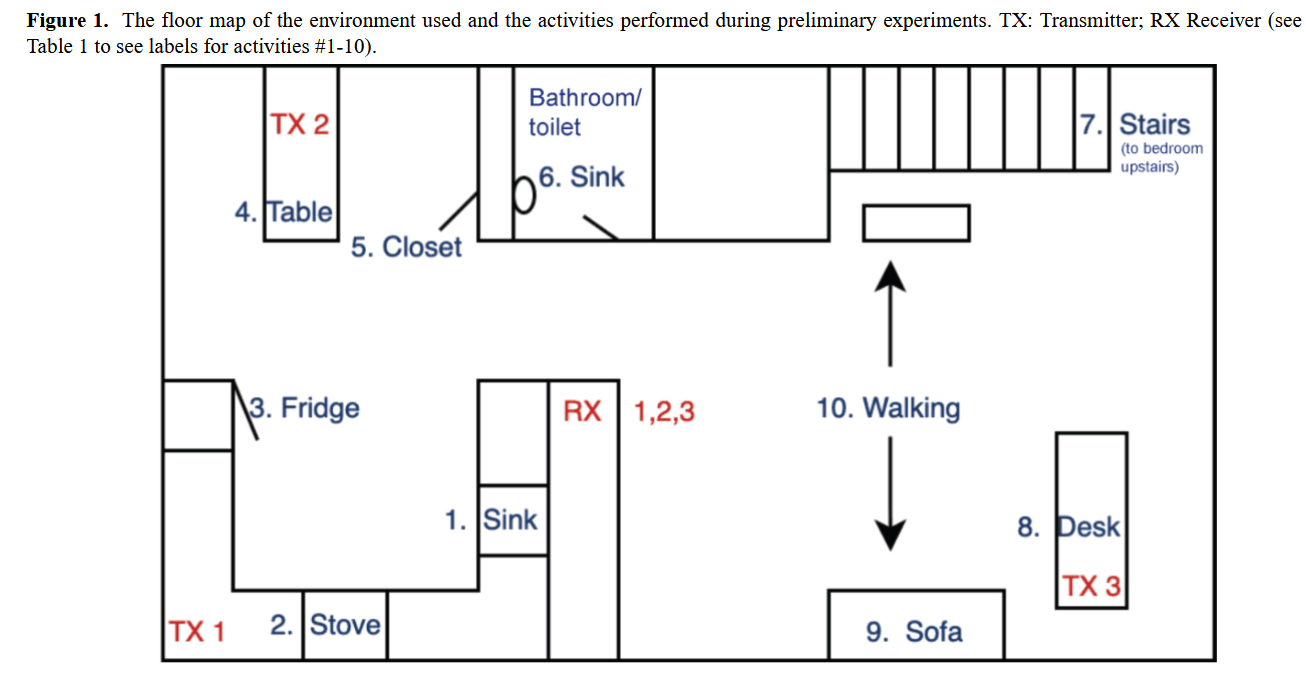
Emory Authors: Using a Device-Free Wi-Fi Sensing System to Assess Daily Activities and Mobility in Low-Income Older Adults

“Older adults belonging to racial or ethnic minorities with low socioeconomic status are at an elevated risk of developing dementia, but resources for assessing functional decline and detecting cognitive impairment are limited. Cognitive impairment affects the ability to perform daily activities and mobility behaviors. Traditional assessment methods have drawbacks,
so smart home technologies (SmHT) have emerged to offer objective, high-frequency, and remote monitoring. However, these technologies usually rely on motion sensors that cannot identify specific activity types. This group often lacks access to these technologies due to limited resources and technology experience. There is a need to develop new sensing technology that is discreet, affordable, and requires minimal user engagement to characterize and quantify various in-home activities.”

Continue reading

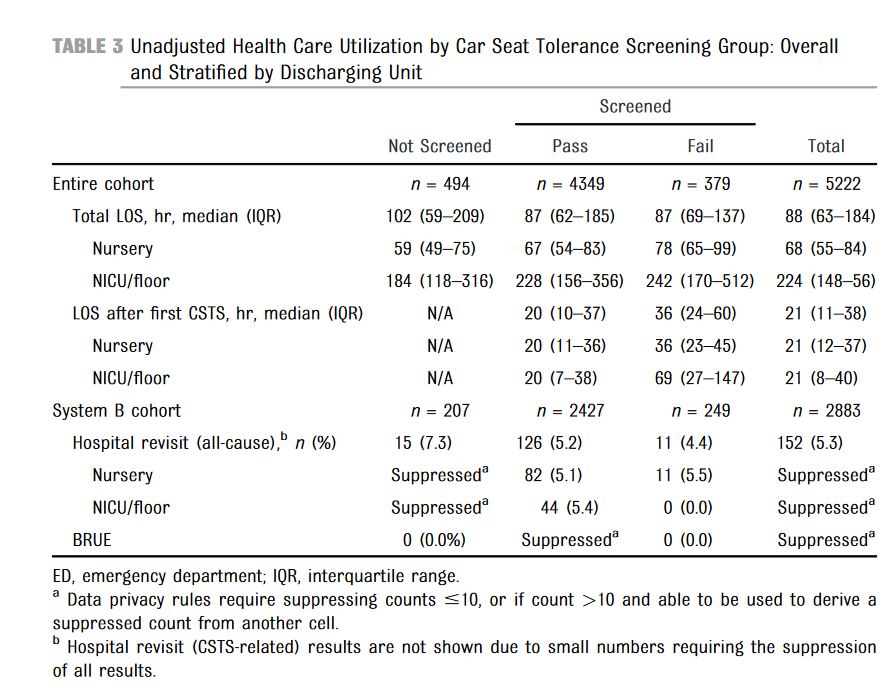
Car Seat Challenges for Low Birth Weight InfantsEarly pumping and postpartum hemorrhage

“Hospital adherence to car seat tolerance screening (CSTS) recommendations was high, and failed screens were relatively common. Routine CSTS was not associated with reduced health care utilization and may prolong hospital LOS, particularly in the NICU/floor. Prospective trials are needed to evaluate this routine practice for otherwise low-risk infants.” (Harrison)

Harrison
Continue reading

Guidance on preoperative fasting

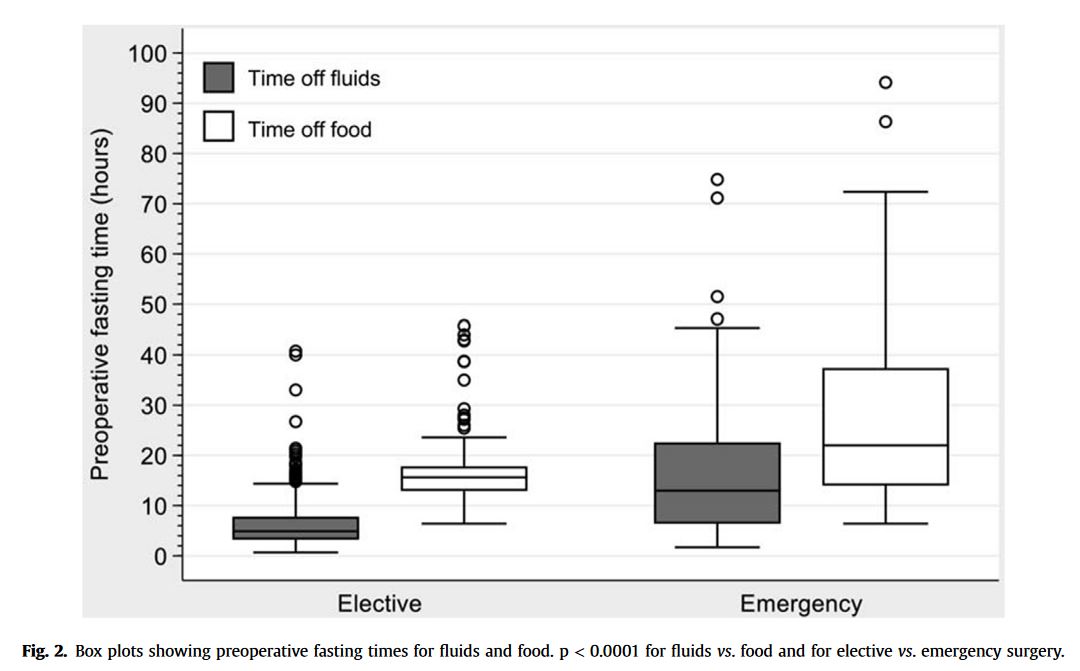
“This multicentre prospective audit from the East Midlands region of the UK demonstrates poor compliance with national and international preoperative fasting guidelines. Patients were fasting from clear fluids and food much longer than is recommended, with the majority of patients undergoing elective surgery fasting >4 h from clear fluids and >12 h from food. Patients undergoing emergency surgery fasted for even more prolonged periods with the
majority fasting >12 h from clear fluids and >24 h from food.” (El-Sharkawy)

El-Sharkawy

El-Sharkawy, A. M. etal (2021). Fasting and surgery timing (FaST) audit. Clinical Nutrition, 40(3), 1405–1412.

Continue reading

Intentional rounding in the inpatient setting

“Intentional rounding has positive outcomes on patient satisfaction and safety. Nurses perceive benefits related to intentional rounding; however, some nurses perceive it as an additional, unnecessary task. The effectiveness of intentional rounding is influenced by external factors including leadership and formal rounding education, workload, ward layout, staffing and experience level.” (Ryan) 

Ryan

Ryan, L., et al (2019). Intentional rounding – An integrative literature review. Journal of Advanced Nursing (John Wiley & Sons, Inc.), 75(6), 1151–1161.

Continue reading