What impact does arsenic exposure have on the development of hepatocellular carcinoma?

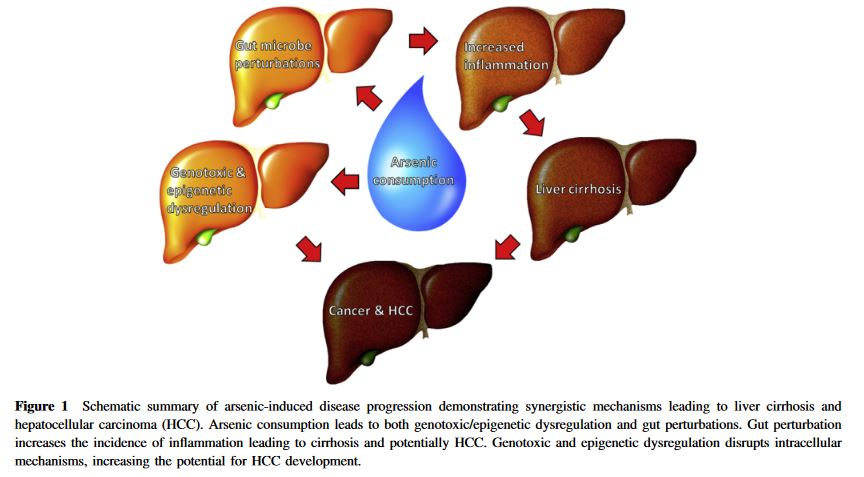
Arsenic is a carcinogenic environmental factor found in food and drinking water around the world. The mechanisms in which arsenic alters homeostasis are not fully understood. Over the past few decades, light has been shed on varying mechanisms in which arsenic induces cancer. Such mechanisms include gut microbe perturbations, genotoxic effects, and pigenetic modification. Increase in inflammation is the major factor in cirrhosis leading to hepatocellular carcinoma.

Choiniere, J., & Wang, L. (2016). Exposure to inorganic arsenic can lead to gut microbe perturbations and hepatocellular carcinoma. Acta pharmaceutica Sinica. B, 6(5), 426–429.
Continue reading
What is the evidence based standard of care for patient monitoring during intravenous immunoglobulin infusion?

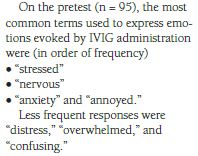
“Due to the infrequent use of I.V. immune globulin (IVIG) in the oncology population, most nurses have little experience with IVIG administration. Multiple-step calculations are often required to administer IVIG based on patient weight. The cost of a single dose of IVIG can be very high, depending on the formulation. Consequently, administering IVIG can be stressful for nurses. This project has important patient safety implications. It highlights apprehension and distress surrounding IVIG administration and can be used as a guide to identify other areas of opportunity to improve nurse comfort and confidence with high adverse reaction profile medications.”

Barnum, T., Bohnenkamp, C., & Haas, S. (2017). A nursing protocol for safe IVIG administration. Nursing.,47(8), 15-19.
Full Text for Emory Users

Continue reading

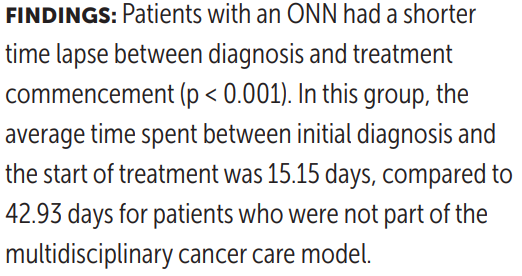
Do oncology nurse-navigators (ONN) improve patient outcomes?

Muñoz R, et al.. Multidisciplinary Cancer Care Model: A Positive Association Between Oncology Nurse Navigation and Improved Outcomes for Patients With Cancer. Clin J Oncol Nurs. 2018 Oct 1;22(5):E141-E145.

Muñoz R, Farshidpour L, Chaudhary UB, Fathi AH. Multidisciplinary Cancer Care Model: A Positive Association Between Oncology Nurse Navigation and Improved Outcomes for Patients With Cancer. Clin J Oncol Nurs. 2018 Oct 1;22(5):E141-E145. doi: 10.1188/18.CJON.E141-E145. PMID: 30239520.
Fulltext for Emory Users

Continue reading

What are modifiable risk factors for cancer?

“An estimated one third to one half of cancers could be prevented by healthy lifestyle choices: eliminating tobacco use, maintaining a healthy body mass index (BMI), moderating alcohol consumption, and maintaining an active lifestyle.”
Arem, Hannah, & Loftfield, Erikka. (2018). Cancer Epidemiology: A Survey of Modifiable Risk Factors for Prevention and Survivorship. American Journal of Lifestyle Medicine., 12(3), 200-210.

Continue reading

What are the various cultural beliefs and practices among minority groups regarding cancer prevention?

From Lott, B. et al. (Reference below)

“Minority youth represent a unique population for public health interventions given the social, economic, and cultural barriers they often face in accessing health services. Interventions to increase uptake of Human Papillomavirus (HPV) vaccination in minority youth have the potential to reduce disparities in HPV infection and HPV-related cancers.

Some studies have found that Black, His-panic, and Asian adolescents were more likely to initiate the HPV vaccine series than their white counterparts, however, were less likely to complete the series

Documented barriers to HPV vaccination of minority youth include knowledge, attitudes, and beliefs among parents, geographic location, distance to vaccination centers,immigrant or foreign-born status, acculturation levels, socioeconomic status, insurance status, and high cost of the vaccine”

Lott, B., Okusanya, B., Anderson, E., Kram, N., Rodriguez, M., Thomson, C., . . . Ehiri, J. (n.d.). Interventions to increase uptake of Human Papillomavirus (HPV) vaccination in minority populations: A systematic review. Preventive Medicine Reports., 19, 101163.

Continue reading

What are the barriers and facilitators to the sustainability of cancer interventions?

These overarching themes were identified, which when present, were facilitators, and if absent, were barriers:

  1. Evidence (intervention credibility, experienced efficacy, perceived need for intervention)
  2. Context (positive attitude to and capacity for survivorship/FCR care, favourable therapist orientation and flexibility, strong referral pathways)
  3. Facilitation of implementation (intervention/service fit, intervention/patient fit, and training,support, and provided resources). Continue reading

Using ice to prevent mouth sores during chemotherapy.

Reis, Paula; Ciol, Marcia; Melo, Nilce; Figueiredo, Paulo; Leite, André; Manzi, Natália; Dos Reis, Paula Elaine Diniz; Ciol, Marcia A; de Melo, Nilce Santos; Figueiredo, Paulo Tadeu de Souza; Leite, André Ferreira; Manzi, Natália de Melo Chamomile infusion cryotherapy to prevent oral mucositis induced by chemotherapy: a pilot study. Source: Supportive Care in Cancer (SUPPORT CARE CANCER), Oct2016; 24(10): 4393-4398. (6p)

Karagözoglu S; Ulusoy MF Chemotherapy: the effect of oral cryotherapy on the development of mucositis.
Journal of Clinical Nursing (J CLIN NURS), Jul2005; 14(6): 754-765. (12p)

Nikoletti S; Hyde S; Shaw T; Myers H; Kristjanson LJ Comparison of plain ice and flavoured ice for preventing oral mucositis associated with the use of 5 fluorouracil. Journal of Clinical Nursing (J CLIN NURS), Jul2005; 14(6): 750-753. (4p)

Taheri JB; Razavi SM; Hajir S; Vaziri P; Bakhtiari S Effect of local hypothermia in prevention or reduction of chemotherapy induced mucositis signs.
Journal of Dental School (J DENT SCH), 2009 Autumn; 27(3): 6-6. (1p)

Katrancı, Nilgün; Ovayolu, Nimet; Ovayolu, Ozlem; Sevinc, Alper Evaluation of the effect of cryotherapy in preventing oral mucositis associated with chemotherapy – A randomized controlled trial.
European Journal of Oncology Nursing (EUR J ONCOL NURS), Sep2012; 16(4): 339-344. (6p)

Wodzinski, Amelia Potential Benefits of Oral Cryotherapy for Chemotherapy-Induced Mucositis.
Clinical Journal of Oncology Nursing (CLIN J ONCOL NURS), Oct2016; 20(5): 462-465. (4p)