Skin care of the premature neonate

“Premature infants have an underdeveloped epidermal barrier with few cornified layers increasing their risk for greater permeability by noxious agents, high water loss, delayed skin maturation, skin damage, and infection. Their skin is easily torn due to deficiency of dermal structural proteins. Stratum corneum (SC) maturation is rapid upon exposure to a dry environment. At 23 weeks, it is nearly absent, with transepidermal water loss (TEWL) of
75 g/m 2 /h. By week 26, a few cornified layers have formed (TEWL of ~45 g/m 2/h), corresponding essentially to a wounded skin surface. One month later, premature SC was not fully competent, as indicated by significantly higher TEWL (17 g/m 2 /h) than normal, full-term infants. Complete skin maturation may take as long as 9 weeks and longer for complete acid mantle formation.”

Visscher, M. O., Carr, A. N., & Narendran, V. (2021). Premature infant skin barrier maturation: status at full-term corrected age. Journal of Perinatology, 41(2), 232–239.

Continue reading
Early pumping and effect on breastfeeding

“The benefits of breastfeeding (BF) are universally acknowledged. Breastmilk has nutritional, gastrointestinal, anti-infective, psychological, and long term benefits for intellectual development of the infant. Breastfeeding is one of the most cost-effective measures to reduce neonatal morbidity and mortality in preterm infants.

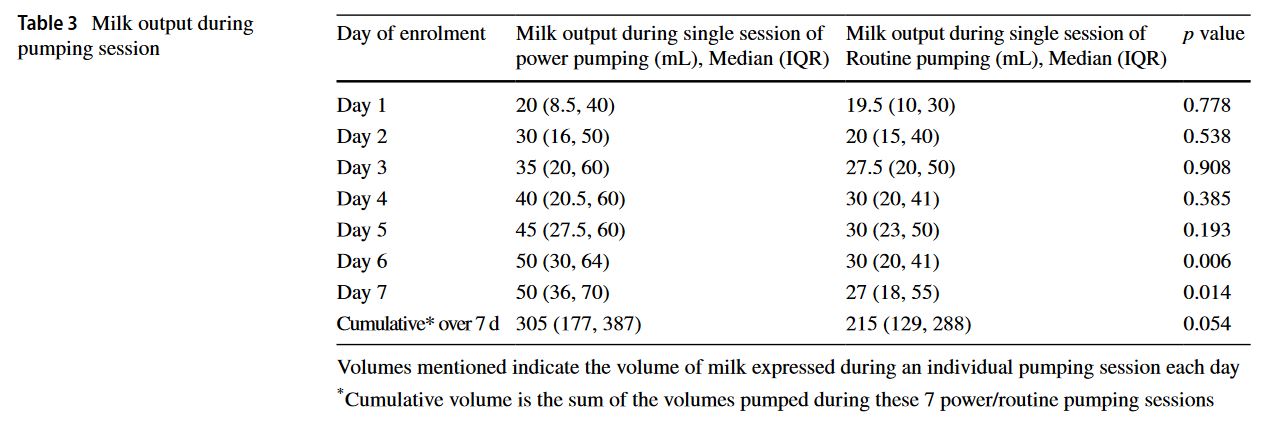
“In this pilot study, short term benefit in the form of significantly increased milk volumes during individual power pumping session was observed. However, power pumping
for 1 wk did not show a statistically significant improvement in the exclusive breastfeeding rates at discharge in mothers of VLBW infants with low milk output compared to routine
pumping.”

Kalathingal, T., et al (2023). Comparison of two pumping strategies to improve exclusive breastfeeding at discharge in mothers of VLBW infants with low milk output-a pilot randomized controlled trial. Indian Journal of Pediatrics, 1-7.

Continue reading

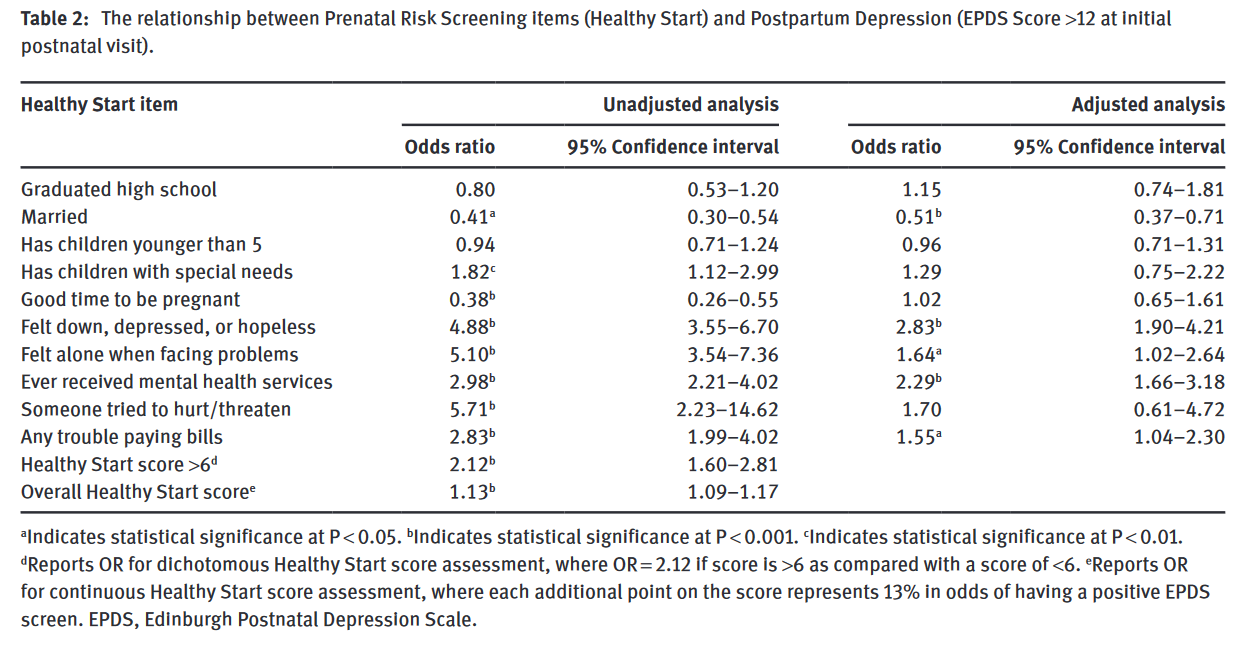
What are the predictors for risk of postpartum depression?


Assessing the utility of the Healthy Start Screen to predict an elevated Edinburgh Postnatal Depression Scale score.(includes abstract) Padilla, Mikela M.; Roussos-Ross, Dikea; Goodin, Amie J. Journal of Perinatal Medicine, Jun2020; 48(5): 483-487. 5p. (Article – research, tables/charts) ISSN: 0300-5577

Padilla
Continue reading

Can donor human milk improve exclusive breastfeeding rates during the birth hospitalization?

“Use of pasteurized donor human milk in the well newborn population has become increasingly common over the last 2 decades. This is in part due to concerns that formula use in the neonatal period is associated with decreased breastfeeding duration as well as concerns about the effect of exposure to formula on infant intestinal microbiota and oxidative stress. In alignment with recommendations by the World Health Organization and the American Academy of Pediatrics , the Joint Commission Perinatal Care Core Measures call for avoiding formula use for breastfed infants during the birth hospitalization but do not discourage the use of DHM. Infants who receive DHM meet the definition of exclusively breast milk fed used by these groups.”

Continue reading