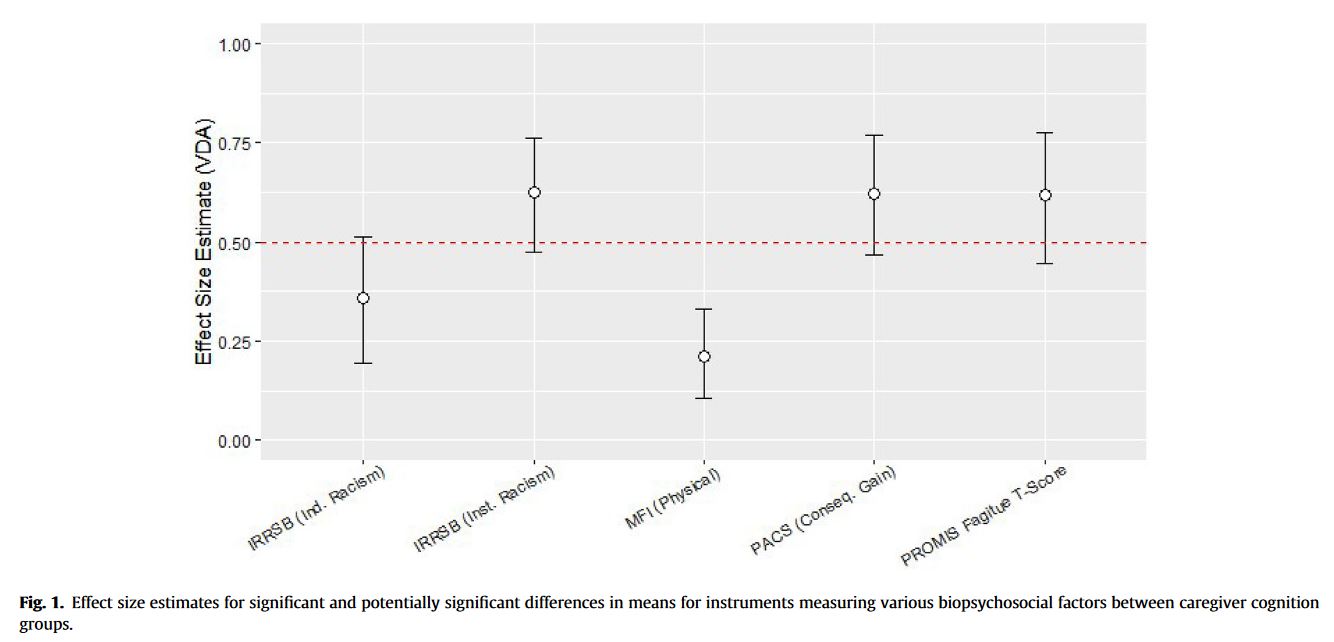
Emory Authors: Factors related to cognitive performance among black caregivers of persons living with a chronic illness: An exploratory study

“While several studies have investigated the impact of informal caregiving on physical and mental health outcomes, there is a gap in the literature concerning the effect of caregiving on cognitive performance, an essential component of independent living and caregiving. The limited research to date predominantly suggests that informal caregiving increases the risk of cognitive impairment and even dementia. This increased risk is related to the stress and
poor sleep associated with the caregiving role, along with various psychosocial, behavioral, and physiological factors that negatively impact caregivers.”

“Despite the increased risk that caregivers have for cognitive impairment, to our knowledge, no studies to date have examined caregiving and cognitive performance among Black caregivers. Black caregivers are the second largest population of caregivers in the U.S.
They face systemic inequities that result in unique challenges and stressors which affect their caregiving roles and compound negative health outcomes. Black caregivers are also more likely to have lower household incomes, experience financial hardship, and are less likely to self-report good physical health.”
Continue reading

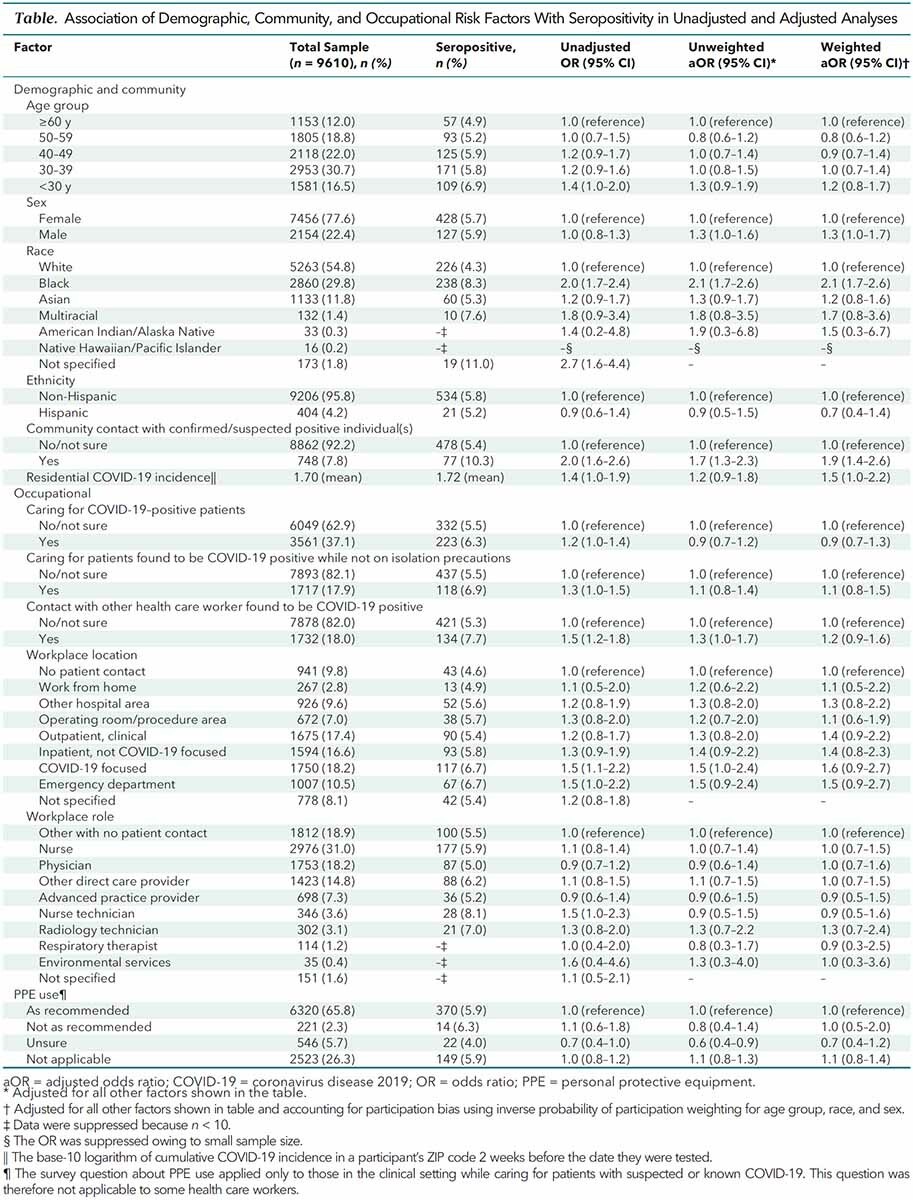
Emory Healthcare: Occupational and Community Risk Factors forSARS-CoV-2 Seropositivity Among Health Care Workers


“Health care workers (HCWs) are presumed to be athigh risk for coronavirus disease 2019 (COVID-19)through occupational exposure to infected patients orcoworkers. Studies have reported a wide range of sero-prevalence of severe acute respiratory syndrome corona-virus 2 (SARS-CoV-2), the virus that causes COVID-19,among HCWs. This variation has in part been attributedto differential risk for exposure in the community. Indeed, recent studies have shown that a substantialnumber of infections among HCWs could not be tracedto occupational exposures and that community expo-sures were as or more strongly associated with infection.”

Continue reading

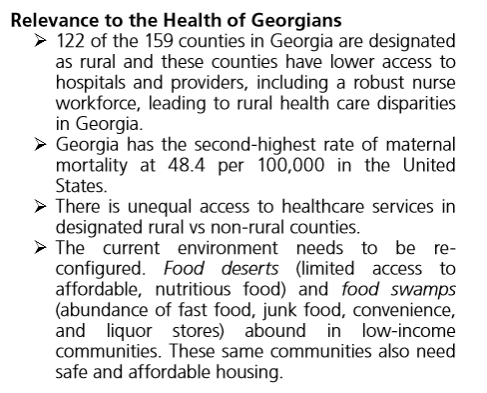
Emory Authors: Advancing Health Equity in Georgia

“America spends more money on health care than any other industrialized country, yet we rank among the highest in terms of poverty rates and income inequity Georgia has some of the poorest health outcomes in the United States and relative to other developed countries (National Academy of Medicine[NAM], 2021) Overall, the United States has the highest health care spending among developed countries with GDP reported to be at 18% in 2020;yet, the United States has some of the poorest health outcomes of industrialized countries”

Continue reading

Reducing racial and ethnic disparities in healthcare

“Reduction of health disparities and advancement of health equity in the United States require high-quality data indicative of where the nation stands vis-à-vis health equity, as well as proper analytic tools to facilitate accurate interpretation of these data.Although much is understood about the role of social determinants of health in shaping the health of populations, researchers should continue to advance understanding of the pathways through which they operate on particular health outcomes. There is still much to learn and implement about how to measure health disparities, health inequities, and social determinants of health at the national level, and the challenges of health equity persist.”

Penman-Aguilar A, Talih M, Huang D, Moonesinghe R, Bouye K, Beckles G. Measurement of Health Disparities, Health Inequities, and Social Determinants of Health to Support the Advancement of Health Equity. J Public Health Manag Pract. 2016 Jan-Feb;22 Suppl 1(Suppl 1):S33-42.

Continue reading