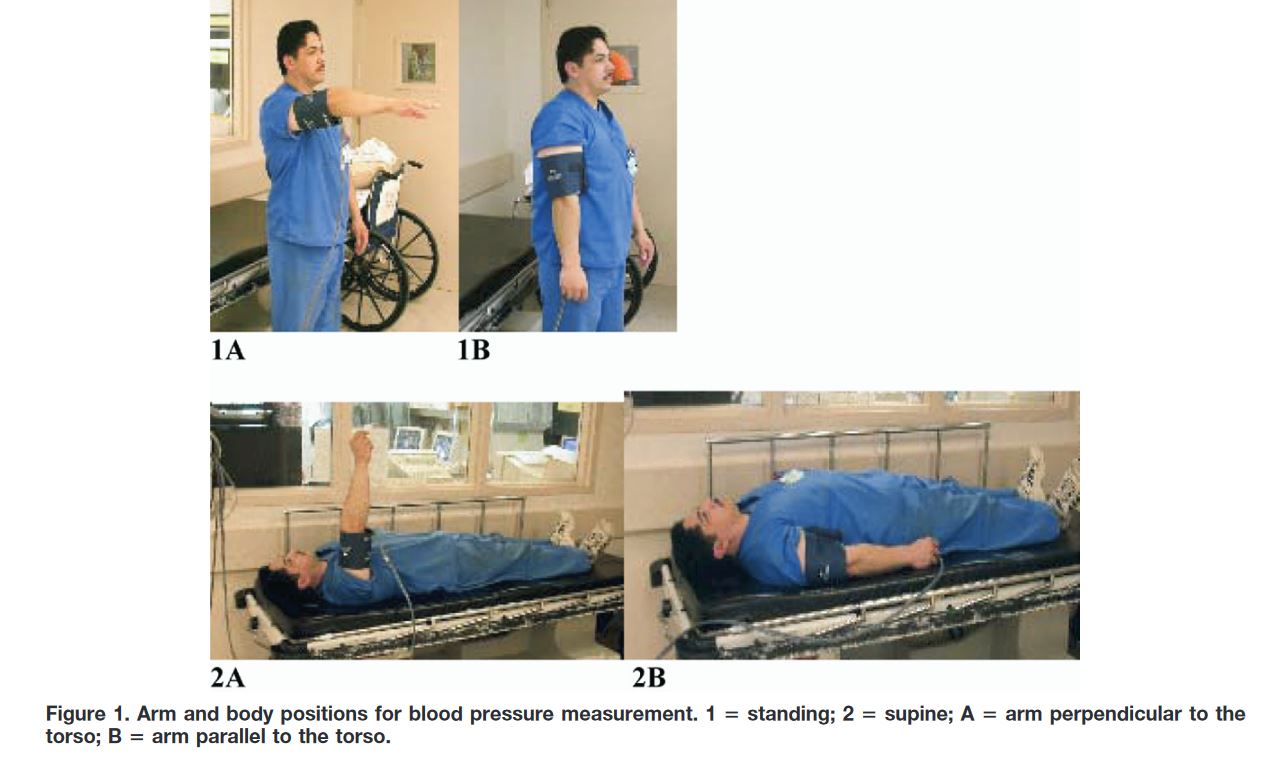
Orthostatic Blood Pressure: Best Practices

“Measurement of blood pressure changes associated with postural change is a common parameter used in a select group of ED patients as an adjunct in the assessment of volume status, hemodynamic stability, and medication toxicity. Orthostatic hypotension has been defined by a consensus statement developed by the American Academy of Neurology and American Autonomic Society as a decrease in systolic blood pressure of > 20 mm Hg or a diastolic drop > 10 mm Hg within 3 min of going from a supine to a standing position” (Guss)

Guss

Guss, D. A., Abdelnur, D., & Hemingway, T. J. (2008). The impact of arm position on the measurement of orthostatic blood pressure. The Journal of emergency medicine, 34(4), 377-382.

Continue reading

Emory Authors: Burned Out on Burnout

“Fifty-six percent of nurses in a national sample reported burnout symptoms in 2022. Although the nursing literature on burnout dates back to 1978, nurses and other health professionals continue to grapple with this workplace phenomenon that leads to deleterious outcomes, including suicide. The suicide risk among US nurses now surpasses that of physicians. Stories of nurses who have died by suicide or considered it are emerging, and some are similar to this suicide note titled, “A Letter to My Abuser,” which was published as a letter to the editor from the nurse’s parents. More attention is needed to meaningfully address nursing burnout and this can be done by also using an equity lens.”

Continue reading

Intentional rounding in the inpatient setting

“Intentional rounding has positive outcomes on patient satisfaction and safety. Nurses perceive benefits related to intentional rounding; however, some nurses perceive it as an additional, unnecessary task. The effectiveness of intentional rounding is influenced by external factors including leadership and formal rounding education, workload, ward layout, staffing and experience level.” (Ryan) 

Ryan

Ryan, L., et al (2019). Intentional rounding – An integrative literature review. Journal of Advanced Nursing (John Wiley & Sons, Inc.), 75(6), 1151–1161.

Continue reading

JONA Highlights: The Magnet Recognition Program and its Influence on Hospital Rankings

“The significance of ANCC Magnet recognition and its positive impact on global safety, quality, mortality rates, patient experience, nurse empowerment, satisfaction, and retention are consistently increasing. There are currently approximately 612Magnet-designated organizations, approximately 10% of US hospitals. The Magnet designation is not easily achieved, requiring rigorous assessment of an organization’s nursing practices, patient care models, and outcomes in the top benchmarks.”

Continue reading

Emory Authors: Telemedicine impact on post-stroke outpatient follow-up in an academic healthcare network during the COVID-19 pandemic.

“Outpatient follow-up after acute stroke plays a signifcant role in optimizing patient care, secondary stroke prevention and reducing morbidity and mortality. As the risk of recurrent stroke is highest within the first six months following stroke, prompt outpatient follow-up is essential for secondary prevention of future complications and minimizing the risk of hospital readmission. Outpatient in-person follow-up represents one strategy. However, the COVID-19 pandemic negatively impacted medical delivery in various specialties, including continuity of care. Telemedicine provides an alternative strategy to evaluate and treat patients after discharge.”

“We found that patients who used teleneurology for follow-up (vs no follow-up) were more likely to be discharged from CSC than PSCs, have private insurance vs Medicare, present to hospital through private transport/taxi (vs EMS or transfer from other hospital), have a history of dyslipidemia, have NIHSS 0-5, receive intraarterial alteplase or thrombectomy, receive antidepressant at discharge and discharge to home. In-person visits (vs no follow-up) were more common among those discharged from CSC, those with family history of stroke, NIHSS 0-5, those ambulating independently with or without device or ambulation with assistance of a person.”

Alabyad, D., et al (2023). Telemedicine impact on post-stroke outpatient follow-up in an academic healthcare network during the COVID-19 pandemic. Journal of Stroke & Cerebrovascular Diseases, 32(8),

Emory Authors: The Future of Magnet (Editorial)

“Since its inception more than 3 decades ago, the American Nurses Credentialing Center’s (ANCC’s) Magnet Recognition Program® has grown to become the premier international acknowledgment of nursing excellence in healthcare organizations worldwide. From its inception, the purpose of the Magnet® program was to support nursing practice through an organizational commitment to excellence.”

Continue reading

Journal of Research in Nursing highlights: Value and core concepts of the Clinical Research Nurse

“The art and science of the Clinical Research Nurse (CRN) role is found within the weaving of care throughout the research process, and the value added to patient care that this produces. CRNs play a vital role in improving patient care and contributing to enhanced treatment pathways through delivering and leading clinical research activities, but research nursing is not simply about task-based actions. Rather, it amplifies the nursing values consistent within patient care provided by nurses across all settings.”

Continue reading