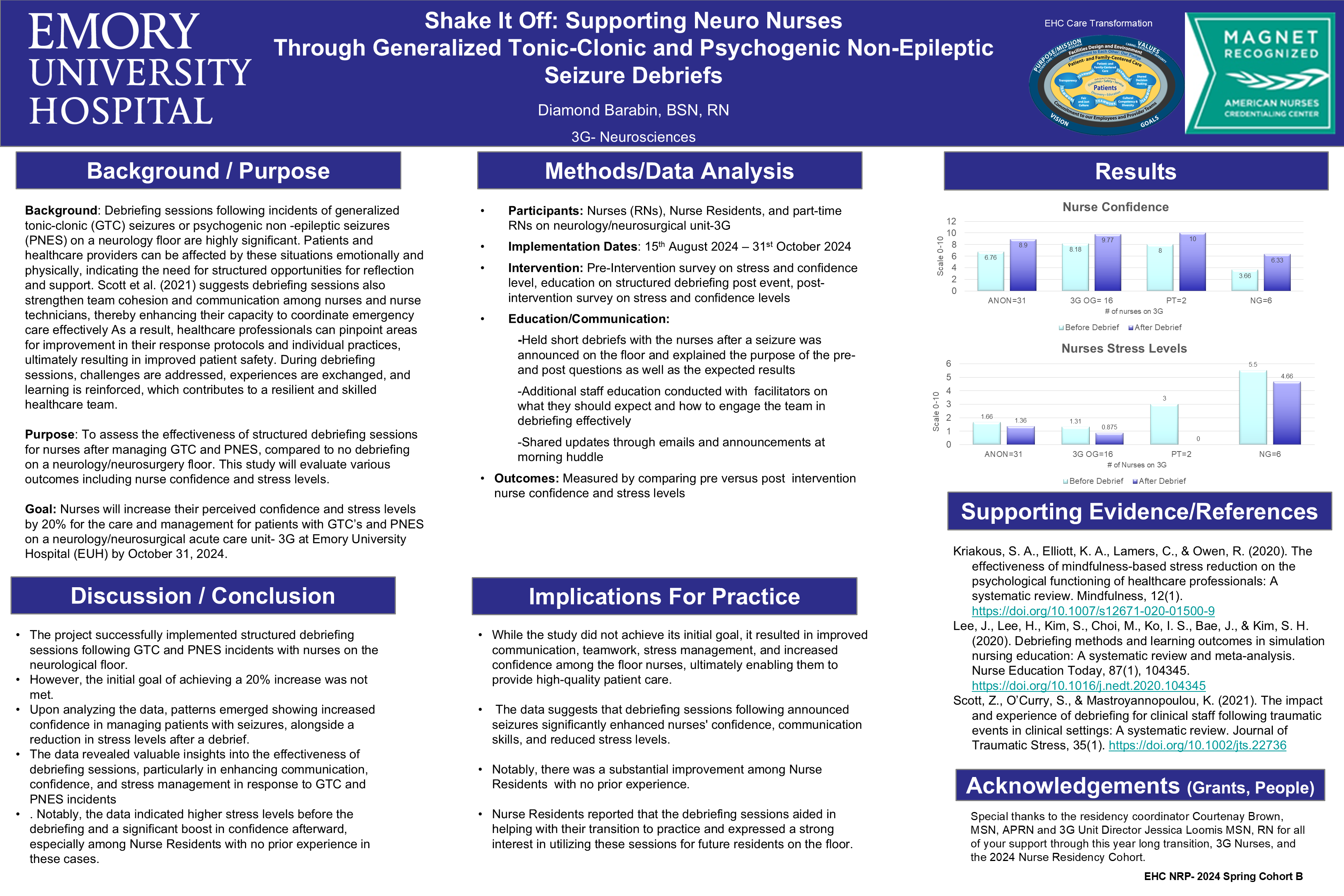
Scrub-A-Dub-Dub: CHG Bath for All

Healthcare-associated infections (HAIs) increase mortality rates and costs, especially in ICUs where central-line use is common (Denkel et al., 2023). Central-line associated bloodstream infections (CLABSIs) often occur when preventive measures fail. Patient reluctance to bathe and reliance on traditional soap and water further hinder infection control. CHG wipes have proven more effective in preventing CLABSIs (Denkel et al., 2023), and education on CHG protocols can reduce CLABSI rates by up to 30% (Reynolds et al., 2021), emphasizing the need for proper education and adherence.”

Alyssa Lowe, BSN, RN, RCIS; Taynara Pimenta, BSN, RN and Taylor Shaw, BSN, RN 2W Cardiac Care Unit (CCU) Scrub-A-Dub-Dub: CHG Bath for All [Emory Healthcare Nurse Residency] Emory Saint Joseph’s Hospital, Atlanta GA

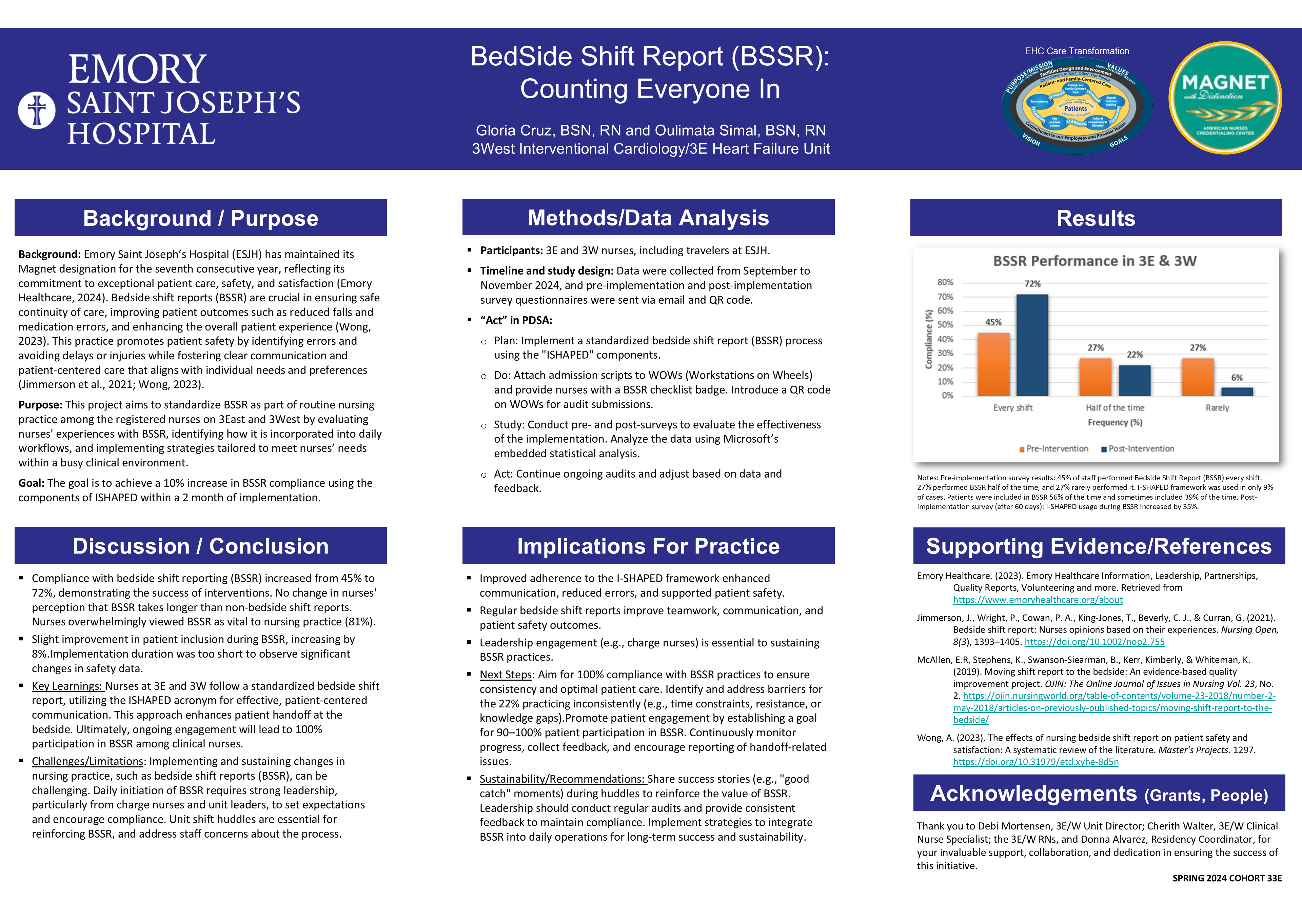
Code Clear Communication: ORchestrated Dialogue: Streamlining OR Communication for Professional Excellence.

“The operating room (OR) is a high-pressure environment that brings together diverse personalities, communication styles, and stressful situations. These dynamics can contribute to poor communication and incivility, leading to increased burnout among OR staff (Sillero & Zabalegui, 2018). Effective collaboration and open communication are crucial for ensuring patient safety and fostering a supportive team culture where personnel feel confident voicing concerns about risks and safety issues. By addressing the complexities of OR interactions and reducing incivility, healthcare organizations can alleviate staff stress, enhance team cohesion, and improve employee retention and patient safety (Laflamme et al., 2019).”

Alexandra Colina, BSN, RN; Shavanee Reid, MSN, RN and Yolanda Ward, MSN, RN Cardiovascular Operating Room (CVOR) Code Clear Communication: ORchestrated Dialogue: Streamlining OR Communication for Professional Excellence [Emory Healthcare Nurse Residency] Emory Saint Joseph’s Hospital, Atlanta GA

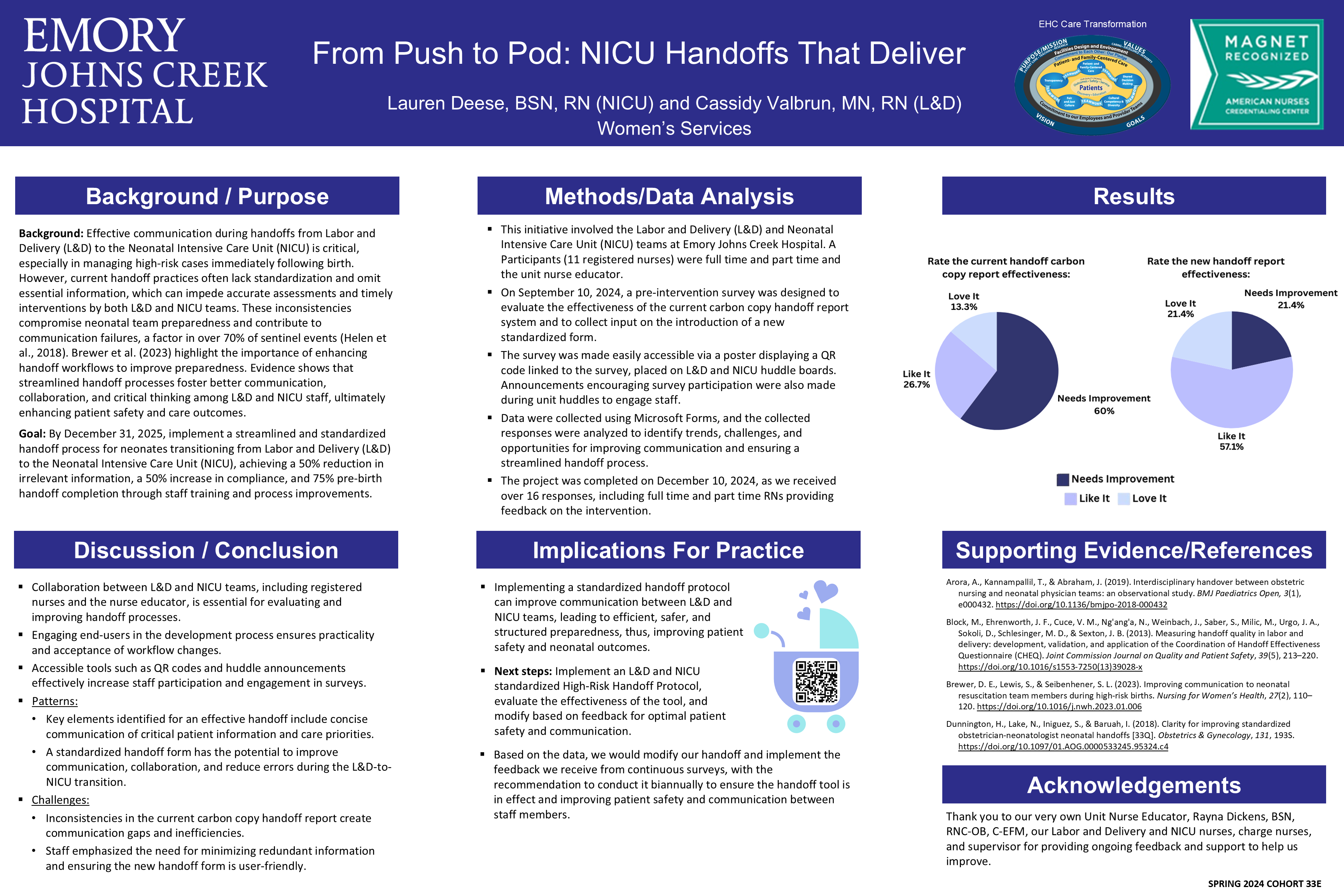
JONA Highlights: Practical Steps Supporting Professional Publications for Leadership and Teams

“Disseminating research or evidence-based practice is not straightforward. As more clinical nurses, executive nurse leaders, nurse scientists, and faculty contribute to new knowledge, there is an increasing need to support the processes to publish and disseminate manuscripts to advance healthcare. Nurse administrators and leaders are key influencers and supporters to bolster expertise and resources to publish. This article provides nurse leaders and administrators clear, actionable steps to enable successful publication outcomes”

Continue reading

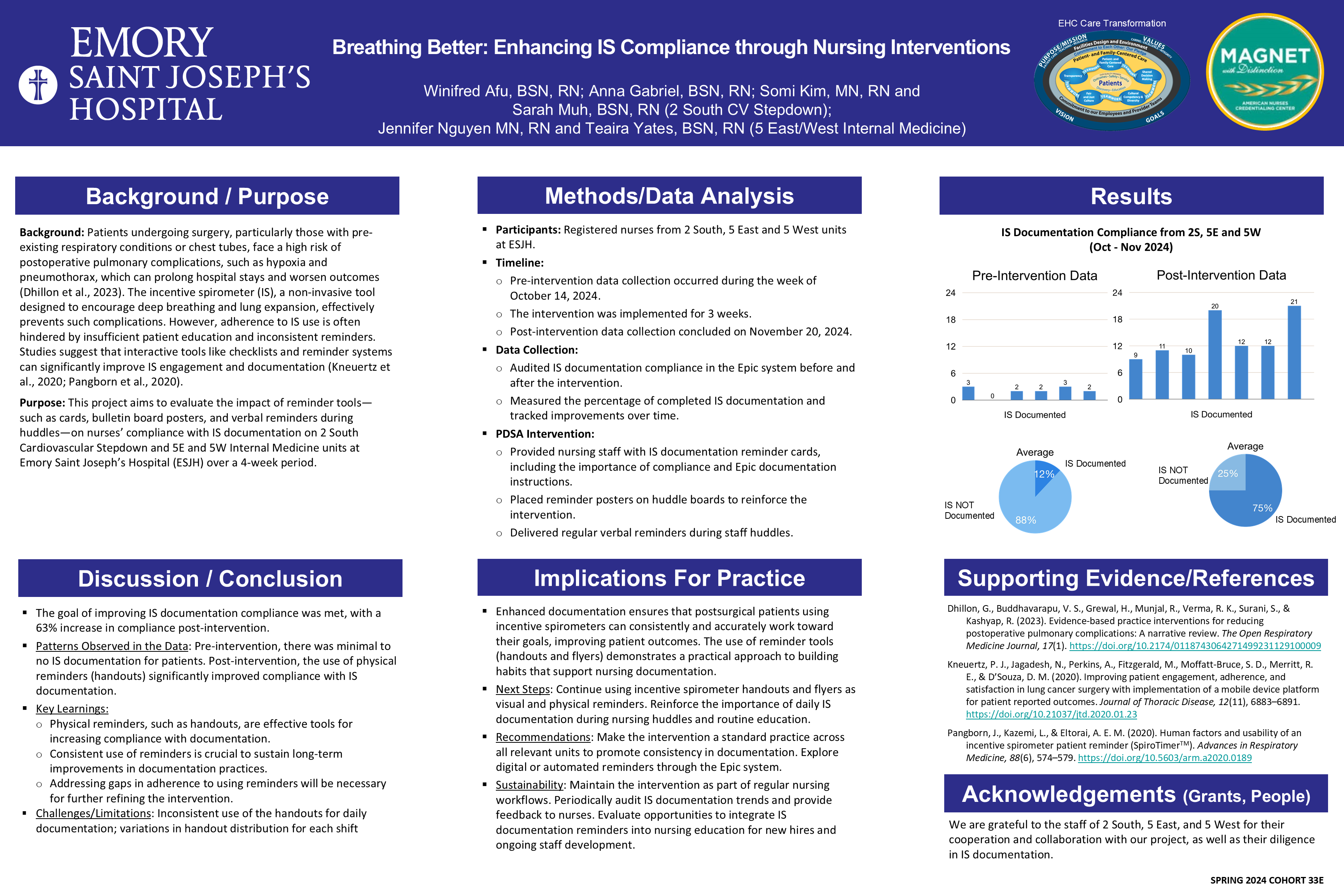
New graduates leaving nursing practice

“During the transition from student to nurse, newly graduated nurses grow and develop as professionals, making this transition a critical period in their new careers. New graduate nurse attrition rate ranges from 30 to 70% in the United States, 28–30% in Canada, and 24.5–35.3% in Korea. Negative experiences during the transitional period, such as theory-practice gaps, not feeling valued or respected, and senior staff’s bullying or violent behaviors are commonly reported reasons for new graduate nurses leaving nursing jobs.”

Kim, J. H., & Shin, H. S. (2020). Exploring barriers and facilitators for successful transition in new graduate nurses: A mixed methods study. Journal of Professional Nursing, 36(6), 560-568.

Continue reading

Emory Authors: Reliability and Validity of Measures Commonly Utilized to Assess Nurse Well-Being

“A healthy, competent nursing workforce is a vital component to ensuring patients receive high-quality, evidence-based care. However, unsafe work environments, patients’ ever-increasing complex care needs, and public health emergencies threaten the well-being of nurses and increase the risk of nurse burnout. Burnout is a psychological syndrome
resulting from chronic job-related interpersonal stressors; it manifests as overwhelming exhaustion, cynicism towards or detachment from the job, and feeling a sense of lacking professional achievement.”

Continue reading

Emory Authors: Using a Device-Free Wi-Fi Sensing System to Assess Daily Activities and Mobility in Low-Income Older Adults

“Older adults belonging to racial or ethnic minorities with low socioeconomic status are at an elevated risk of developing dementia, but resources for assessing functional decline and detecting cognitive impairment are limited. Cognitive impairment affects the ability to perform daily activities and mobility behaviors. Traditional assessment methods have drawbacks,
so smart home technologies (SmHT) have emerged to offer objective, high-frequency, and remote monitoring. However, these technologies usually rely on motion sensors that cannot identify specific activity types. This group often lacks access to these technologies due to limited resources and technology experience. There is a need to develop new sensing technology that is discreet, affordable, and requires minimal user engagement to characterize and quantify various in-home activities.”

Continue reading

Emory Authors: Implementing Cognitive Rehearsal Training With Nursing Students to Counter Incivility in the Clinical Setting as Students and New Nurses.

“Incivility is prevalent in the clinical workplace and can lead to reduced self-confidence, adverse health effects, and negative implications for patient care. Cognitive rehearsal training (CRT) serves as a mental plan that individuals can use to counter incivility. This mixed-methods study examined select outcomes related to experiencing incivility for nursing students before and after receiving CRT and early into their professional practice. Many participants described experiencing incivility. Most found CRT useful and implemented the general approach of pausing and thinking before responding. Incorporating CRT into prelicensure education has potential for decreasing the effects of incivility and protecting professional well-being.”

“COGNITIVE REHEARSAL TRAINING Following the training structure developed by Griffin (2004), CRT included one hour of didactic presentation on incivility and its consequences and one hour of interactive small-group role-play, during which participants practiced first
pausing after experiencing an uncivil remark or gesture and then utilizing a scripted response to address the incivility. The pause mitigates emotional reaction, and the use of a scripted response reduces cognitive burden in the moment.”

“SIMULATION-BASED LEARNING EXPERIENCE Students participated in the SBLE one to three weeks following CRT. The objectives of the SBLE were for students to work in small groups to provide care to multiple patients, recognize incivility, and utilize CRT strategies to
deflect incivility. The SBLE was designed following standards of best practice for simulation by a certified health care simulation educator.”

Continue reading