
“The Magnet Recognition Program emphasizes excellence across multiple dimensions of nursing performance including nurse engagement and patient experience outcomes. Organizations are expected to exceed national benchmarks in both domains. Although these domains are measured independently, they may represent interconnected indicators of nursing excellence, organizational culture, and performance. From a leadership perspective, understanding how these outcome measures move together has important operational implications. If declines in nurse engagement occur before declines in patient experience, leaders have an opportunity to intervene early through targeted workforce and operational strategies. This creates a strategic opportunity to view nursing engagement not
solely as a workforce outcome measure, but as a strategic indicator for organizational performance and Magnet readiness.”
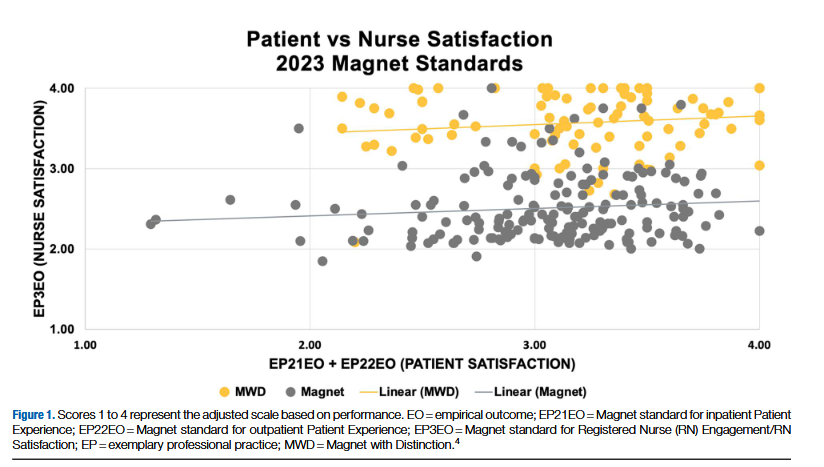
“The findings suggest nurse engagement represents more than an internal workforce measure; it provides meaningful insight into practice environments, organizational
culture, and future patient experience. For nurse leaders, this creates an opportunity to shift from reactive to proactive performance management. Patient experience measures are often reviewed after declines have already occurred, whereas changes in nurse engagement may emerge earlier. Monitoring nurse engagement trends enables leaders to identify operational concerns before they become evident in patient outcomes or organizational performance indicators. This perspective aligns with the Magnet recognition framework, which emphasizes positive work environments, professional practice, nurse empowerment, and transformational leadership. Organizations that effectively support nurses are also better positioned to support patients”
.Rand, F., & Spates, P. (2026). Nurse engagement as a leading indicator of patient experience: Implications for Magnet ® leaders. Journal of Nursing Administration (JONA), 56(10), 525–527.

