
“In previous articles, it has been noted that patient refusals are also a barrier to performing daily CHG bathing. Indeed, Caya et al found that compliance with daily CHG bathing averaged 78%, with patient refusal of CHG bathing ranging from 3% to 29% across all units within a 505-bed hospital. According to patient interviews, reasons for refusing a CHG bath included a low perception of susceptibility to infection and low knowledge of the benefits of CHG bathing. There were no concerns related to the CHG product itself. Similarly, Reynolds noted that providing patients education on the importance of bathing while hospitalized may help improve compliance with this practice.”
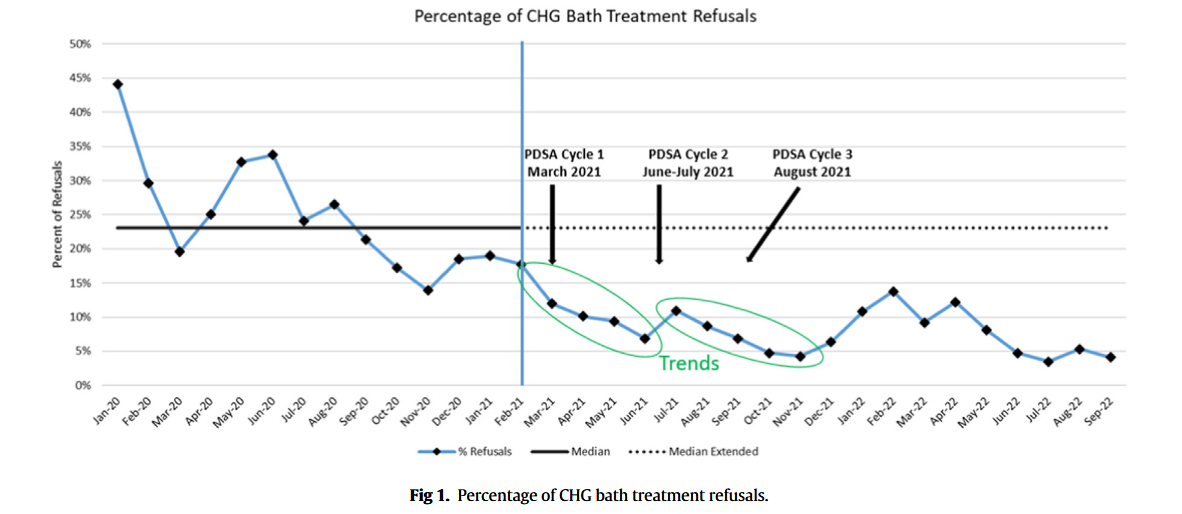
“This project found a reduction in patient refusals of CHG bathing after Plan-Do-Study-Acts (PDSA) cycles were initiated focused on this barrier. Continued efforts are needed to improve overall CHG bathing compliance and reduce CLABSI rates; however, this initiative showed that focused
efforts to remove a significant barrier were beneficial. Other health care systems who struggle with patient refusals of CHG bathing may consider implementing similar interventions.”
Destine, Y., Capes, K., & Reynolds, S. S. (2023). Reduction in patient refusal of CHG bathing. American Journal of Infection Control, 51(9), 1034–1037.
Kettelhut, V., Van Schooneveld, T., McClay, J., Fruhling, A., & Dempsey, K. (2017). The utility of electronic health record-based hygiene notes for chlorhexidine bathing practice evaluation. Journal of Infection Prevention, 18(2), 72–77.
Caya, T., Jo Knobloch, M., Musuuza, J., Wilhelmson, E., & Safdar, N. (2019). Patient perceptions of chlorhexidine bathing: A pilot study using the health belief model. American Journal of Infection Control, 47(1), 18–22.
Harrington, E. M., Trautman, K., Davis, M. B., Varzavand, K., Meacham, H., Dains, A., Marra, A. R., McDanel, J., Kenne, L., Hanna, B., Murphy, J. P., Diekema, D. J., Wellington, M., Brust, K. B., Kobayashi, T., & Abosi, O. J. (2024). Descriptive epidemiology of central line-associated bloodstream infections at an academic medical center in Iowa, 2019-2022. American Journal of Infection Control, 52(4), 436–442.
Vanhoozer, G., Lovern BS, I., Masroor, N., Abbas, S., Doll, M., Cooper, K., Stevens, M. P., & Bearman, G. (2019). Chlorhexidine gluconate bathing: Patient perceptions, practices, and barriers at a tertiary care center. American Journal of Infection Control, 47(3), 349–350.
Hines, A. G., Nuss, S., Rupp, M. E., Lyden, E., Tyner, K., & Hewlett, A. (2015). Chlorhexidine Bathing of Hospitalized Patients: Beliefs and Practices of Nurses and Patient Care Technicians, and Potential Barriers to Compliance. Infection control and hospital epidemiology, 36(8), 993–994.
Musuuza, J. S., Roberts, T. J., Carayon, P., & Safdar, N. (2017). Assessing the sustainability of daily chlorhexidine bathing in the intensive care unit of a Veteran’s Hospital by examining nurses’ perspectives and experiences. BMC infectious diseases, 17(1), 75.
Kuroki, M., Short, A. C., & Coombs, L. A. (2025). Chlorhexidine Gluconate Treatment Adherence Among Nurses and Patients to Reduce Central Line–Associated Bloodstream Infections. Clinical Journal of Oncology Nursing, 29(2), E37.
Artese, A. L., Sainvil, M., Fish, L. J., Hill, L., Somers, T., Matthews, A., … & Sung, A. D. (2024). Exploring facilitators and barriers to daily chlorhexidine gluconate bathing in adult patients undergoing hematopoietic stem cell transplantation. Supportive Care in Cancer, 32(12), 833.
 Evidence Matters