
“Unintentional medication discrepancies due to inadequate medication reconciliation pose a threat to patient safety. Skilled nursing facilities are an important care setting where patients are vulnerable to unintentional medication discrepancies due to increased medical complexity and care transitions. This study describes a quality improvement approach to improve medication reconciliation in a skilled nursing facility setting as part of the Multi-Center Medication Reconciliation Quality Improvement Study 2.” (Baughman)
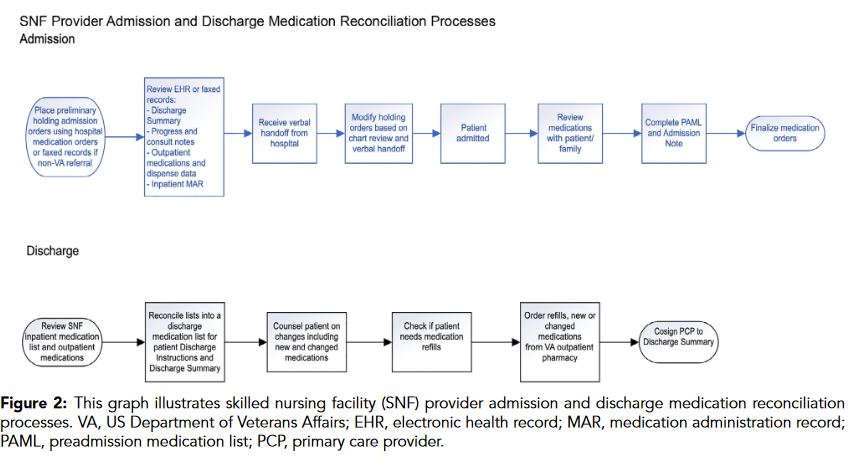
Baughman, A. W., et al . (2021). Improving Medication Reconciliation with Comprehensive Evaluation at a Veterans Affairs Skilled Nursing Facility. Joint Commission journal on quality and patient safety, 47(10), 646–653. Free Full Text
Ndegwa, M. Evidence Summary. Medication Administration: Interventions to Reduce Errors. The JBI EBP Database. 2021; JBI-ES-2757-3
Lee V, et al Impact of Discharge Medication Reconciliation Across a Five-Hospital Health System. J Healthc Qual. 2022 Mar 23. Full Text For Emory Users
Tamblyn, R., et a; (2018). Improving patient safety and efficiency of medication reconciliation through the development and adoption of a computer-assisted tool with automated electronic integration of population-based community drug data: the RightRx project. Journal of the American Medical Informatics Association, 25(5), 482–495 Free Full Text
Popp, R. A., et al. (2020). Effect of Therapeutic Interchange on Medication Changes Between Admission and Discharge. Hospital pharmacy, 55(6), 382–390. Free Full Text
 Evidence Matters